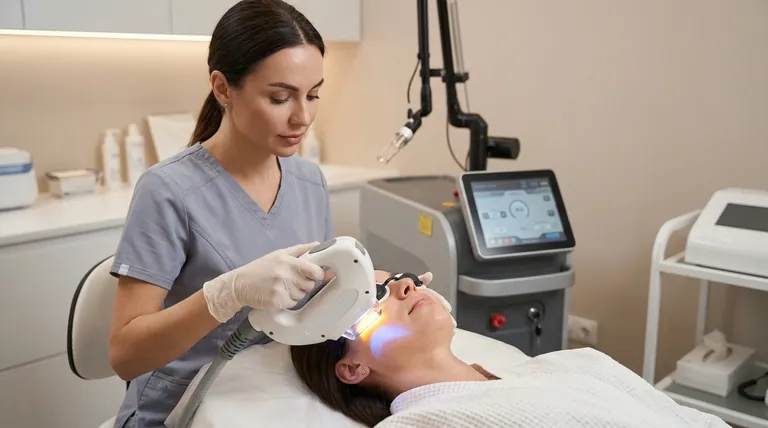
When addressing multiple skin concerns—from pigmentation to texture—patients and dermatologists increasingly favor Intense Pulsed Light (IPL) therapy for its unparalleled versatility and efficiency. Unlike treatments targeting single issues (like chemical peels for pigmentation or lasers for vascular flaws), IPL simultaneously corrects pigmented lesions, vascular irregularities, and collagen depletion with minimal downtime. This article explores why IPL stands as the gold-standard solution for comprehensive skin rejuvenation, backed by clinical evidence and real-world outcomes.
Understanding IPL's Versatility in Modern Dermatology
IPL's broad-spectrum light technology makes it uniquely capable of addressing multiple skin concerns in one session. Here’s how it outperforms layered procedures:
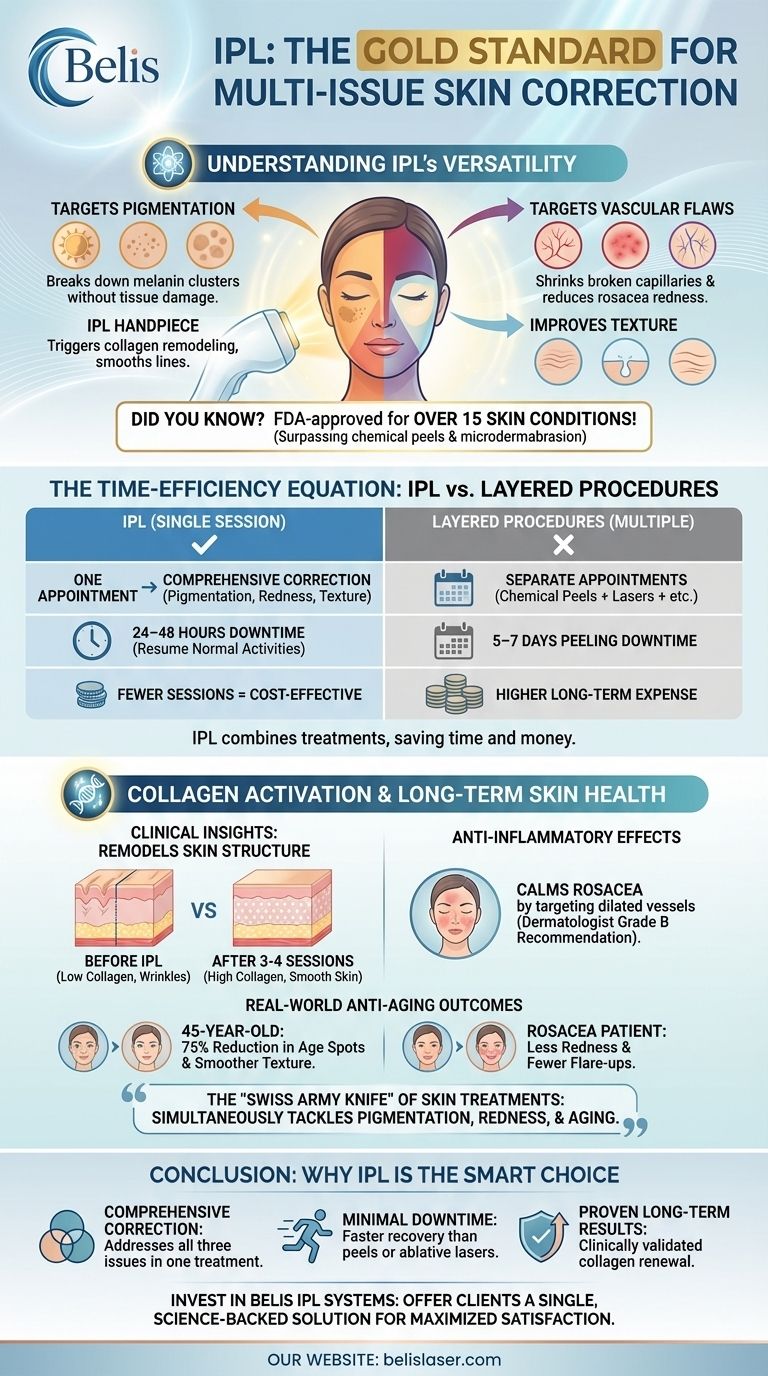
Targeting Pigmentation, Vascular Flaws, and Texture
- Pigmentation: IPL’s wavelengths break down melanin clusters in freckles, sunspots, and melasma without damaging surrounding tissue.
- Vascular Issues: Hemoglobin absorbs light to shrink broken capillaries or rosacea-related redness.
- Texture Improvement: Heat stimulation triggers collagen remodeling, smoothing fine lines and enlarged pores.
Did you know? IPL is FDA-approved for over 15 skin conditions, including rosacea, acne scars, and hyperpigmentation—far surpassing the limited scope of chemical peels or microdermabrasion.
The Time-Efficiency Equation: IPL vs. Layered Procedures
- Single-Session Advantage: While chemical peels (for pigmentation) and vascular lasers (for redness) require separate appointments, IPL combines both treatments.
- Downtime: IPL patients resume normal activities within 24–48 hours, compared to 5–7 days of peeling post-chemical peel.
- Cost-Effectiveness: Fewer sessions mean lower long-term expenses.
Collagen Activation and Long-Term Skin Health
IPL isn’t just a quick fix—it promotes lasting structural improvements by stimulating collagen and elastin production.
Clinical Insights: How IPL Remodels Skin Structure
- Collagen Density: Studies show a 40–60% increase in collagen fibers after 3–4 IPL sessions, reducing wrinkles and pore size.
- Anti-Inflammatory Effects: IPL calms rosacea by targeting dilated blood vessels (grade B recommendation from dermatologists).
Real-World Anti-Aging Outcomes
- Patient Case 1: A 45-year-old with sun damage saw 75% reduction in age spots and smoother texture after 2 sessions.
- Patient Case 2: A rosacea patient reported less redness and fewer flare-ups within weeks.
Ever wondered why IPL is dubbed the “Swiss Army knife” of skin treatments? Its ability to tackle pigmentation, redness, and aging simultaneously makes it indispensable for holistic care.
Conclusion: Why IPL is the Smart Choice for Multi-Issue Correction
- Comprehensive Correction: Addresses pigmentation, vascular issues, and texture in one treatment.
- Minimal Downtime: Faster recovery than chemical peels or ablative lasers.
- Proven Long-Term Results: Clinically validated collagen renewal and anti-aging benefits.
For clinics and salons, investing in Belis IPL systems means offering clients a single, science-backed solution for diverse skin concerns—maximizing satisfaction and repeat visits.
Ready to transform your skin strategy? Explore how IPL can streamline your treatment menu while delivering superior outcomes.
Products You Might Be Looking For:
Explore advanced skin rejuvenation devices
Visual Guide
Related Products
- 4D 12D HIFU Machine Device for Skin Tightening and Lifting
- IPL SHR+Radio frecuency machine
- 4D 12D HIFU Machine Device for Skin Tightening
- Hydrofacial Machine with Facial Skin Analyzer and Skin Tester
- Ultrasonic Cavitation Radiofrecuency Machine for Body Slimming
Related Articles
- HIFU vs. Surgical Facelifts: A Non-Invasive Path to SMAS Rejuvenation
- How HIFU Delivers Safer, Smarter Anti-Aging Results: Science-Backed Insights
- HIFU vs. Surgery: How to Choose the Right Anti-Aging Treatment for You
- How HIFU Outperforms Traditional Anti-Aging Treatments: A Science-Backed Guide
- HIFU Vaginal Tightening: A Safe, Effective Alternative to Traditional Rejuvenation Methods



















