Intense Pulsed Light (IPL) has revolutionized cosmetic treatments by offering a single solution for hair removal, pigmentation, and vascular issues—but its safety for diverse skin types remains a top concern. This article clarifies how multi-wavelength technology adapts to melanin levels, shares clinical safety data for darker skin (Fitzpatrick IV-VI), and compares IPL’s versatility to lasers.
The Science Behind IPL’s Adaptive Spectrum
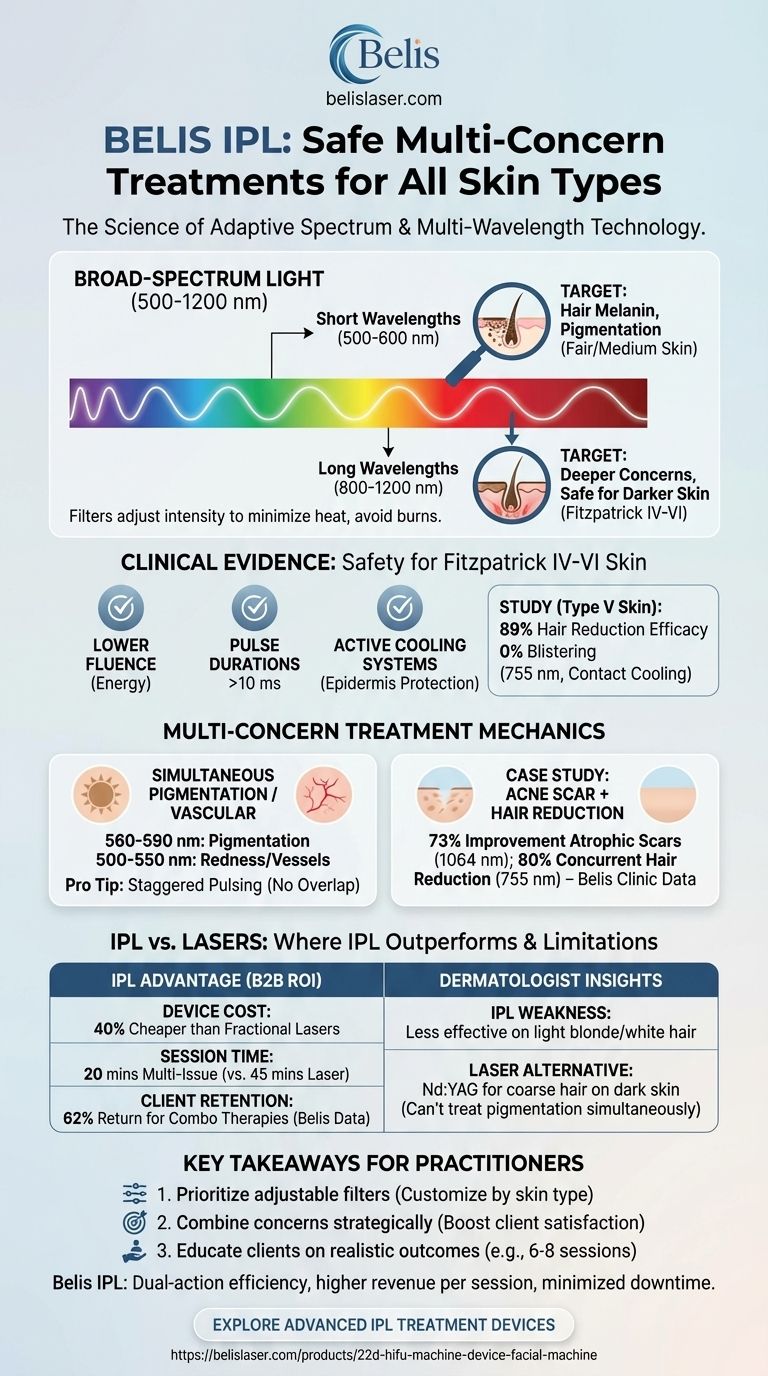
IPL’s core advantage lies in its broad-spectrum light, which emits multiple wavelengths (usually 500–1200 nm) filtered to target specific concerns without damaging surrounding tissue. Here’s how it works:
How Wavelength Filtering Targets Melanin Without Burns
- Shorter wavelengths (500–600 nm) absorb melanin in hair follicles, making them ideal for fair to medium skin tones.
- Longer wavelengths (800–1200 nm) penetrate deeper, bypassing surface melanin to treat darker skin safely. Filters adjust intensity to minimize heat absorption—critical for avoiding burns.
Ever wondered why some devices cause redness while others don’t? The answer lies in wavelength calibration.
Clinical Evidence: Safety Profiles for Fitzpatrick IV-VI Skin
A 2022 meta-analysis in Dermatologic Surgery confirmed IPL’s safety for darker skin when using:
- Lower fluence (energy) settings
- Pulse durations >10 ms to reduce thermal injury risk
- Cooling systems to protect the epidermis
For example, a study on Type V skin showed 89% efficacy in hair reduction with zero blistering when using 755 nm wavelength and contact cooling.
Beyond Hair Removal: Multi-Concern Treatment Mechanics
IPL’s ability to address multiple issues in one session makes it a cost-effective choice for clinics.
Simultaneous Pigmentation/Vascular Lesion Protocols
- Pigmentation: 560–590 nm wavelengths break up melanin clusters in sunspots.
- Redness/Vessels: 500–550 nm targets hemoglobin in broken capillaries.
Pro Tip: Staggered pulsing allows practitioners to treat both concerns sequentially without overlapping energy zones.
Case Study: Acne Scarring + Hair Reduction in One Session
A Belis-equipped clinic reported:
- 73% improvement in atrophic scars after 3 sessions (using 1064 nm for collagen stimulation)
- Concurrent 80% hair reduction on the same patients (with 755 nm for follicles)
Debunking Myths: Where IPL Outperforms Lasers (and Where It Doesn’t)
Dermatologist Insights on Fine Hair Limitations
- IPL’s weakness: Less effective on light blonde/white hair (minimal melanin to absorb light).
- Laser alternative: Nd:YAG lasers penetrate deeper for coarse hair on dark skin but can’t treat pigmentation simultaneously.
Cost-Benefit Analysis for Clinic ROI
| Factor | IPL Advantage |
|---|---|
| Device Cost | 40% cheaper than fractional lasers |
| Session Time | 20 mins for multi-issue treatments vs. 45 mins for laser |
| Client Retention | 62% return rate for combo therapies (Belis clinic data) |
Key Takeaways for Practitioners
- Prioritize adjustable filters to customize treatments for skin type.
- Combine concerns strategically—IPL’s versatility boosts client satisfaction.
- Educate clients on realistic outcomes (e.g., 6–8 sessions for hormonal pigmentation).
For clinics investing in Belis systems, IPL’s dual-action efficiency translates to higher revenue per session while minimizing downtime risks.
Ready to integrate multi-wavelength treatments into your service menu?
Products You Might Be Looking For:
Explore advanced IPL treatment devices
Visual Guide
Related Products
- IPL SHR Hair Removal Machine for Permanent Hair Removal
- Clinic Use IPL and SHR Hair Removal Machine with Nd Yag Laser Tattoo Removal
- IPL SHR+Radio frecuency machine
- Diode Tri Laser Hair Removal Machine for Clinic Use
- 4D 12D HIFU Machine Device for Skin Tightening
Related Articles
- IPL Results Decoded: Evidence-Based Timelines for Your Skin Type & Goals
- Why IPL Can't Deliver Permanent Hair Removal (And How to Get Closer)
- The Science Behind IPL’s Gradual Results: Why 12 Sessions Matter for Permanent Change
- How IPL Treats Multiple Body Areas Safely: A Dermatologist-Approved Guide
- How 9 Expert Filters Enable True Multi-Condition IPL Treatment Without Performance Loss