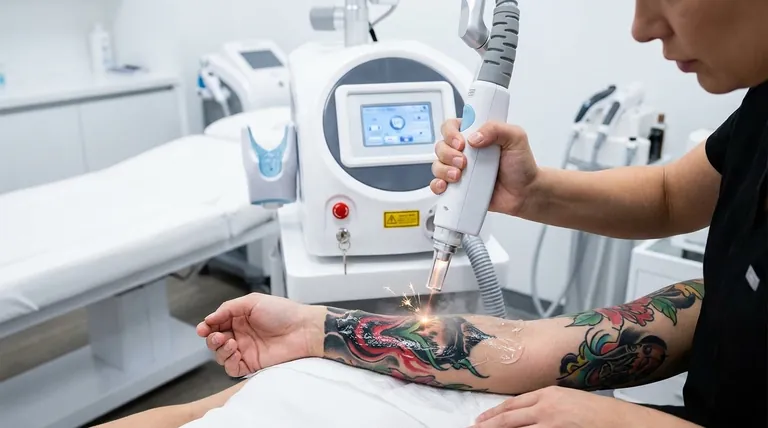
Tattoo removal has evolved dramatically with Q-Switched Laser technology, offering precision and safety even for complex, multi-colored designs. This article breaks down the physics of wavelength targeting, explains built-in safety protocols, and demonstrates how specialists tackle rainbow-colored tattoos—equipping you with science-backed insights for informed decisions.
How Q-Switched Laser Targets Tattoo Ink Precisely
The Physics Behind Wavelength Selection
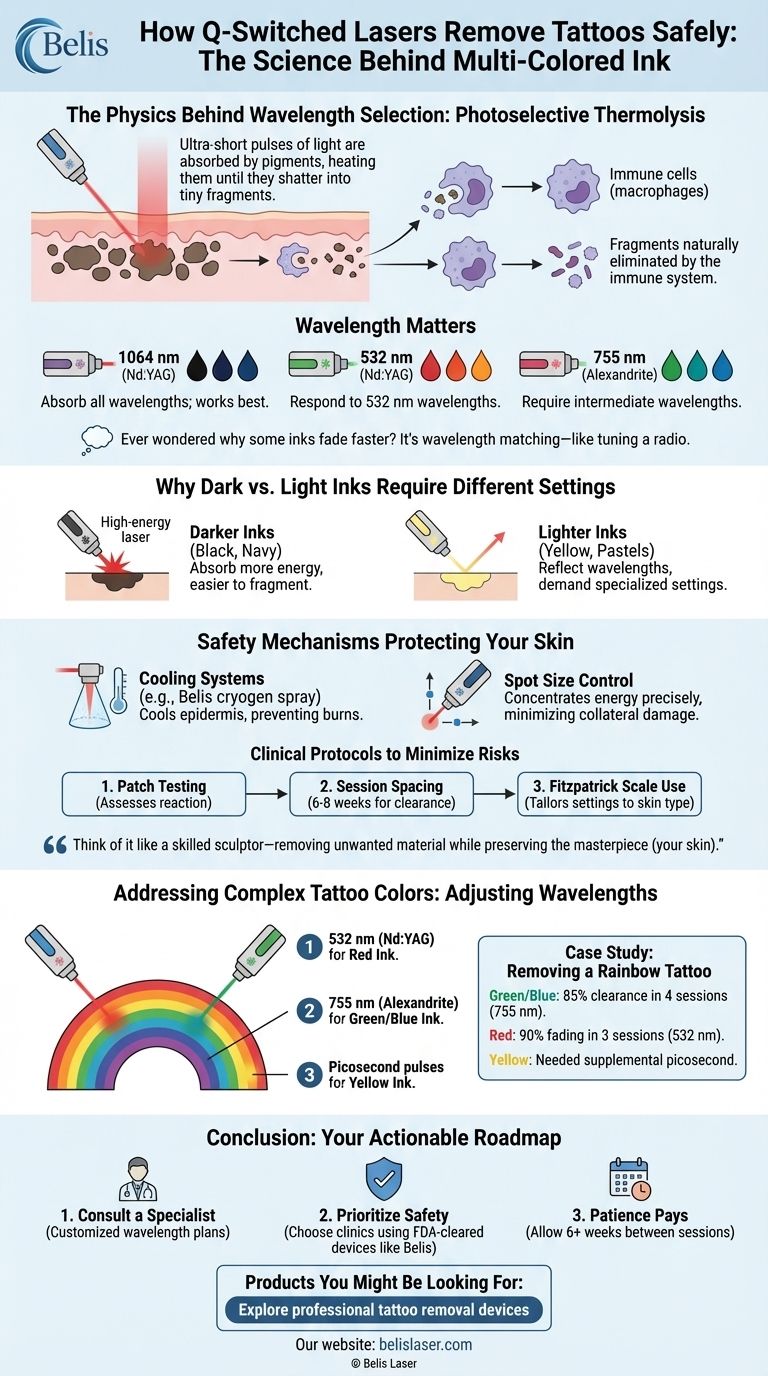
Q-Switched Lasers work on photoselective thermolysis: ultra-short pulses of light are absorbed by tattoo pigments, heating them until they shatter into tiny fragments. These fragments are then naturally eliminated by the immune system.
- Wavelength Matters: Different ink colors absorb specific light wavelengths. For example:
- Black/Dark Inks: Absorb all wavelengths (1064 nm on Nd:YAG lasers works best).
- Red/Orange Inks: Respond to 532 nm wavelengths.
- Green/Blue Inks: Require intermediate wavelengths like 755 nm (Alexandrite lasers).
Ever wondered why some inks fade faster than others? It’s all about wavelength matching—like tuning a radio to the right station.
Why Dark vs. Light Inks Require Different Settings
Darker inks (black, navy) absorb more energy, making them easier to fragment. Lighter or fluorescent inks (yellow, pastels) reflect certain wavelengths, demanding specialized settings:
- High-Contrast Strategy: Clinicians often start with darker inks first, adjusting laser parameters for lighter shades in subsequent sessions.
- Pulse Duration: Q-Switched lasers deliver nanosecond pulses—short enough to avoid overheating surrounding skin but long enough to break pigment bonds.
Safety Mechanisms Protecting Your Skin
How the Laser Spares Surrounding Tissue
The laser’s energy is selectively absorbed by ink particles, not melanin or skin cells. Key safeguards include:
- Cooling Systems: Devices like Belis’s cryogen spray cool the epidermis during treatment, preventing burns.
- Spot Size Control: Smaller beam diameters concentrate energy precisely, minimizing collateral damage.
Clinical Protocols to Minimize Risks
Reputable clinics follow strict guidelines:
- Patch Testing: Assesses skin reaction to a small area first.
- Session Spacing: 6–8 weeks between sessions allows the immune system to clear fragmented ink.
- Fitzpatrick Scale Use: Tailors settings to skin types (e.g., higher melanin levels require lower fluence to avoid hypopigmentation).
Think of it like a skilled sculptor—removing only the unwanted material while preserving the masterpiece (your skin).
Addressing Complex Tattoo Colors
Adjusting Wavelengths for Multi-Colored Ink
Rainbow tattoos demand a wavelength-switching approach:
- Layer-by-Layer Removal: Treat each color separately in one session, adjusting the laser’s wavelength between passes.
- Combination Devices: Advanced systems (e.g., Belis’s dual-wavelength Q-Switched lasers) switch between 1064 nm and 532 nm modes seamlessly.
Case Study: Removing a Rainbow Tattoo
A 2022 clinical trial showed:
- Green/Blue Ink: Required 755 nm (Alexandrite) for 85% clearance in 4 sessions.
- Red Ink: 532 nm (Nd:YAG) achieved 90% fading in 3 sessions.
- Yellow Ink: Needed supplemental picosecond laser pulses for optimal results.
Conclusion: Your Actionable Roadmap
- Consult a Specialist: Multi-colored tattoos require customized wavelength plans.
- Prioritize Safety: Choose clinics using FDA-cleared devices like Belis’s Q-Switched lasers with cooling tech.
- Patience Pays: Allow 6+ weeks between sessions for best results.
Products You Might Be Looking For:
Explore professional tattoo removal devices
Visual Guide
Related Products
- Q Switch Nd Yag Laser Machine Tattoo Removal Nd Yag Machine
- Pico Laser Tattoo Removal Machine Picosure Picosecond Laser Machine
- Pico Picosecond Laser Machine for Tattoo Removal Picosure Pico Laser
- Clinic Use IPL and SHR Hair Removal Machine with Nd Yag Laser Tattoo Removal
- Clinic Diode Laser Hair Removal Machine with SHR and Trilaser Technology
Related Articles
- How to Manage Pico Laser Side Effects and Optimize Recovery: A Complete Guide
- How TrioPro’s Multi-Wavelength Technology Delivers Precision for Every Skin and Hair Type
- How to Prepare for Pico Laser Treatment: A Complete Safety & Efficacy Guide
- How Pico Laser Works: A Safe, Effective Solution for Skin Renewal
- Pico Laser for Dark Skin: A Safe Solution for Hyperpigmentation Without the Risks