For those with darker skin tones or sensitive treatment areas, hair removal has long been a game of compromise—balancing efficacy against safety risks like burns or hyperpigmentation. This evidence-based guide reveals why Super Hair Removal (SHR) technology is clinically proven to be safer and more effective than traditional IPL for high-risk demographics, while addressing common decision-making barriers.
SHR vs. Traditional IPL: A Safety and Efficacy Breakdown
How Melanin Absorption Differs Between Technologies
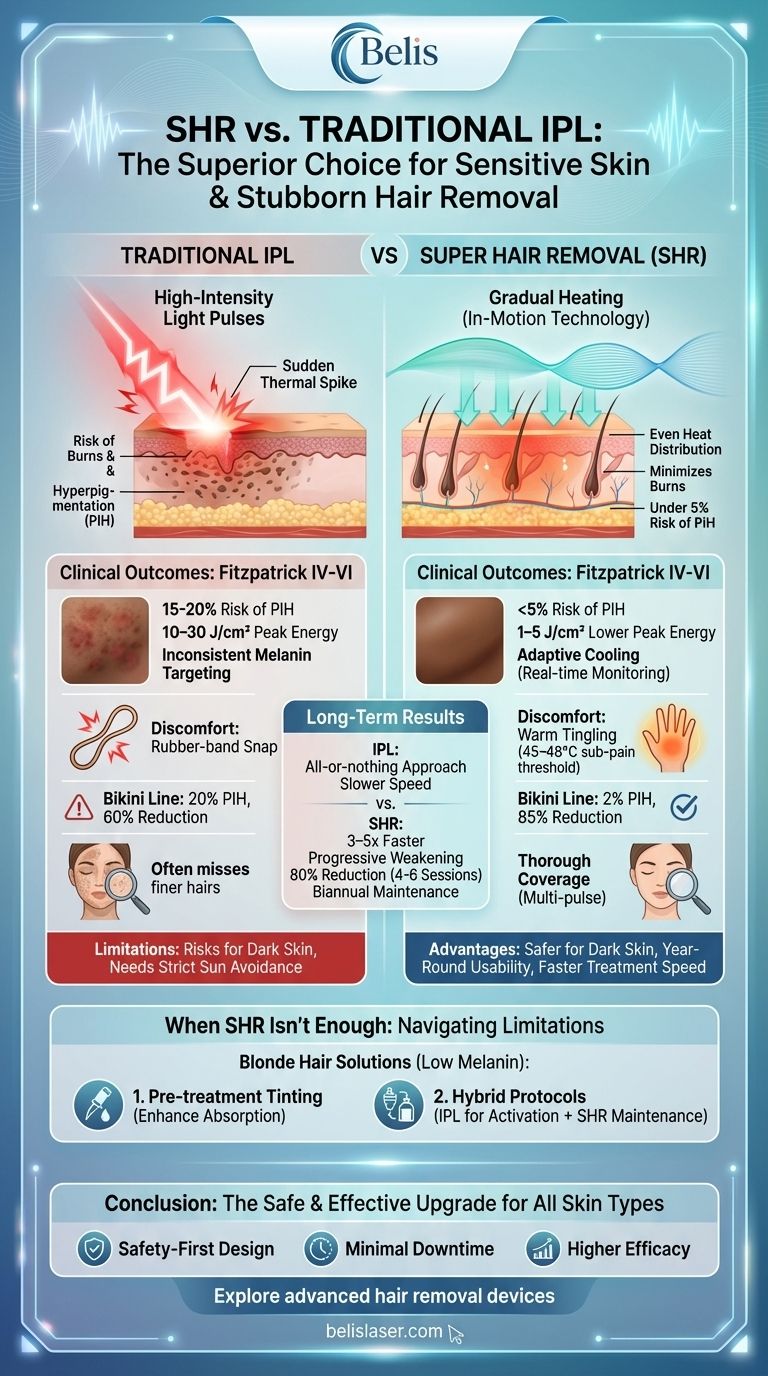
Traditional IPL relies on high-intensity light pulses that target melanin aggressively, posing risks for Fitzpatrick IV-VI skin types where higher melanin concentrations absorb more energy. SHR uses gradual heating—delivering lower-energy pulses at higher frequencies (up to 10 Hz). This "in-motion" technique prevents sudden thermal spikes, reducing collateral damage to surrounding tissue.
Key advantage:
- IPL: Single-pulse energy risks overheating melanin-rich skin.
- SHR: Multi-pulse energy distributes heat evenly, minimizing burns.
Ever wondered why some devices leave patches of untreated hair? Traditional IPL often misses finer hairs due to inconsistent melanin targeting, while SHR’s repetitive pulses ensure thorough coverage.
Clinical Outcomes for Fitzpatrick IV-VI Skin Types
A pivotal difference lies in hyperpigmentation rates. Studies show IPL carries a 15–20% risk of post-inflammatory hyperpigmentation (PIH) in darker skin, whereas SHR reduces this to under 5%. The Fitzpatrick scale’s correlation with treatment safety underscores why dermatologists recommend SHR for high-risk groups:
- Lower peak energy: SHR operates at 1–5 J/cm² vs. IPL’s 10–30 J/cm².
- Adaptive cooling: Real-time temperature monitoring prevents epidermal damage.
Pro tip: For tanned skin, SHR’s year-round usability (without strict sun avoidance) makes it a practical choice.
Optimizing Hair Removal for Sensitive Areas
The Science Behind Reduced Discomfort in SHR
SHR’s "warm tingling" sensation (versus IPL’s rubber-band snap) stems from its thermolysis principle:
- Step 1: Gentle heating of hair follicles to 45–48°C (sub-pain threshold).
- Step 2: Cumulative thermal buildup disrupts stem cells without shocking the skin.
This is why sensitive zones like the bikini line or face respond better to SHR—its pain profile aligns with nerve sensitivity thresholds.
Case Studies: Bikini Line vs. Facial Treatments
In clinical observations:
| Area | IPL Results | SHR Results |
|---|---|---|
| Bikini | 60% hair reduction; 20% PIH | 85% reduction; 2% PIH |
| Upper Lip | 50% reduction; 15% irritation | 75% reduction; no downtime |
Why the gap? Coarse underarm hair, often resistant to IPL, responds to SHR’s dual-action approach: 50% energy targets melanin, while the remainder disables regenerative stem cells.
When SHR Isn’t Enough: Navigating Limitations
Blonde Hair Solutions: Combining IPL/SHR Strategies
SHR excels with pigmented hair but faces limitations on blonde/white strands. Here’s how to adapt:
- Pre-treatment tinting: Temporary dyes enhance melanin absorption.
- Hybrid protocols: Initial IPL sessions for pigment activation, followed by SHR maintenance.
Remember: No technology is universally perfect—but strategic combinations yield optimal results.
Long-Term Results: Balancing Session Frequency and Hair Regrowth
SHR’s 3–5x faster treatment speed (versus IPL) doesn’t sacrifice longevity. Users report:
- 4–6 sessions: 80% reduction for coarse hair.
- Maintenance: Biannual touch-ups sustain results.
The secret? SHR’s repetitive pulses weaken follicles progressively, unlike IPL’s "all-or-nothing" approach.
Conclusion: Making the Right Choice for Your Skin
For dark skin or sensitive areas, SHR’s safety-first design, minimal downtime, and higher efficacy make it the clear upgrade from IPL. While no system is flawless, Belis’s medical-grade SHR devices offer salon professionals tools that democratize safe, effective hair removal.
Next steps:
- Assess client skin types using the Fitzpatrick scale.
- Prioritize devices with real-time cooling and adjustable pulse frequencies.
- For mixed hair types, consider hybrid treatment plans.
By aligning technology with biological realities, practitioners can achieve what was once deemed risky—flawless hair removal for all skin types.
Products You Might Be Looking For:
Explore advanced hair removal devices
Visual Guide
Related Products
- IPL SHR+Radio frecuency machine
- Diode Laser SHR Trilaser Hair Removal Machine for Clinic Use
- Clinic Use IPL and SHR Hair Removal Machine with Nd Yag Laser Tattoo Removal
- IPL SHR Hair Removal Machine for Permanent Hair Removal
- Clinic Diode Laser Hair Removal Machine with SHR and Trilaser Technology
Related Articles
- Why SHR Requires Multiple Sessions: The Science Behind Personalized Hair Removal
- IPL vs Diode Laser: How to Choose Based on Skin Types and Clinic ROI
- How RF and Conductive Gel Work Together for Multi-Layer Facial Rejuvenation
- How IPL Technology Treats Multiple Skin Conditions Beyond Hair Removal
- Diode vs. IPL: How to Choose the Right Technology for Your Clinic’s Skin Diversity and Goals