If you're exploring low-level laser therapy (LLLT) for hair regrowth, you've likely encountered conflicting advice about treatment frequency, duration, and device selection. This guide cuts through the noise with clinically validated protocols, explaining exactly why the 3x/week approach works, how to customize it for your needs, and how to integrate it with other treatments for maximum results.
The Science Behind the 3x/Week LLLT Protocol
How Light Energy Stimulates Hair Follicles
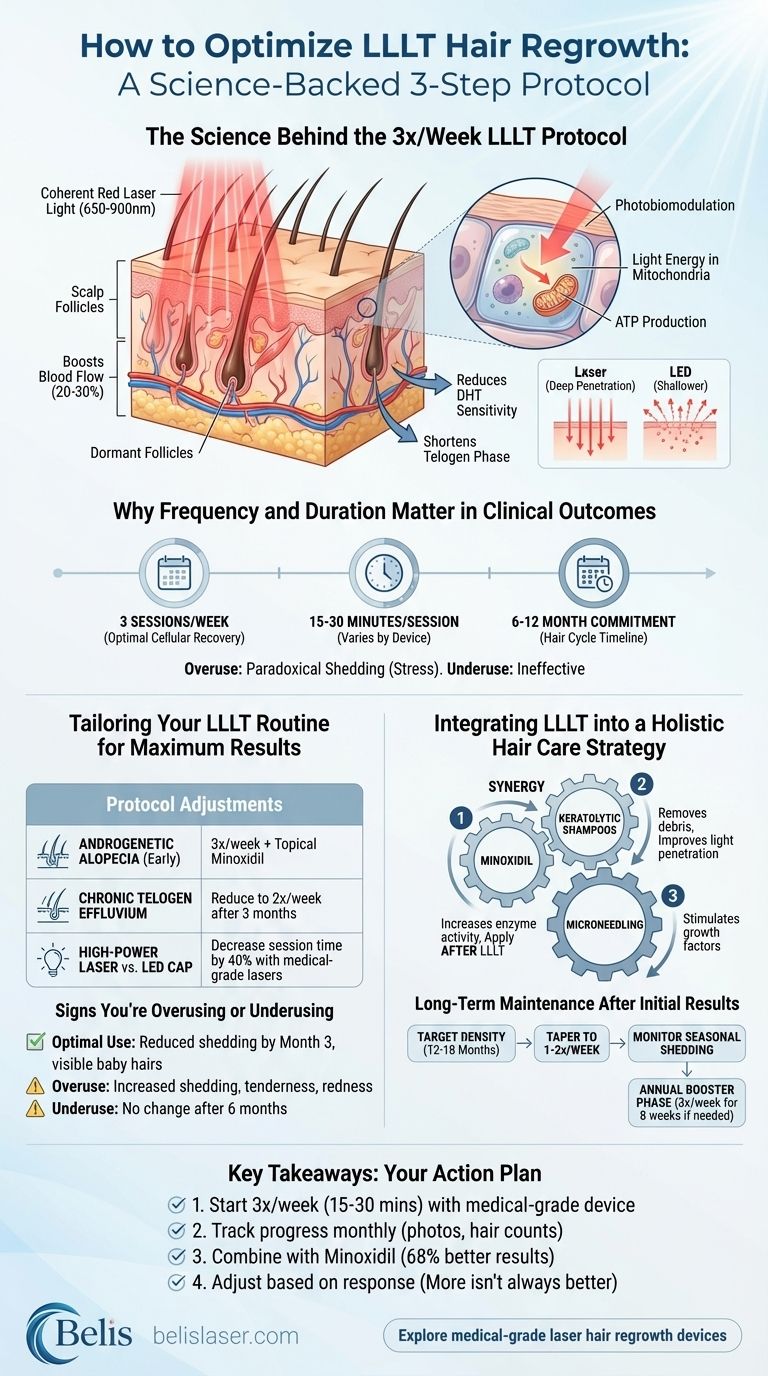
LLLT devices emit red or near-infrared light (typically 650–900 nm) to trigger photobiomodulation—a process where hair follicle cells absorb light energy and convert it into cellular fuel (ATP). Research shows this:
- Boosts blood flow to dormant follicles by 20–30% (enhancing nutrient delivery)
- Reduces DHT sensitivity in genetically susceptible follicles
- Shortens telogen (resting) phase, pushing more hairs into active growth
Ever wondered why lasers outperform LED devices? The coherent light in lasers penetrates deeper into scalp tissues, targeting follicles more precisely.
Why Frequency and Duration Matter in Clinical Outcomes
A 2022 meta-analysis of 18 clinical trials found optimal results with:
- 3 sessions/week (allows cellular recovery between treatments)
- 15–30 minutes/session (varies by device power density)
- 6–12 month commitment (hair cycles take 3–6 months to show changes)
Overuse (daily treatments) can cause paradoxical shedding from follicle stress, while underuse (1x/week) fails to sustain metabolic benefits.
Tailoring Your LLLT Routine for Maximum Results
Factors Influencing Protocol Adjustments
Not all hair loss responds equally. Adjust your approach based on:
| Factor | Adjustment |
|---|---|
| Androgenetic alopecia (early stage) | Stick to standard 3x/week; combine with topical minoxidil |
| Chronic telogen effluvium | Reduce to 2x/week after 3 months (prevents overstimulation) |
| High-power laser vs. LED cap | Decrease session time by 40% with medical-grade lasers |
Signs You’re Overusing or Underusing Your Device
Listen to your scalp’s feedback:
✅ Optimal Use: Gradual reduction in shedding by Month 3, visible "baby hairs" at hairline
⚠️ Overuse: Increased shedding, scalp tenderness, or redness
⚠️ Underuse: No changes in hair density after 6 months
Integrating LLLT into a Holistic Hair Care Strategy
Synergy with Topical Treatments
LLLT amplifies the effects of:
- Minoxidil – Increases sulfotransferase enzyme activity (boosts minoxidil conversion to its active form)
- Keratolytic shampoos – Removes scalp debris, improving light penetration
- Microneedling – Stimulates growth factors that complement LLLT’s ATP effects
Pro Tip: Apply minoxidil after LLLT sessions—the enhanced blood flow improves absorption.
Long-Term Maintenance After Initial Results
Once target density is achieved (usually 12–18 months):
- Taper to 1–2x/week for maintenance
- Monitor seasonal shedding (temporarily increase frequency if needed)
- Annual "booster" phases – Resume 3x/week for 8 weeks if thinning recurs
Key Takeaways: Your Action Plan
- Start with 3x/week sessions (15–30 mins) using a medical-grade device
- Track progress monthly with scalp photos and hair count tests
- Combine with minoxidil for 68% better results versus LLLT alone
- Adjust based on response – More isn’t always better
For salon professionals, Belis medical laser systems offer programmable protocols that automatically adjust fluence and pulse duration—eliminating guesswork for clients. The science is clear: precision and consistency win the hair regrowth race.
Products You Might Be Looking For:
Explore medical-grade laser hair regrowth devices
Visual Guide
Related Products
- Multifunctional Laser Hair Growth Machine Device for Hair Growth
- Multifunctional Laser Hair Growth Machine Device for Hair Growth
- Diode Laser SHR Trilaser Hair Removal Machine for Clinic Use
- IPL SHR+Radio frecuency machine
- Clinic Diode Laser Hair Removal Machine with SHR and Trilaser Technology
Related Articles
- How SHR Laser Hair Removal Works: The Science Behind Multiple Sessions
- How Trilaser Hair Removal Enhances Skin Health Beyond Hair Reduction
- How Trilaser Hair Removal Treats Ingrown Hairs and Folliculitis Effectively
- How Trilaser Hair Removal Boosts Athletic Performance: The Science Behind Speed
- Trilaser Hair Removal: Science-Backed Safety and Performance Benefits