Introduction
Intense Pulsed Light (IPL) treatments promise brighter, smoother skin—but not all complexions respond equally. For those with melanin-rich skin or heightened sensitivity, navigating IPL safety requires understanding light-skin interactions and knowing when to consider alternatives. This guide combines dermatological insights with practical protocols to help practitioners and patients achieve optimal results across the Fitzpatrick spectrum while minimizing risks.
IPL's Science of Light and Skin Diversity
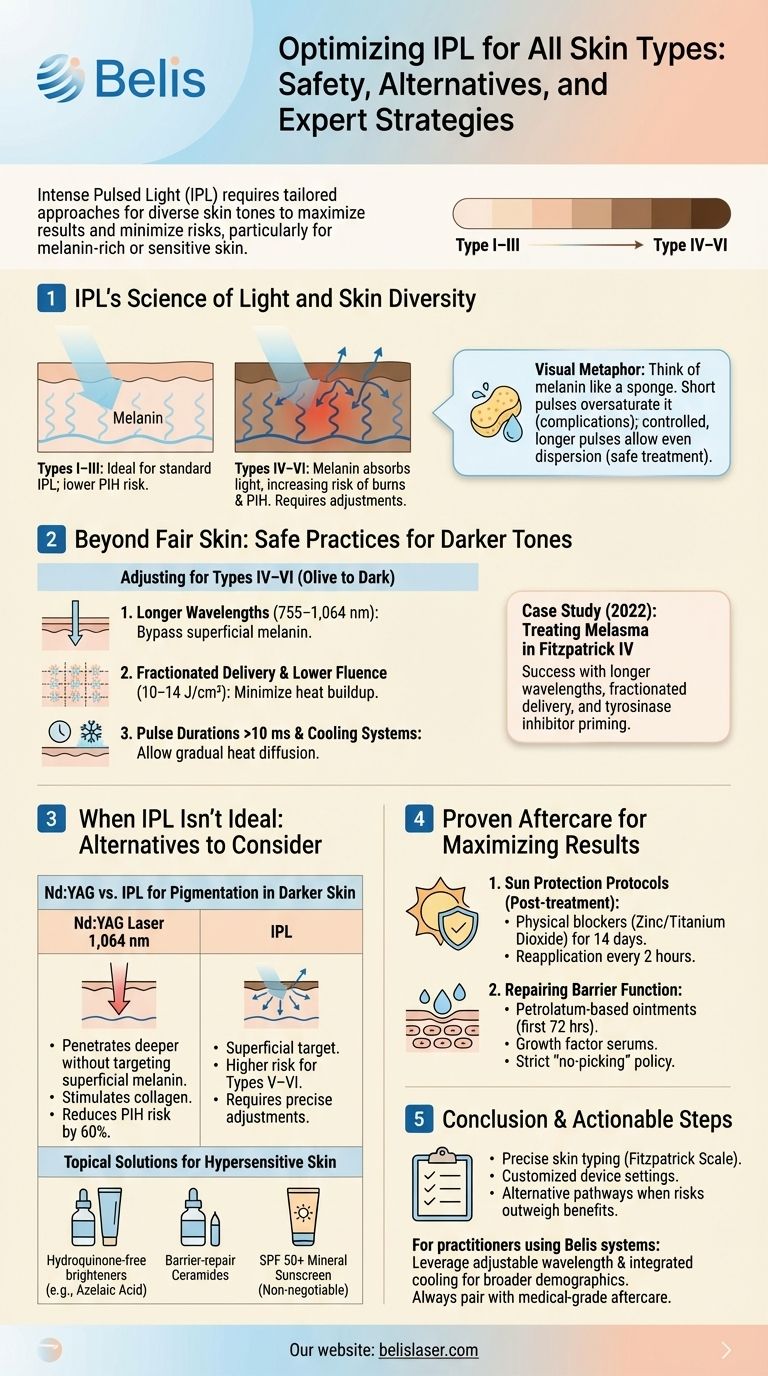
How Melanin Depth Impacts IPL Efficacy
Melanin acts as both protector and challenger in IPL treatments. The pigment absorbs light energy, which can:
- Reduce effectiveness for deeper pigmentation by scattering intended wavelengths
- Increase side effects like burns or post-inflammatory hyperpigmentation (PIH) in darker skin
Ever wondered why some clients see dramatic IPL results while others face complications? The answer lies beneath the skin’s surface.
Fitzpatrick Scale Demystified: Who's a Candidate?
The Fitzpatrick scale classifies skin types I–VI based on melanin content and sun response. Key correlations:
- Types I–III (Light to medium): Ideal for standard IPL settings; lower PIH risk
- Types IV–VI (Olive to dark): Require adjusted wavelengths and pulse durations
- Clinical finding: A study using the Fitzpatrick scale noted higher side-effect rates in types IV+ with aggressive IPL parameters.
Beyond Fair Skin: Safe Practices for Darker Tones
Case Study: Treating Melasma in Fitzpatrick IV Skin
A 2022 trial demonstrated success using:
- Longer wavelengths (755–1,064 nm) to bypass epidermal melanin
- Fractionated delivery to minimize heat buildup
- Pre-treatment priming with tyrosinase inhibitors
Device Settings and Wavelength Adjustments
For types IV–VI, prioritize:
- Lower fluence (10–14 J/cm²)
- Pulse durations >10 ms to allow gradual heat diffusion
- Cooling systems to protect the epidermis
Visual metaphor: Think of melanin like a sponge—shorter pulses oversaturate it, while controlled, longer pulses allow even dispersion.
When IPL Isn’t Ideal: Alternatives to Consider
Laser Comparisons: Nd:YAG vs. IPL for Pigmentation
Nd:YAG lasers (1,064 nm) outperform IPL for darker skin by:
- Penetrating deeper dermal layers without targeting superficial melanin
- Stimulating collagen to improve texture (as referenced in clinical data)
- Reducing PIH risk by 60% compared to IPL in types V–VI
Topical Solutions for Hypersensitive Skin
When light therapy is contraindicated:
- Hydroquinone-free brighteners (e.g., azelaic acid 15%)
- Barrier-repair ceramides to mitigate irritation
- SPF 50+ mineral sunscreen as non-negotiable prevention
Proven Aftercare for Maximizing Results
Sun Protection Protocols for High-Risk Skin
Post-treatment UV exposure worsens PIH. Advise:
- Physical blockers (zinc oxide/titanium dioxide) for 14 days
- Reapplication every 2 hours during daylight
Repairing Barrier Function Post-Treatment
Combat dryness and inflammation with:
- Petrolatum-based ointments for the first 72 hours
- Growth factor serums to accelerate healing
- Strict "no-picking" policies to prevent scarring
Conclusion & Actionable Steps
IPL can be adapted for diverse skin tones, but success hinges on:
- Precise skin typing using the Fitzpatrick scale
- Customized device settings for melanin-rich complexions
- Alternative pathways like Nd:YAG lasers when risks outweigh benefits
For practitioners using Belis systems: Leverage adjustable wavelength capabilities and integrated cooling to safely serve broader demographics. Always pair treatments with medical-grade aftercare products to sustain results.
Final thought: In cosmetic dermatology, one size never fits all—but with science-backed adjustments, radiant outcomes are within reach for every skin story.
Products You Might Be Looking For:
Explore advanced facial treatment devices
Visual Guide
Related Products
- IPL SHR Hair Removal Machine for Permanent Hair Removal
- Clinic Use IPL and SHR Hair Removal Machine with Nd Yag Laser Tattoo Removal
- IPL SHR+Radio frecuency machine
- Multifunctional Laser Hair Growth Machine Device for Hair Growth
- Diode Tri Laser Hair Removal Machine for Clinic Use
Related Articles
- How to Safely Use IPL for Dark Skin: Expert-Backed Methods
- How 9 Expert Filters Enable True Multi-Condition IPL Treatment Without Performance Loss
- IPL vs Diode Laser: How to Choose Based on Skin Types and Clinic ROI
- The Science Behind IPL’s Gradual Results: Why 12 Sessions Matter for Permanent Change
- Why IPL Can't Deliver Permanent Hair Removal (And How to Get Closer)