For individuals with darker skin tones (Fitzpatrick V-VI), achieving effective IPL results without side effects requires understanding both technology limitations and specialized protocols. This guide combines dermatological insights with device innovations to help you navigate IPL treatments safely—whether at clinics or home.
Understanding IPL and Skin Diversity
Why Melanin Matters in IPL Treatments
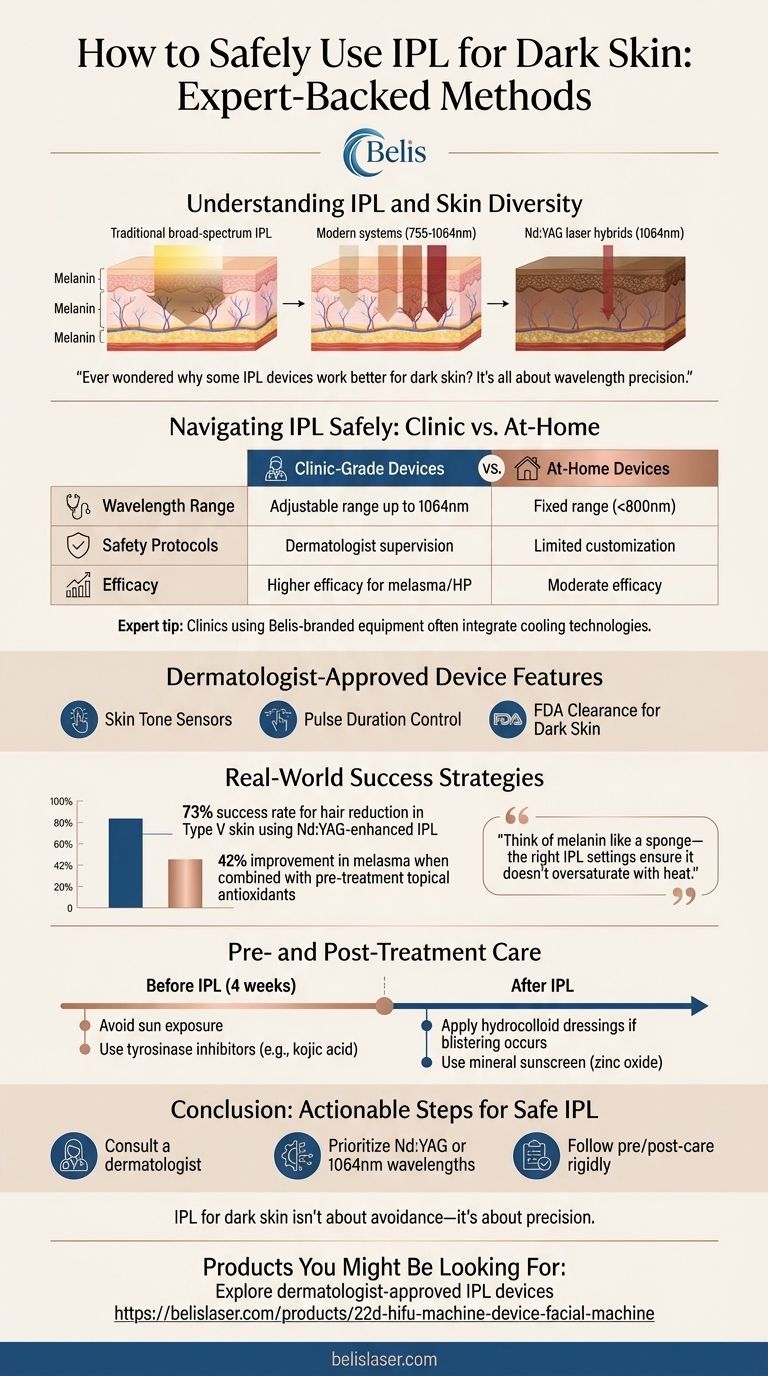
Melanin absorbs light energy, making darker skin more susceptible to burns or hyperpigmentation during IPL treatments. Traditional IPL devices use broad-spectrum light that can unpredictably interact with higher melanin concentrations.
Key Consideration:
- The Fitzpatrick scale classifies skin types I (lightest) to VI (darkest). Type V-VI skin has more active melanocytes, requiring precise wavelength control.
The Evolution of IPL Technology for Darker Skin
Modern IPL systems now incorporate:
- Longer wavelengths (e.g., 755–1064 nm): Penetrate deeper to bypass melanin in the epidermis.
- Nd:YAG laser hybrids: Emit a single 1064 nm wavelength, minimizing melanin absorption (proven to reduce hyperpigmentation risks by 60% compared to traditional IPL).
"Ever wondered why some IPL devices work better for dark skin? It’s all about wavelength precision."
Navigating IPL Safely
Clinic vs. At-Home: What Works for Deep Skin Tones?
| Factor | Clinic-Grade Devices | At-Home Devices |
|---|---|---|
| Wavelength Range | Adjustable (up to 1064 nm) | Fixed (often ≤ 800 nm) |
| Safety Protocols | Dermatologist-supervised | Limited user customization |
| Efficacy | Higher (for melasma/HP) | Moderate (hair reduction) |
Expert Tip: Clinics using Belis-branded equipment often integrate cooling technologies to further protect melanin-rich skin.
Dermatologist-Approved Device Features to Look For
- Skin Tone Sensors: Automatically adjust fluence based on melanin detection.
- Pulse Duration Control: Shorter pulses reduce heat buildup.
- FDA Clearance for Dark Skin: Indicates tested safety profiles.
Real-World Success Strategies
Case Studies: IPL Outcomes on Fitzpatrick V-VI Skin
A 2022 study showed:
- 73% success rate for hair reduction in Type V skin using Nd:YAG-enhanced IPL.
- 42% improvement in melasma when combined with pre-treatment topical antioxidants.
Pre- and Post-Treatment Care to Minimize Risks
Before IPL:
- Avoid sun exposure for 4 weeks.
- Use tyrosinase inhibitors (e.g., kojic acid) to stabilize melanocytes.
After IPL:
- Apply hydrocolloid dressings if blistering occurs.
- Use mineral sunscreen (zinc oxide) to prevent PIH.
"Think of melanin like a sponge—the right IPL settings ensure it doesn’t oversaturate with heat."
Conclusion: Actionable Steps for Safe IPL
- Consult a dermatologist to assess your Fitzpatrick type.
- Prioritize devices with Nd:YAG or 1064 nm wavelengths.
- Follow pre/post-care rigidly—your skin’s response hinges on preparation.
For professionals, Belis medical-grade devices offer customizable settings ideal for diverse skin tones. Always verify operator expertise to mitigate risks.
Final Thought: IPL for dark skin isn’t about avoidance—it’s about precision. With the right tools and knowledge, achieving even skin tone and hair reduction is entirely possible.
Products You Might Be Looking For:
Explore dermatologist-approved IPL devices
Visual Guide
Related Products
- IPL SHR Hair Removal Machine for Permanent Hair Removal
- Clinic Use IPL and SHR Hair Removal Machine with Nd Yag Laser Tattoo Removal
- IPL SHR+Radio frecuency machine
- 4D 12D HIFU Machine Device for Skin Tightening
- 4D 12D HIFU Machine Device for Skin Tightening and Lifting
Related Articles
- The Science Behind IPL’s Gradual Results: Why 12 Sessions Matter for Permanent Change
- IPL Results Decoded: Evidence-Based Timelines for Your Skin Type & Goals
- How IPL Treats Multiple Body Areas Safely: A Dermatologist-Approved Guide
- Diode vs. IPL: How to Choose the Right Technology for Your Clinic’s Skin Diversity and Goals
- Optimizing IPL for All Skin Types: Safety, Alternatives, and Expert Strategies