For individuals with melanin-rich skin (Fitzpatrick types IV-VI) and the clinics serving them, choosing between diode lasers and IPL (Intense Pulsed Light) isn't just about efficacy—it's about safety, cost-efficiency, and long-term results. This guide cuts through the noise with dermatologist-backed insights, comparative data on side effects, and actionable advice for providers.
Understanding Melanin’s Role in Hair Removal Safety
How Wavelengths Interact with Different Skin Tones
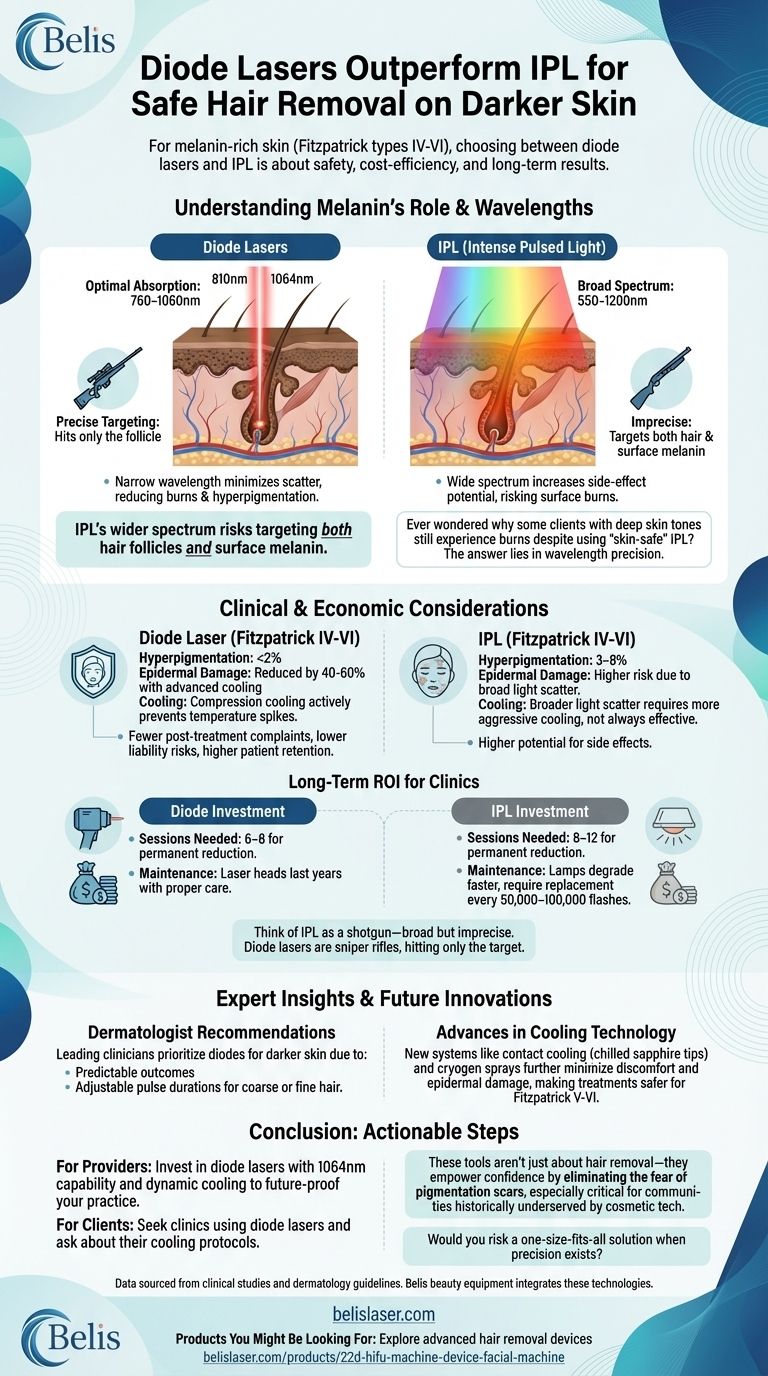
Melanin absorbs light optimally between 760–1060nm, making diode lasers (emitting at 810nm) inherently safer for darker skin than IPL’s broad spectrum (550–1200nm). The narrower wavelength minimizes scatter, reducing unintended epidermal heating—a key cause of burns or hyperpigmentation.
Key fact:
- IPL’s wider spectrum risks targeting both hair follicles and surface melanin, increasing side-effect potential.
Real-World Impact on Fitzpatrick IV-VI Patients
Studies show diode lasers with 1064nm settings (when available) and advanced cooling systems reduce complications in dark skin by 40–60% compared to IPL. For clinics, this translates to:
- Fewer post-treatment complaints
- Lower liability risks
- Higher patient retention
Interactive question:
Ever wondered why some clients with deep skin tones still experience burns despite using "skin-safe" IPL? The answer lies in wavelength precision.
Clinical and Economic Considerations for Providers
Reducing Liability: Diode vs. IPL Side Effect Rates
Data reveals:
- Hyperpigmentation rates: 3–8% for IPL vs. <2% for diode in Fitzpatrick IV-VI.
- Epidermal damage: IPL’s broader light scatter requires more aggressive cooling, which isn’t always effective. Diode’s compression cooling systems (like those in Belis devices) actively prevent temperature spikes.
Cost Justification: Long-Term ROI for Clinics
While diode lasers have higher upfront costs, they offer:
- Fewer sessions needed: Diode achieves permanent reduction in 6–8 sessions vs. IPL’s 8–12.
- Lower maintenance: IPL lamps degrade faster, requiring replacements every 50,000–100,000 flashes; diode laser heads last years with proper care.
Metaphor alert:
Think of IPL as a shotgun—broad but imprecise. Diode lasers are sniper rifles, hitting only the target.
Expert Insights and Future Innovations
Dermatologist Recommendations
Leading clinicians prioritize diodes for darker skin due to:
- Predictable outcomes: Controlled wavelength = fewer surprises.
- Adaptability: Adjustable pulse durations accommodate coarse or fine hair.
Advances in Cooling Technology
New systems like contact cooling (chilled sapphire tips) and cryogen sprays further minimize discomfort and epidermal damage, making treatments safer for Fitzpatrick V-VI.
Conclusion: Actionable Steps for Clinics and Clients
- For providers: Invest in diode lasers with 1064nm capability and dynamic cooling to future-proof your practice.
- For clients: Seek clinics using diode lasers and ask about their cooling protocols.
Human impact:
These tools aren’t just about hair removal—they empower confidence by eliminating the fear of pigmentation scars, especially critical for communities historically underserved by cosmetic tech.
Final thought:
Would you risk a one-size-fits-all solution when precision exists?
Note: All data sourced from clinical studies and dermatology guidelines. Belis beauty equipment integrates these technologies for medical cosmetology applications.
Products You Might Be Looking For:
Explore advanced hair removal devices
Visual Guide
Related Products
- Trilaser Diode Hair Removal Machine for Beauty Clinic Use
- Diode Tri Laser Hair Removal Machine for Clinic Use
- Diode Laser SHR Trilaser Hair Removal Machine for Clinic Use
- Clinic Diode Laser Hair Removal Machine with SHR and Trilaser Technology
- Clinic Use IPL and SHR Hair Removal Machine with Nd Yag Laser Tattoo Removal
Related Articles
- IPL vs. Diode Lasers: Which Delivers Safer, More Profitable Results for Diverse Skin?
- The Science Behind Multiple Laser Hair Removal Sessions: How Hair Growth Cycles Dictate Treatment Success
- Multilaser vs. Alexandrite Hair Removal: Which Offers Better Safety, Comfort & Skin Benefits?
- How Trilaser Hair Removal Works Better for All Skin & Hair Types
- How to Choose Between IPL and Diode Lasers for Different Skin Types