When selecting light-based skin treatments, the right device can mean the difference between glowing results and costly disappointments. This guide cuts through the noise to match your skin type and treatment goals with the optimal technology—balancing safety, efficacy, and long-term value.
Understanding Melanin and Light-Based Technologies
Light-based devices like IPL (Intense Pulsed Light) and diode lasers work by targeting melanin in hair follicles or pigmented lesions. But their effectiveness hinges on one critical factor: how your skin absorbs light.
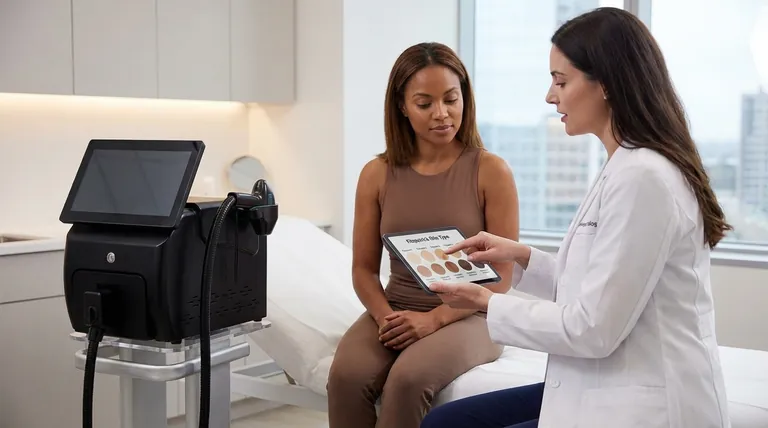
How Skin Tone (Fitzpatrick Scale) Impacts Device Selection
The Fitzpatrick scale (I–VI) classifies skin by its melanin content and reaction to UV exposure:
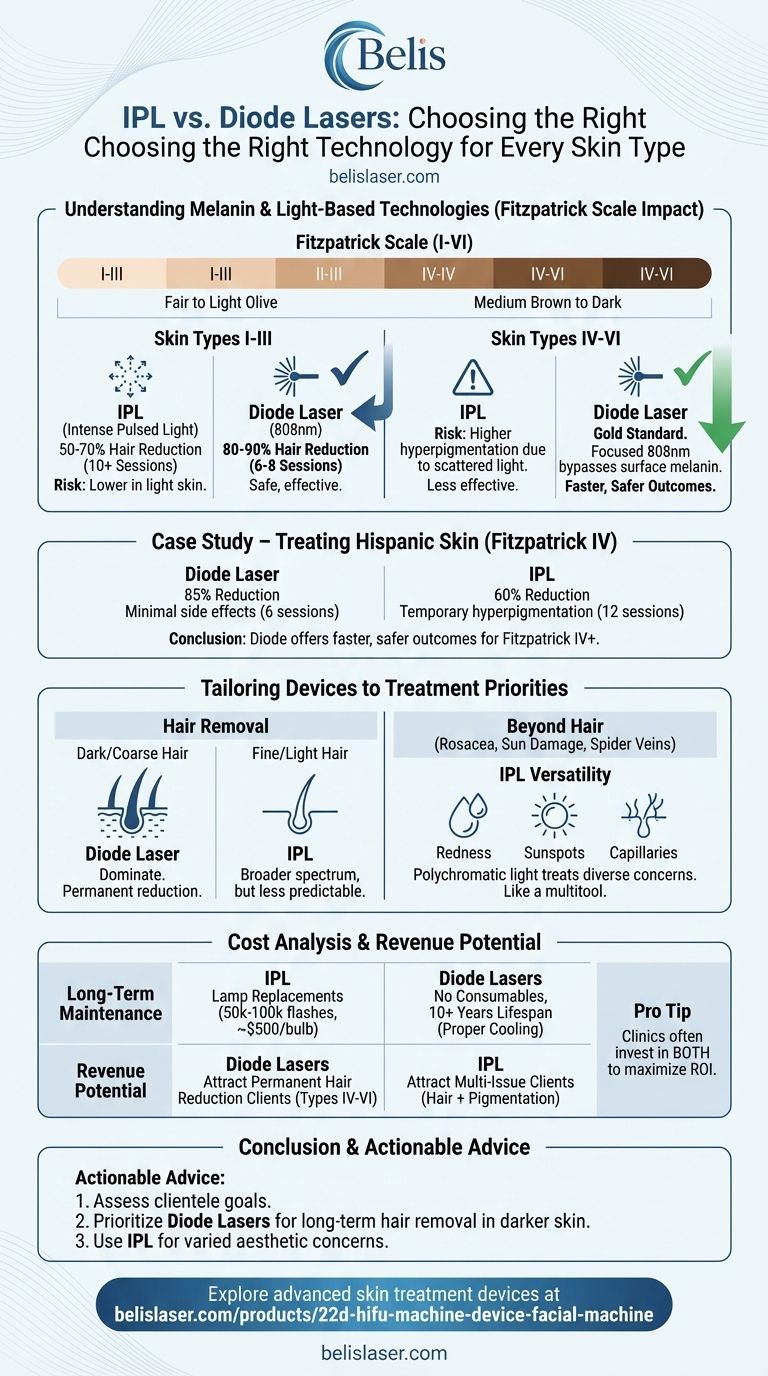
- Skin Types I–III (Fair to Light Olive): Both IPL and diode lasers are safe, but diode lasers (e.g., 808nm) achieve 80–90% hair reduction in 6–8 sessions, while IPL requires 10+ sessions for 50–70% reduction.
- Skin Types IV–VI (Medium Brown to Dark): Diode lasers are the gold standard. IPL’s scattered wavelengths risk hyperpigmentation in darker skin, whereas diode’s focused 808nm beam safely bypasses surface melanin.
Ever wondered why some clients see slower results? The answer often lies in mismatched devices and skin tones.
Case Study: Treating Hispanic Skin (Fitzpatrick IV) with Diode vs IPL
A clinic comparing devices for Hispanic clients found:
- Diode Laser: 85% hair reduction after 6 sessions, minimal side effects.
- IPL: 60% reduction after 12 sessions, with two cases of temporary hyperpigmentation.
Takeaway: For skin types IV+, diode lasers offer faster, safer outcomes.
Tailoring Devices to Treatment Priorities
Hair Removal: Dark, Coarse Hair vs Fine, Light Hair
- Dark/Coarse Hair: Diode lasers dominate. Their 808nm wavelength penetrates deep into follicles, disabling growth permanently.
- Fine/Light Hair: IPL’s broader spectrum can target subtle pigments, but results are less predictable.
Beyond Hair: Managing Rosacea, Sun Damage, and Spider Veins
IPL’s versatility shines here. Its polychromatic light (500–1200nm) treats:
- Redness/Rosacea by collapsing capillaries.
- Sunspots via selective photothermolysis.
Think of IPL as a multitool—less precise than a diode laser’s scalpel but handy for diverse concerns.
Cost Analysis Beyond the Price Tag
Long-Term Maintenance: Lamp Replacements vs Laser Diode Lifespan
- IPL: Requires bulb replacements every 50,000–100,000 flashes (~$500 per bulb).
- Diode Lasers: No consumables; diodes last 10+ years with proper cooling.
Revenue Potential: Which Device Attracts Broader Clientele?
- Diode Lasers: Appeal to clients seeking permanent hair reduction, especially skin types IV–VI.
- IPL: Attracts those wanting multi-issue treatments (e.g., hair + pigmentation).
Pro Tip: Clinics serving diverse demographics often invest in both devices to maximize ROI.
Conclusion: Matching Technology to Your Needs
- For Fitzpatrick IV+ or Coarse Hair: Diode lasers deliver higher efficacy and safety.
- For Lighter Skin or Multi-Concern Treatments: IPL provides cost-effective versatility.
Actionable Advice:
- Assess your clientele’s primary skin types and goals.
- Prioritize diode lasers for long-term hair removal in darker skin.
- Use IPL for salon settings addressing varied aesthetic concerns.
By aligning devices with biology and business needs, you’ll invest wisely—turning light energy into lasting results.
Products You Might Be Looking For:
Explore advanced skin treatment devices
Visual Guide
Related Products
- Trilaser Diode Hair Removal Machine for Beauty Clinic Use
- Clinic Diode Laser Hair Removal Machine with SHR and Trilaser Technology
- Diode Tri Laser Hair Removal Machine for Clinic Use
- Diode Laser SHR Trilaser Hair Removal Machine for Clinic Use
- IPL SHR Hair Removal Machine for Permanent Hair Removal
Related Articles
- Diode Laser Hair Removal: A Personalized Guide for Your Skin & Hair Type
- How SHR's Multi-Wavelength Technology Works for Every Skin and Hair Type
- How Trilaser Hair Removal Works Better for All Skin & Hair Types
- Diode vs. IPL: How to Choose the Right Technology for Your Clinic’s Skin Diversity and Goals
- Multilaser vs. Alexandrite Hair Removal: Which Offers Better Safety, Comfort & Skin Benefits?