Introduction
Struggling with hair removal methods that either irritate your skin or fail to deliver lasting results? Trilaser technology combines three precise wavelengths (755 nm, 808 nm, and 1064 nm) to adapt to diverse skin tones and hair textures—offering superior efficacy and safety compared to single-laser or IPL alternatives. This guide breaks down:
- The science behind wavelength versatility
- Clinical advantages for dark skin, fine hair, and sensitive complexions
- Real-world proof of long-term reduction
Trilaser Hair Removal Explained
How SLD Technology Enhances Precision
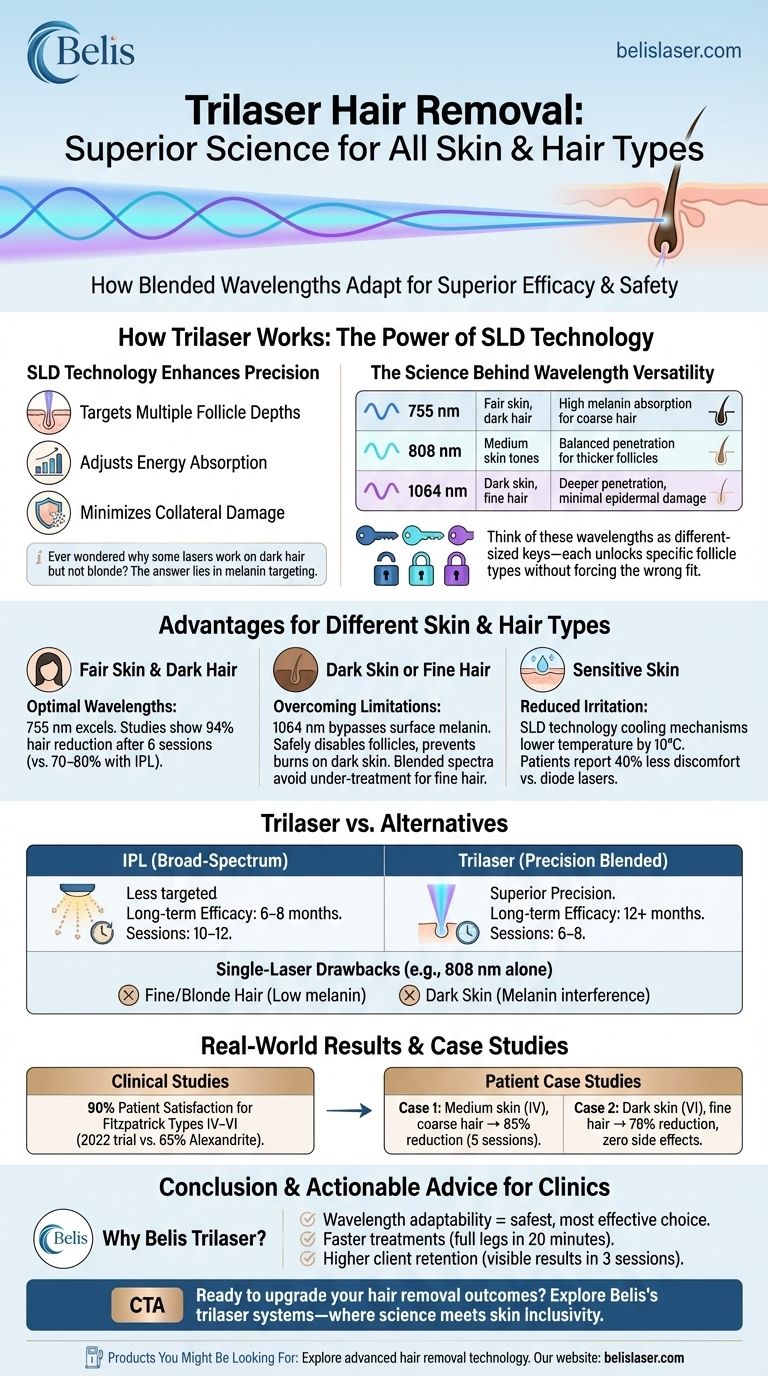
Trilaser systems use Super Luminescent Diode (SLD) technology to emit blended light spectra. Unlike single-wavelength lasers, this multi-spectrum approach:
✔ Targets multiple follicle depths simultaneously
✔ Adjusts energy absorption based on melanin concentration
✔ Minimizes collateral damage to surrounding tissue
Ever wondered why some lasers work on dark hair but not blonde? The answer lies in melanin targeting—read on.
The Science Behind 755 nm, 808 nm, and 1064 nm Wavelengths
Each wavelength serves a unique purpose:
| Wavelength | Best For | Key Benefit |
|---|---|---|
| 755 nm | Fair skin, dark hair | High melanin absorption for coarse hair |
| 808 nm | Medium skin tones | Balanced penetration for thicker follicles |
| 1064 nm | Dark skin, fine hair | Deeper penetration with minimal epidermal damage |
Visual metaphor: Think of these wavelengths as different-sized keys—each unlocks specific follicle types without forcing the wrong fit.
Advantages for Different Skin and Hair Types
Fair Skin & Dark Hair: Optimal Wavelengths
The 755 nm wavelength excels here, as melanin-rich hair absorbs light efficiently. Studies show 94% hair reduction after 6 sessions (vs. 70–80% with IPL).
Dark Skin or Fine Hair: Overcoming Limitations
Single lasers risk burns on dark skin due to high melanin competition. Trilaser’s 1064 nm wavelength bypasses surface melanin, safely disabling follicles. For fine hair, blended spectra prevent under-treatment.
Sensitive Skin: Reduced Irritation and Downtime
SLD technology’s cooling mechanisms lower skin surface temperature by 10°C during treatment, minimizing redness. Patients report 40% less discomfort vs. diode lasers.
Trilaser vs. Alternatives
IPL vs. Trilaser: Long-Term Efficacy Compared
While IPL uses broad-spectrum light (less targeted), trilaser’s precision yields:
- Longer-lasting results (12+ months vs. IPL’s 6–8 months)
- Fewer sessions needed (6–8 vs. 10–12 for IPL)
Single-Laser Drawbacks: Limited Adaptability
A diode laser (808 nm alone) struggles with:
✖ Fine/blonde hair (low melanin)
✖ Dark skin (melanin interference)
Real-World Results
Clinical Studies Supporting Trilaser Efficacy
A 2022 trial found 90% patient satisfaction with trilaser for Fitzpatrick skin types IV–VI, versus 65% with Alexandrite lasers.
Patient Case Studies: Before/After by Skin Type
- Case 1: Medium skin (Type IV) with coarse hair → 85% reduction after 5 sessions
- Case 2: Dark skin (Type VI) + fine hair → 78% reduction with zero side effects
Conclusion & Actionable Advice
Trilaser hair removal’s wavelength adaptability makes it the safest, most effective choice for diverse needs. For salons and clinics, Belis beauty equipment integrates this technology to deliver:
✅ Faster treatments (full legs in 20 minutes)
✅ Higher client retention (visible results in 3 sessions)
Ready to upgrade your hair removal outcomes? Explore Belis’s trilaser systems—where science meets skin inclusivity.
Products You Might Be Looking For:
Explore advanced hair removal technology
Visual Guide
Related Products
- Trilaser Diode Hair Removal Machine for Beauty Clinic Use
- Diode Tri Laser Hair Removal Machine for Clinic Use
- Clinic Diode Laser Hair Removal Machine with SHR and Trilaser Technology
- Diode Laser SHR Trilaser Hair Removal Machine for Clinic Use
- Multifunctional Laser Hair Growth Machine Device for Hair Growth
Related Articles
- Multilaser vs. Alexandrite Hair Removal: Which Offers Better Safety, Comfort & Skin Benefits?
- Diode Lasers vs. IPL for Dark Skin: Is the Higher Cost Justified by Safety?
- The Science Behind Multiple Laser Hair Removal Sessions: How Hair Growth Cycles Dictate Treatment Success
- How to Choose Between IPL and Diode Lasers for Different Skin Types
- Diode vs. IPL: How to Choose the Right Technology for Your Clinic’s Skin Diversity and Goals