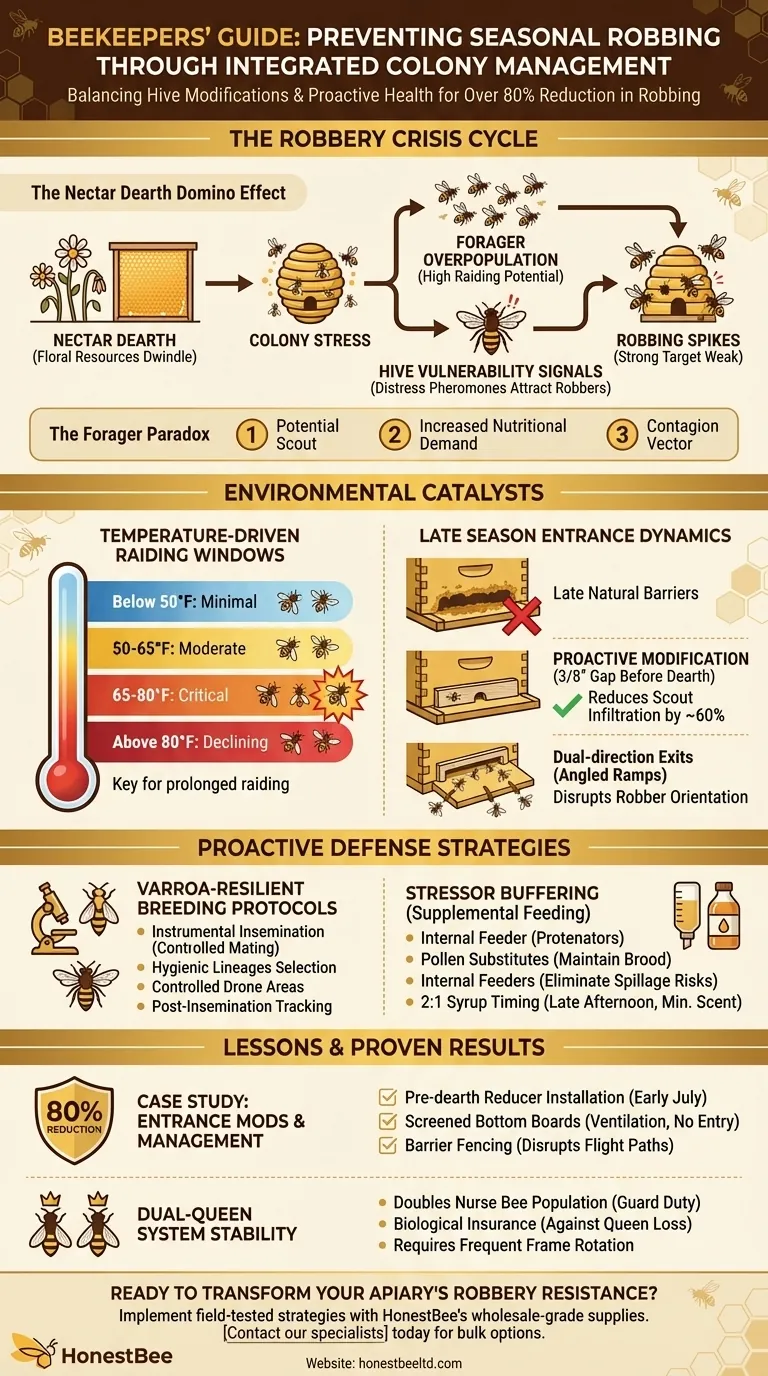
Seasonal robbing threatens apiaries when environmental stressors and colony vulnerabilities collide. This guide synthesizes field-tested strategies from leading apiaries, demonstrating how balancing hive modifications with proactive health management can reduce robbing incidents by over 80%.
Understanding the Robbery Crisis Cycle
The Nectar Dearth Domino Effect
When floral resources dwindle after peak flows, colonies enter survival mode. Research shows robbing spikes during late summer nectar gaps, as strong hives target weaker neighbors' stores. Key triggers include:
- Forager overpopulation: Colonies with excessive foragers during dearth periods exhibit heightened raiding behavior
- Temperature thresholds: Days with moderate warmth (around 70-80°F) enable prolonged raiding activity
- Hive vulnerability signals: Stressed colonies emit distress pheromones that attract robbers
The Forager Paradox
Dense forager populations—often viewed as a sign of colony strength—become liabilities during dearth. Each unemployed forager represents:
- A potential robber scout
- Increased nutritional demand on hive stores
- A contagion vector if robbing spreads mites/disease
Environmental Catalysts of Hive Conflict
Temperature-Driven Raiding Windows
Bee flight activity follows distinct thermal ranges:
| Temperature Range | Robbing Risk Level |
|---|---|
| Below 50°F | Minimal |
| 50-65°F | Moderate |
| 65-80°F | Critical |
| Above 80°F | Declining |
Data aggregated from commercial apiary logs
Late Season Entrance Dynamics
Hive architecture directly impacts robbery prevention:
- Propolis barriers: Bees naturally narrow entrances with resin, but often too late in the season
- Modified reducers: Installing 3/8" entrance gaps before dearth reduces scout infiltration by ~60%
- Dual-direction exits: Some apiaries report success with angled entrance ramps that disrupt robber orientation
Proactive Colony Defense Strategies
Varroa-Resilient Breeding Protocols
Instrumental insemination enables controlled mating of mite-resistant stock, though success requires:
✓ Queen selection from documented hygienic lineages
✓ Controlled drone congregation areas
✓ Post-insemination performance tracking
"Breeding programs that combine instrumental insemination with natural mating stations show the highest resistance retention." — Northern Bee Breeding Cooperative
Stressor Buffering Through Supplemental Feeding
Strategic nutrition prevents the colony distress signals that trigger robbing:
- Pollen substitutes: Maintain brood rearing during dearth to prevent workforce collapse
- Internal feeders: Eliminate spillage risks from open feeding
- 2:1 syrup timing: Late afternoon feeding minimizes daytime scent trails
Lessons from Robbery-Preventive Apiaries
Case Study: 80% Robbing Reduction via Entrance Mods
A Michigan apiary achieved consistent results through:
- Pre-dearth reducer installation (early July)
- Screened bottom board conversion for ventilation without entry points
- Barrier fencing to disrupt direct flight paths between hives
Dual-Queen System Stability
While requiring advanced management, maintaining two laying queens:
- Doubles nurse bee populations for guard duty
- Provides biological insurance against sudden queen loss
- Requires frequent brood frame rotation to prevent swarming
Ready to transform your apiary's robbery resistance? HONESTBEE equips commercial beekeepers and distributors with wholesale-grade entrance reducers, hygienic breeding supplies, and precision feeders—all designed to implement these proven strategies at scale. Contact our bee health specialists today for bulk purchasing options tailored to your operation size.
Visual Guide