Products Honey Processing Equipment Honey Testing Equipment
Toggle Categories

Get Instant Support

Choose your preferred way to connect with our team

Response Time

Within 8 hours on working days, 24 hours on holidays

Honey Testing Equipment

In the global honey trade, precision is the cornerstone of profitability and brand trust. HONESTBEE’s Honey Testing Equipment is engineered specifically for commercial apiaries, honey packers, and distributors who require rigorous quality assessment. Our instruments provide the data necessary to verify moisture levels, sugar concentrations, and purity, ensuring every batch meets regulatory and organic certification standards.

Our specialized category includes:

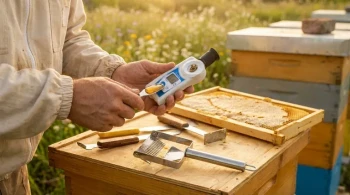
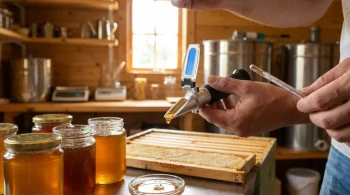
  • Precision Honey Refractometer Instrument: A robust, manual tool featuring Automatic Temperature Compensation (ATC) for stable and accurate moisture, Brix, and Baumé readings in various environmental conditions.
  • Digital Honey Refractometer: An advanced, high-speed solution offering instant digital readouts of moisture, Brix, refractive index (RI), and temperature, designed for efficiency in high-volume processing environments.

Elevating Honey Quality Standards: The Science and Engineering of Honey Testing Equipment

In the competitive landscape of the commercial honey industry, the difference between a premium product and a rejected batch often lies in a few percentage points of moisture. HONESTBEE understands that for commercial apiaries and large-scale distributors, honey is not just a natural sweetener—it is a high-value commodity that requires scientific validation. Our range of Honey Testing Equipment is designed to provide that validation with uncompromising accuracy and durability.

The Critical Importance of Professional Honey Analysis

Honey is a complex biological substance, and its market value is directly tied to its physical and chemical properties. Professional honey analysis is utilized to evaluate moisture content, sugar profiles, and potential residue levels. For producers aiming for organic certification, our testing equipment is an indispensable asset. It provides the empirical evidence needed to prove that the honey has been processed correctly and remains free from external contaminants. By validating the organic production process, commercial players can justify premium pricing strategies and build long-term trust with international buyers.

Furthermore, specialized testing equipment is the first line of defense against market-wide adulteration. With the rise of synthetic sugar syrups and diluted products, being able to quickly identify honey purity is a critical business capability. Our refractometers allow for rapid screening, protecting your brand from the legal and reputational risks associated with substandard honey.

Technical Features and Product Characteristics

HONESTBEE’s testing instruments are built to withstand the rigors of industrial beekeeping environments. We prioritize materials and designs that ensure longevity and consistent performance:

  1. High-Precision Optics: Our manual refractometers utilize high-quality prisms and lenses that provide sharp, clear scales for moisture (12-27%), Brix (58-90%), and Baumé (38-43°). This allows for granular quality control that simple tools cannot match.
  2. Automatic Temperature Compensation (ATC): Temperature fluctuations can significantly affect refractive index readings. Our ATC technology automatically adjusts for temperature changes between 10°C and 30°C, ensuring that your measurements remain accurate whether you are in a climate-controlled lab or out in the field.
  3. Digital Integration: For modern processing facilities, our Digital Honey Refractometers offer rapid-fire testing capabilities. With large LCD screens and one-button operation, these units reduce human error and speed up the quality control pipeline, displaying moisture and temperature results in seconds.
  4. Durable and Hygienic Construction: Following the principles of food-grade machinery, our tools are designed for easy cleaning and maintenance. The contact surfaces are resistant to the acidity of honey, preventing corrosion and ensuring that no metallic residues contaminate your samples.

The Principles of Refractometry in Honey Production

The fundamental principle behind our testing equipment is the refraction of light. When light enters a liquid, it changes direction; the angle of this change (the refractive index) is directly proportional to the concentration of dissolved solids in the liquid—in this case, sugar. By measuring this index, our refractometers can determine the exact sugar content (Brix) and, conversely, the water content (moisture) of the honey.

Understanding moisture levels is vital because honey with a water content above 18-19% is at high risk of fermentation by osmophilic yeasts. High moisture leads to spoilage, gas production, and off-flavors, which can ruin entire shipments. Our equipment allows producers to monitor the drying process and determine the optimal time for harvesting and bottling, ensuring the honey remains shelf-stable for years.

Operational Advantages for Commercial Apiaries

Investing in HONESTBEE testing equipment offers significant economic and operational advantages:

  • Waste Reduction: By identifying high-moisture batches early, you can take corrective measures (such as using a honey dehydrator) before fermentation occurs, saving tons of product from being downgraded to industrial grade.
  • Efficiency in Blending: For distributors who blend different honey varieties to achieve a specific moisture or sugar profile, our precision tools provide the data needed to calculate exact blending ratios, ensuring a consistent end product for the consumer.
  • Low Maintenance and High ROI: Our equipment is designed for minimal energy consumption (for digital models) and virtually zero maintenance for manual models. This low cost of ownership, combined with the high value of the honey protected, ensures an immediate return on investment.
  • Compact and Portable: Despite their industrial-grade accuracy, our refractometers are compact and portable, allowing for "at-the-hive" testing to assess ripeness before the extraction process even begins.

Why Choose HONESTBEE for Your Quality Control Needs?

HONESTBEE is more than a supplier; we are a partner in your commercial success. Our portfolio spans the full spectrum of beekeeping hardware, from hive-making machinery to these precision testing instruments. This holistic understanding of the honey value chain allows us to provide equipment that integrates perfectly into your existing workflow.

We recognize that different markets have different standards. Whether you are adhering to the Codex Alimentarius, EU honey directives, or specific national standards, our equipment provides the reliable data you need to compete globally. We also offer customizable services for large distributors who require specific calibration or bulk branding for their field teams.

Partner with the Experts in Bee Product Technology

Don't leave your honey quality to chance. In an industry where purity is the ultimate currency, ensure your business is equipped with the best analysis tools available. Our team of experts is ready to help you select the right testing suite for your specific production volume and technical requirements.

Are you ready to optimize your quality control process and secure your market position? Contact HONESTBEE today to discuss our wholesale pricing, bulk orders, and how our professional honey testing equipment can elevate your operations. Let’s work together to bring the highest quality honey to the global market.


REQUEST A QUOTE

Our professional team will reply to you within one business day. Please feel free to contact us!


Related Articles

The Unseen Cost of Heat: Preserving the Value in Commercial Honey Operations

The Unseen Cost of Heat: Preserving the Value in Commercial Honey Operations

Heat doesn't spoil honey, but it silently degrades its color, flavor, and value. Learn to protect your commercial honey from its true enemies.

Read more
The Sieve and the System: Why a Higher Mesh Number Means a Finer Particle

The Sieve and the System: Why a Higher Mesh Number Means a Finer Particle

Unlock processing efficiency by understanding the inverse logic of mesh sizes. A higher mesh number means more wires and smaller, finer holes.

Read more
Precision in a Drop: Why Your Honey Refractometer Might Be Lying to You

Precision in a Drop: Why Your Honey Refractometer Might Be Lying to You

Inaccurate honey readings often stem from hidden variables like temperature, crystals, and micro-impurities. Mastering sample preparation is key.

Read more
The Quality vs. Scale Dilemma: Why Your Honey Filtering Process Is Broken (And How to Fix It for Good)

The Quality vs. Scale Dilemma: Why Your Honey Filtering Process Is Broken (And How to Fix It for Good)

Struggling with clogged filters and inconsistent honey quality? Discover the root cause of this production bottleneck and the right equipment to fix it.

Read more
The Physics of Spoilage: Why a Single Number Defines the Fate of Your Honey Harvest

The Physics of Spoilage: Why a Single Number Defines the Fate of Your Honey Harvest

Honey's stability isn't guaranteed. Learn how moisture content above 18.6% activates yeast, leading to fermentation, and why measuring it is critical.

Read more
The Physics of Perfection: Why a Single Number Determines Your Honey's Fate

The Physics of Perfection: Why a Single Number Determines Your Honey's Fate

A honey refractometer measures moisture content to prevent fermentation. Learn how this tool removes guesswork and ensures a stable, high-quality harvest.

Read more
Beyond Brix: Why Your Honey's Future Depends on a Single, Temperature-Compensated Number

Beyond Brix: Why Your Honey's Future Depends on a Single, Temperature-Compensated Number

A honey refractometer isn't just a tool; it's risk management. Discover why ATC and a digital display are non-negotiable for honey quality.

Read more
Beyond the Numbers: Why Your Honey Yield Is Unpredictable and How to Fix It for Good

Beyond the Numbers: Why Your Honey Yield Is Unpredictable and How to Fix It for Good

Unpredictable honey yields hurting your bottom line? Discover the systemic reason your forecasts fail and how professional equipment can create a more profitable, resilient apiary.

Read more
The Invisible Threat: Why One Number Determines Your Entire Honey Harvest's Profitability

The Invisible Threat: Why One Number Determines Your Entire Honey Harvest's Profitability

Learn why honey moisture content is the silent killer of profits and how professional equipment can prevent fermentation and guarantee product stability.

Read more
The One Number That Determines Your Honey's Fate—And How to Control It

The One Number That Determines Your Honey's Fate—And How to Control It

Discover why traditional methods fail to prevent honey spoilage. Learn how measuring water content is the key to commercial quality and stability.

Read more
Beyond the Shine: The Hidden Physics of Honey Tank Sanitation

Beyond the Shine: The Hidden Physics of Honey Tank Sanitation

Discover why honey tank hygiene depends more on sanitary design—eliminating hidden 'dead zones' and poor welds—than just the material itself.

Read more
The Beekeeper's Dilemma: Managing Vertical Space and Colony Psychology

The Beekeeper's Dilemma: Managing Vertical Space and Colony Psychology

Learn how honey supers manage hive expansion, prevent swarming, and tap into bee psychology for a maximized, clean honey harvest.

Read more
Why Your Honey Refractometer Gives Inconsistent Readings—And How to Fix It for Good

Why Your Honey Refractometer Gives Inconsistent Readings—And How to Fix It for Good

Frustrated with inconsistent honey moisture readings? Discover the real reason your refractometer is failing and how a simple care routine can ensure lasting accuracy.

Read more
The Beehive's Balance Sheet: Why a 2:1 Syrup Is a Non-Negotiable Winter Asset

The Beehive's Balance Sheet: Why a 2:1 Syrup Is a Non-Negotiable Winter Asset

Learn why the 2:1 sugar-to-water ratio for fall feeding is a critical strategy based on hive psychology and energy conservation, not just food.

Read more
How to Achieve Precise Honey Moisture Measurement for Quality Assurance

How to Achieve Precise Honey Moisture Measurement for Quality Assurance

Learn precise honey moisture measurement techniques using refractometers to ensure quality, compliance, and optimal shelf life for your honey products.

Read more
Hive Architecture: How One Empty Box Prevents a Colony's Collapse

Hive Architecture: How One Empty Box Prevents a Colony's Collapse

A honey super isn't just for storage; it's a tool to manage a bee colony's psychology, preventing swarming by redirecting their instinct to expand.

Read more
Precision Is a Process, Not a Purchase: Mastering the Honey Refractometer

Precision Is a Process, Not a Purchase: Mastering the Honey Refractometer

Accurate honey moisture readings depend less on the refractometer itself and more on a disciplined process of calibration and temperature control.

Read more
The Sticky Bottleneck: Why Your Honey Filtering Fails and How to Fix It for Good

The Sticky Bottleneck: Why Your Honey Filtering Fails and How to Fix It for Good

Tired of clogged sieves and inconsistent honey quality? Discover the real reason your filtering process is failing and how the right equipment can solve it.

Read more
The Art of Apiary Architecture: How a Simple Box Prevents a Beehive from Self-Destructing

The Art of Apiary Architecture: How a Simple Box Prevents a Beehive from Self-Destructing

Learn how the honey super prevents a hive from becoming 'honey-bound'—a critical trigger for swarming and a major threat to honey production.

Read more
The Unseen Architecture of Trust: Calibrating the Honey Refractometer

The Unseen Architecture of Trust: Calibrating the Honey Refractometer

Accurate honey moisture is non-negotiable. Learn why refractometer calibration is a matter of trust, physics, and protecting your harvest from spoilage.

Read more