Within 8 hours on working days, 24 hours on holidays
Comb Honey Tools
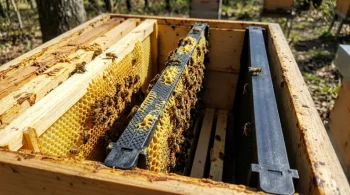
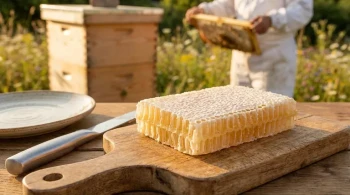
Comb honey represents the purest form of beekeeping, offering consumers honey exactly as the bees intended. HONESTBEE’s Comb Honey Tools are engineered for commercial apiaries seeking to capture this high-margin market with efficiency and precision. Our product range caters to both the traditional cut-comb method and the modern integrated cassette system, reducing labor costs while maximizing product aesthetics.
Our specialized inventory includes:
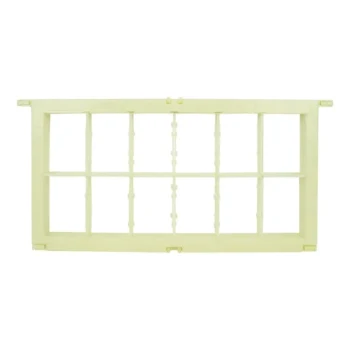
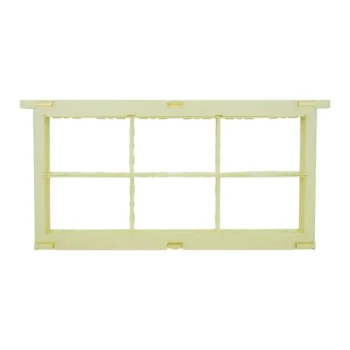
Sectional Comb Honey Frames (250g & 500g): Modular systems that produce uniform, retail-ready sections directly within the hive.
Heart-Shaped Honeycomb Cassettes: Innovative frames designed for the premium gift and specialty food markets.
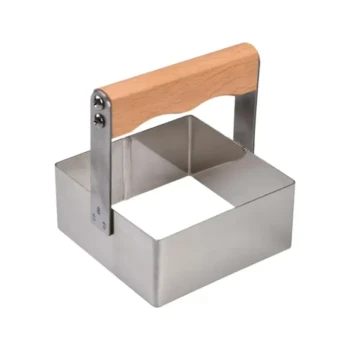
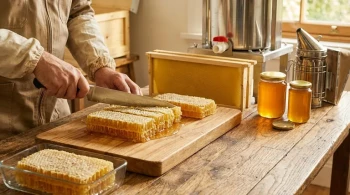
Heavy-Duty Stainless Steel Cutters: Precision tools for clean, waste-free portioning of wireless foundation combs.
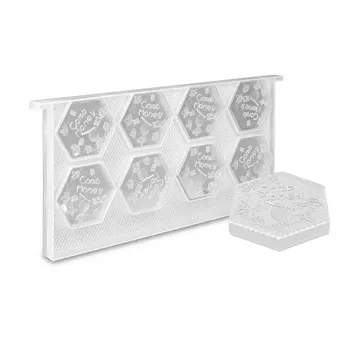
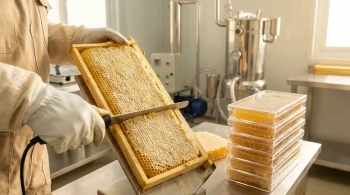
Plastic Honeycomb Cassette Boxes: Integrated hive-to-table solutions compatible with standard Langstroth equipment, ensuring high yield and food-grade safety.
The Science and Strategy of Professional Comb Honey Production
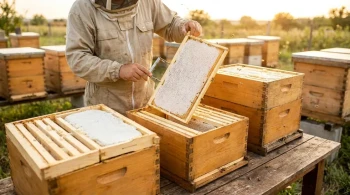
In the competitive landscape of the global honey market, comb honey stands out as a premium, unadulterated product that commands significantly higher price points than liquid honey. At HONESTBEE, we provide the machinery and specialized tools necessary to transition from basic extraction to high-value comb honey production. Our systems are designed to minimize hive disruption while maximizing the visual appeal and shelf-readiness of the final product.
Understanding the Two Primary Methods of Production
Commercial apiaries generally utilize two distinct methodologies for harvesting honeycomb, and HONESTBEE provides industry-leading equipment for both:
1. The Cut Comb Method
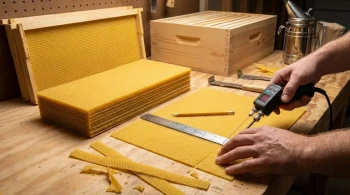
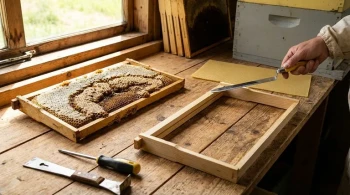
This traditional approach involves allowing bees to build comb on wireless wax foundations or within empty frames. Our Heavy-Duty Stainless Steel Honeycomb Cutters are essential for this process. Unlike standard kitchen knives, these professional tools are designed to maintain a consistent temperature and provide the necessary leverage to slice through wax and honey without crushing the delicate cell walls. This ensures a clean edge, which is vital for preventing leakage and maintaining the aesthetic integrity of the product in its packaging.
2. The Cassette and Section System
Modern commercial beekeeping has largely shifted toward cassette systems, such as our 250g and 500g Sectional Comb Honey Frames. This method eliminates the need for manual cutting and reduces the risk of contamination. Bees build the comb directly into food-grade plastic inserts. Once the cells are fully capped, the beekeeper simply removes the cassette, snaps on a lid, and the product is ready for the retail shelf. This 'hive-to-table' approach drastically reduces labor overhead and ensures that every portion is identical in weight and appearance.
Advanced Features and Material Excellence
All HONESTBEE comb honey tools are manufactured with a focus on durability and food safety. We understand that commercial equipment must withstand the rigors of high-volume use and frequent cleaning cycles.
Food-Grade ABS and Polypropylene: Our cassette boxes and frames are made from high-impact, food-safe plastics that do not leach chemicals or odors into the honey. This is critical for maintaining the organic profile of the product.
Precision Engineering: Our heart-shaped frames and sectional systems are designed to fit perfectly within standard Langstroth supers. This compatibility ensures that commercial distributors can integrate our tools into their existing infrastructure without the need for custom hive modifications.
Hygienic Design: All our tools are designed for easy sanitation. The stainless steel components are resistant to corrosion and support clean-in-place (CIP) procedures, ensuring that your facility meets international food safety standards.
Economic Advantages for Wholesalers and Distributors
For distributors, the HONESTBEE advantage lies in the scalability of our solutions. By providing tools that facilitate the production of uniform units (such as our 250g sections), we enable apiaries to enter the wholesale market with products that are easy to inventory, ship, and price.
Furthermore, utilizing prepped drawn combs or specialized cassettes provides a biological advantage to the colony. By reducing the energy the bees must spend on drawing out foundation, our systems allow the colony to focus immediately on nectar collection and honey storage. This acceleration is crucial during short, intense nectar flows, potentially increasing the total annual yield per hive.
Principles of Post-Harvest Quality Control
To ensure the longevity of the honeycomb, HONESTBEE equipment is designed to work in tandem with professional post-harvest protocols. We recommend that all cut comb and cassette sections undergo a freezing process. This biological control method effectively eliminates wax moth larvae and eggs without the use of chemicals, preserving the purity of the honey. Our tools are built to withstand these temperature fluctuations without becoming brittle or losing structural integrity.
Customization and Global Supply Solutions
As a leading supplier to commercial apiaries, HONESTBEE offers more than just off-the-shelf products. We specialize in customizable solutions for large-scale distributors. Whether you require specific branding on your honeycomb cassettes or specialized dimensions for regional hive types, our engineering team is ready to assist.
We pride ourselves on our professionalism and our ability to support the industry's largest players with consistent, high-quality hardware. Our machinery portfolio extends beyond hand tools to include honey-filling machines and hive-making equipment, providing a full-spectrum solution for your beekeeping enterprise.
Are you looking to scale your comb honey production or source professional-grade equipment for your distribution network?
What Are The Main Applications Of Styrofoam Bee Hives?
Styrofoam bee hives are primarily used for queen bee rearing, colony reproduction, and enhancing honey production. They are ideal for optimizing beekeeping practices, especially in spring and autumn, and are suitable for both beginners and experienced beekeepers.
What Is The Purpose Of A Hive Stand?
A hive stand is used to raise the beehive off the ground, protecting the colony from pests like ants and termites, and preventing moisture buildup. It also improves ventilation and makes hive management easier for beekeepers.
What Is The Principle Of A Solar Beeswax Melter?
A solar beeswax melter uses sunlight to melt beeswax, creating clean wax without additional energy sources. It typically consists of a container with a glass or plastic covering and a small inner container where melted wax collects. The heat from the sun melts the wax, which then drips into a pan of water, often passing through a filter.
What Is The Principle Of A Wax Melter?
The principle of operation of any wax melter involves heating honeycombs loaded into a tank to a temperature above +70°C. This causes the wax to melt into a liquid state, which is then filtered and used for its intended purpose. The process is the same regardless of the design or energy source used.
What Is The Principle Of A Beeswax Melter?
The principle of operation of any wax melter involves heating honeycombs loaded into a tank to a temperature above +70°C. This causes the wax to melt into a liquid state, which is then filtered and used for its intended purpose.
What Is The Application Of A Wax Foundation Roller?
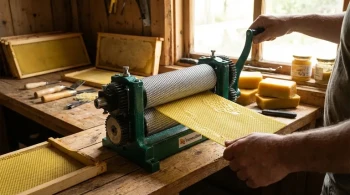
A wax foundation roller is used in beekeeping to create wax sheets for foundation comb. The process involves melting beeswax in a bain-marie, handling the wax with a wooden paddle, and rolling it using an embossing roller. The wax sheets are then cut to the appropriate size for use in beehives.
What Are The Main Applications Of Plastic Bee Hives?
Plastic bee hives are widely used in beekeeping for their durability and ease of management. They are ideal for enhancing hive productivity, efficient temperature regulation, and are particularly suited for queen rearing, garden beekeeping, and improving pollination efficiency.
What Is A Hive Tool Used For In Beekeeping?
A hive tool is a specialized pry bar used by beekeepers to separate hive parts glued together with propolis by honeybees. It is also used to scrape off unwanted propolis and burr comb. It is essential for inspecting and maintaining the hive.
What Are The Types Of Styrofoam Bee Hives Available?
Styrofoam bee hives come in various types, including mini mating nuc boxes (3-frame and 8-frame), twin queen breeding boxes, and 6-frame pro nuc boxes. Each type is designed to cater to specific beekeeping needs, such as queen rearing, colony management, and honey production.
What Are The Main Types Of Hive Stands?
The main types of hive stands include metal hive stands and plastic hive stands. Metal stands are durable and provide strong protection, while plastic stands are lightweight and designed for specific hive types like Langstroth hives.
What Are The Advantages Of Using A Solar Beeswax Melter?
The benefits of using a solar beeswax melter include sustainability, as it reduces the energy footprint by harnessing renewable solar energy; high-quality wax, as the slow and controlled melting process ensures clean and pure wax free from contaminants; and versatility, as it is compatible with frames from different hive systems and can be expanded for larger volumes of wax. Additionally, it is environmentally friendly, requires no energy, and is low maintenance, making it suitable for beginners.
What Are The Advantages Of A Wax Melter?
The advantages of a wax melter include standard dimensions, a comfortable and well-thought-out design, fast melting of honeycombs, obtaining high-quality non-burnt wax, and minimal intervention required from the beekeeper during the melting process.
What Are The Advantages Of A Steam Beeswax Melter?
The advantages of a steam wax melter include standard dimensions, a comfortable and well-thought-out design, fast melting of honeycombs, obtaining high-quality non-burnt wax, and minimal intervention required from the beekeeper during the melting process.
What Is The Principle Of A Wax Foundation Roller?
The principle of a wax foundation roller involves melting beeswax at a controlled temperature (between 70 and 80 degrees Celsius) in a bain-marie. The melted wax is then rolled using a heavy embossing roller, which is lubricated with soap and suds to facilitate the release of the wax sheets. The sheets are subsequently cut to size for use in beekeeping.
What Types Of Plastic Bee Hives Are Available?
There are several types of plastic bee hives available, including insulated plastic bee hive boxes made from food-grade HDPE for better temperature regulation and 4-frame plastic nuc boxes that are lightweight, durable, and stackable, perfect for various beekeeping activities.
What Are The Main Features Of A Hive Tool?
A hive tool is a multi-tool used in beekeeping for opening the hive, lifting and shifting frames or other hive parts, scraping away wax and propolis, and prying out or re-setting loose nails or staples. It is made of tempered steel and is typically 20 to 25 cm long, with a flattened end and a bent end for prying frames.
What Is The Principle Behind Styrofoam Bee Hives?
The principle of styrofoam bee hives is to provide superior insulation and lightweight construction. This helps maintain optimal hive temperatures, ensuring cooler conditions in summer and retaining heat in winter, which promotes healthier bee colonies and increased honey production.
How Does A Hive Stand Protect Against Pests?
A hive stand elevates the hive, making it harder for pests like ants and termites to access. Adding slippery substances like Vaseline to the legs can further deter pests from climbing up.
What Are The Applications Of A Solar Beeswax Melter?
A solar beeswax melter is used to melt beeswax using the heat of the sun, especially useful for beekeepers with large quantities of raw wax. The wax is placed in a pan inside the melter, and the melted wax is collected in a tray as it cools and solidifies. This purified wax can then be reused in various applications such as candles and cosmetics.
What Are The Applications Of A Wax Melter?
A wax melter simplifies and speeds up the wax melting process. It is ideal for applications such as candle making, cosmetics, and hair removal preparations. It ensures safety and efficiency by avoiding overheating and making it easier to remove wax from the pot.
What Are The Applications Of A Beeswax Melter?
Beeswax is used to polish furniture and other surfaces, and it is also used in the production of candles and cosmetics.
What Are The Advantages Of Using A Wax Foundation Roller?
The advantages of using a wax foundation roller include the production of wax sheets that are more readily accepted by bees for drawing comb. These wax sheets are more natural for bees compared to plastic foundations and do not require heavy wax coating. Additionally, the process of using a wax foundation roller is efficient and helps in maintaining the health of the hive and increasing honey production.
What Are The Principles Behind Choosing Plastic Bee Hives Over Wooden Ones?
When choosing between plastic and wooden bee hives, consider factors like environmental impact, durability, ease of maintenance, and cost. Plastic hives are durable, easy to clean, and impervious to wax moths, but they are more expensive and non-renewable compared to wooden hives, which are natural and renewable but can split, warp, and are vulnerable to wax moth damage.
What Is The Principle Behind Using A Hive Tool?
The principle behind using a hive tool is its multipurpose functionality. It is used for scraping unwanted burr comb, prying hive boxes apart, picking up frames, and removing nails. It is considered an essential tool for beekeepers to maintain and inspect hives effectively.
What Are The Advantages Of Using Styrofoam Bee Hives Over Wooden Hives?
Styrofoam bee hives offer several advantages over wooden hives, including earlier colony formation, better honey yield, improved colony reproduction, increased overwintering success, quicker spring setup, higher honey production, and a significant weight advantage. Additionally, they provide healthier conditions for bees due to their insulation properties.
What Are The Advantages Of Using A Hive Stand?
Using a hive stand provides several advantages, including improved ventilation, protection from pests and moisture, reduced strain on the beekeeper's back during inspections, and enhanced hive stability.
What Are The Main Features Of A Solar Beeswax Melter?
The main features of a solar beeswax melter include high-strength double-glazed glass that reaches up to 120°C under direct sunlight, a stainless steel plate for uniform heat distribution, and a durable wax tray that provides ample space for melting wax from hive frames. These features ensure efficient, even melting and easy cleaning.
What Are The Main Types Of Wax Melters?
The main types of wax melters include steam wax melters, electric wax melters, and solar wax melters. Each type has its own unique features and is suited for different applications, such as small apiaries, industrial use, or eco-friendly beekeeping.
What Types Of Wax Foundation Rollers Are Available?
There are several types of wax foundation rollers available, including fully automatic beeswax embossing machines, economy manual beeswax embossing mills, electric flatting and embossing machines, and manual beeswax comb foundation machines. These machines vary in terms of automation, capacity, and features, catering to different beekeeping needs.
What Are The Advantages Of Using Plastic Bee Hives?
Plastic bee hives offer several advantages: they come pre-assembled and require no additional assembly; they are impervious to wax moths; they hold up well in extractors and are easy to clean; black plastic frames make it easier to spot queen eggs; and they are very durable, resisting splitting and warping. Additionally, they can reduce the need for winter wraps, decrease labor, and promote faster colony buildup in the spring, enhancing honey production and overall hive productivity.
What Are The Advantages Of Using A Hive Tool?
The advantages of using a hive tool include its ability to separate brood and super chambers, loosen frames, scrape hive parts, and remove debris. Made of tempered steel, it is durable and typically 20 to 25 cm long, with a flattened end and a bent end for prying frames, making it an indispensable tool for beekeepers.
How Do Styrofoam Bee Hives Improve Overwintering Success?
Styrofoam bee hives improve overwintering success by retaining heat more effectively than wooden hives. This helps maintain a stable and warm environment inside the hive, reducing the risk of bee mortality during colder months and ensuring a stronger colony in the spring.
Why Is Ventilation Important In A Hive Stand?
Ventilation is crucial for maintaining a healthy bee colony. A hive stand allows air to circulate beneath the hive, preventing moisture buildup and reducing the risk of diseases that thrive in damp conditions.
How Does A Steam Wax Melter Work?
A steam wax melter works by directing hot steam into a container where frames with honeycombs are placed. The steam is generated in a hermetically sealed container where water boils, and the steam is then directed through a hose into the wax melter, melting the wax.
What Types Of Beeswax Melters Are Available?
There are several types of beeswax melters available, including electric commercial beeswax melters for factory use, steam beeswax melters for wax processing, solar beeswax melters for eco-friendly wax extraction, and compact beeswax melters for candle making and crafting.
Why Is A Hive Tool Essential For Beekeepers?
A hive tool is essential for beekeepers because it allows them to effectively separate hive parts, scrape off propolis and burr comb, and perform routine maintenance tasks. Its multifunctional design makes it a crucial tool for ensuring the health and productivity of the hive.
How Does A Hive Stand Benefit Beekeepers?
A hive stand reduces the need for beekeepers to bend down too far, which can be beneficial for their back. It also makes hive inspections and management more convenient and efficient.
This website uses cookies to enhance your browsing experience,
analyze site traffic, and serve better user experiences. By continuing to use this site, you consent to our use of
cookies. Learn more in our cookie policy.