Within 8 hours on working days, 24 hours on holidays
Uncapping Roller
Efficient honey extraction begins with the right preparation. Uncapping rollers are essential tools for commercial beekeepers and honey processors who prioritize speed and frame preservation. Unlike traditional slicing knives, these rollers use a perforation technique to open cells without removing the wax, significantly reducing waste and allowing the bee colony to spend less energy on repairs.
Our specialized inventory includes:
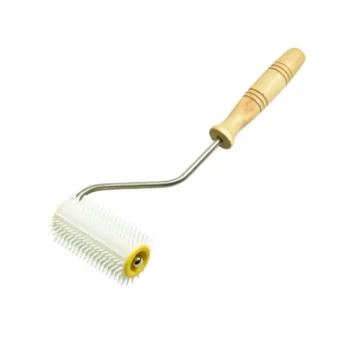
Professional Honey Uncapping Roller: Engineered with high-grade stainless steel needles and an ergonomic handle for heavy-duty, long-term commercial use.
Lightweight Plastic Uncapping Roller with Tines: A maneuverable and cost-effective option designed for fast, gentle perforation across large volumes of honey frames.
Whether used as a primary tool or for finishing missed spots after mechanical uncapping, these rollers ensure maximum honey yield with minimal hive disruption.
The Strategic Advantage of Uncapping Rollers in Commercial Apiaries
In the competitive world of commercial beekeeping, efficiency is measured not just by the speed of the harvest, but by the health and productivity of the colony following extraction. The uncapping roller represents a sophisticated yet simple solution to one of the most labor-intensive steps in honey production. At HONESTBEE, we understand that for distributors and large-scale apiaries, every second saved and every gram of wax preserved translates directly into higher profit margins. Our uncapping rollers are meticulously designed to bridge the gap between manual precision and industrial throughput.
The Science of Perforation vs. Slicing
Traditional uncapping methods, such as using electric or steam-heated knives, rely on slicing the entire wax capping off the frame. While effective, this process creates a significant amount of "cappings wax" which must then be processed, and more importantly, it leaves the honeycomb cells open and damaged.
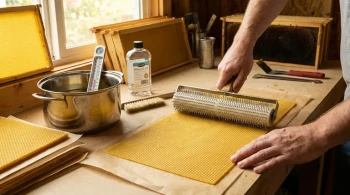
The principle behind the uncapping roller is fundamentally different. Instead of removal, it utilizes a series of precision-engineered needles or tines to perforate the wax seal. This action breaks the surface tension of the wax, creating enough passage for honey to be drawn out by the centrifugal force of an extractor, yet leaving the majority of the wax structure intact on the frame.
Why Wax Preservation Matters for Your Bottom Line
For a commercial honey producer, the most valuable asset is the bees' labor. It is a biological fact that honeybees must consume approximately 6 to 10 pounds of honey to produce just one pound of wax. When a beekeeper uses an uncapping roller, they are effectively "recycling" the bees' previous work.
Faster Hive Recovery: Because the cell walls are left largely intact, the bees do not need to rebuild the comb from scratch. They can immediately begin cleaning and refilling the cells after the frame is returned to the hive.
Increased Annual Yield: By reducing the energy and resources bees spend on wax production, that energy is redirected toward foraging and honey accumulation, leading to more frequent harvests throughout the season.
Reduced Mess: Rollers create significantly fewer wax crumbs than scratchers or knives, keeping your honey sumps and filters cleaner for longer periods.
Engineering Excellence: Material and Ergonomics
Our product line caters to different operational needs without compromising on quality.
The Professional Stainless Steel Series
This tool is the workhorse of the modern honey room. The needles are crafted from high-grade, food-safe stainless steel that resists corrosion even when exposed to the acidic nature of certain honey varieties. The weight of the roller is balanced to provide natural pressure, reducing the physical strain on the operator’s wrist and arm during ten-hour harvesting shifts. The ergonomic handle is designed for a non-slip grip, even when hands are sticky with honey.
The Lightweight High-Density Plastic Series
For operations prioritizing speed and maneuverability, our plastic tine rollers offer a lightweight alternative. These are molded from impact-resistant, food-grade polymers. The tines are shaped to enter and exit the wax with minimal "pull," ensuring that the comb isn't lifted from the foundation—a common issue with inferior manual tools.
Integration into a Professional Workflow
While the uncapping roller is a powerful standalone tool, it is also an indispensable secondary tool in automated lines. Even the most advanced automatic uncapping machines can miss low spots on uneven frames. Instead of slowing down the line to adjust the machine, operators can use an uncapping roller to quickly "hit" those missed patches as the frames move toward the extractor. It is faster than a capping scratcher and provides more consistent results across the frame surface.
Maintenance and Longevity
At HONESTBEE, we design for the long haul. Our rollers are easy to sanitize; they can be cleaned with warm water (below the melting point of wax to avoid buildup) or specialized food-grade degreasers. The axle components are built to withstand thousands of rotations without seizing, ensuring that your investment lasts through many seasons of heavy use.
Partner with HONESTBEE: Wholesale and Customization
As a leading provider of beekeeping machinery and tools, HONESTBEE offers more than just off-the-shelf products. We understand that distributors and large apiaries often have specific requirements. We provide:
Wholesale Pricing: Tiered pricing structures that support the growth of distributors and commercial enterprises.
Customization and OEM: Looking to brand these tools for your own company? We offer customization options for handle colors, materials, and logo engraving to help you build your brand identity.
Global Logistics: Our experience in supplying the full spectrum of beekeeping equipment means we have the logistics network to deliver your orders safely and on time, anywhere in the world.
Our commitment is to provide the hardware that powers the honey industry. From hive-making machinery to the smallest hand tool, our portfolio is built on a foundation of professional expertise and a deep understanding of apiculture.
Ready to upgrade your harvesting equipment or expand your wholesale inventory? Our team of experts is standing by to provide technical specifications, bulk quotes, and customized solutions tailored to your specific market needs. Experience the difference that professional-grade tools make in your production efficiency.
An uncapping tub is used in beekeeping to enhance the honey extraction process. It helps in removing the wax caps from honeycombs efficiently, ensuring high-quality honey production.
What Is A Frame Machine?
A frame machine is a specialized piece of equipment used in beekeeping to automate the production and assembly of bee frames. These machines can perform various tasks such as forming, stapling, punching holes, and fitting eyelets into bee frames, making the process more efficient and precise.
What Are The Common Uses Of A Hive Box?
A hive box is commonly used for scraping propolis and burr comb off the hive, prying apart boxes (supers) joined by wax or propolis, scraping debris off the hive’s floorboards, cleaning honey and beeswax off frames during extraction, levering open covers glued shut with propolis, banging loose nails into wood, loosening frames that are attached, opening bee packages and nucs, scraping out bee stingers without releasing venom, opening a bee smoker that’s jammed shut, and separating vertical hive components.
What Is A Strainer For Honey Used For?
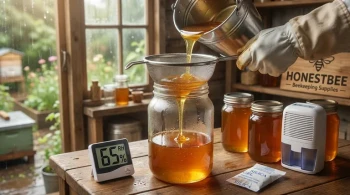
A strainer for honey is used to filter raw honey, removing impurities such as wax particles and debris while retaining beneficial components like pollen. It is essential for ensuring the purity and quality of honey during processing.
What Is The Principle Of Pressing Honey?
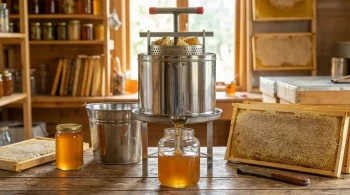
The principle of pressing honey involves forcing honey out of the comb using a honey press. This process should be done as soon as possible after harvesting. The honeycombs are broken into small pieces and placed in suitable sealable plastic containers. A honey screw press with a honey chamber and a wooden cover is used, and the cover is pressed down by a spindle to extract the honey. After pressing, the honey is warmed using a water-bath and then strained.
What Are The Main Types Of Uncapping Tubs Available?
The main types of uncapping tubs include those made from durable 304 stainless steel and those constructed from plastic. Both types are designed to optimize honey extraction and improve beekeeping productivity.
What Are The Main Types Of Frame Machines?
The main types of frame machines include the Semi-Auto Bee Frame Assembly and Stapling Machine, Mini Desktop Bee Hive Frame Forming Making Machine, Frame Punching Hole Puncher Machine, and Frame Eyelets Assembly Machine. Each type is designed for specific tasks in the bee frame production process.
What Are The Features Of A Hive Box?
A regular hive tool is essentially a smaller, flatter version of a crowbar. It has a long end for leverage and a smaller curved edge for prying in tight spaces. It typically costs between $8-15. A hive tool focuses on the essentials and has everything you need to do a complete hive inspection.
What Are The Main Types Of Strainers For Honey?
The main types of strainers for honey include nylon honey strainers (e.g., square filter cloths and conical filter bags), stainless steel strainers (e.g., double-layer sieves and triangle support strainers), and integrated systems like honey storage tanks with built-in strainers.
What Are The Advantages Of Pressing Honey?
Pressing honey offers several advantages. It is relatively clean and tidy because there is no need for uncapping and subsequent dripping on the way to the extractor. Unlike the crush-and-strain method, which involves squeezing or crushing the comb by hand, pressing honey requires minimal cleanup and avoids excessive air exposure. Additionally, filtered honey has a longer shelf life and is easier to pour, making it more convenient for everyday use.
What Are The Advantages Of Using A Stainless Steel Uncapping Tub?
A stainless steel uncapping tub offers durability, resistance to corrosion, and ease of cleaning. These features ensure long-term use and maintain the quality of the honey extraction process.
What Types Of Hive Boxes Are Available?
There are several types of hive boxes available, including Plastic Insulated Bee Hive Boxes, Honey Flow Garden Bee Hive, Langstroth Bee Hives, and Langstroth Honey Bee Box Hive Boxes. Each type is designed for specific beekeeping needs and offers unique features such as temperature regulation, easy honey extraction, and customizable options.
How Does A Strainer For Honey Work?
A strainer for honey works by filtering raw honey through a mesh or sieve, which traps impurities like wax and debris while allowing clean honey to pass through. Some systems use centrifugal force to extract honey from wax cells, followed by filtration for purity.
What Are The Applications Of Pressing Honey?
Pressing honey is primarily used for extracting honey from honeycombs. The process involves breaking honeycombs into small pieces and placing them in sealable plastic containers. A honey screw press with a honey chamber and a wooden cover is then used to press down and extract the honey. This method is efficient and ensures that the honey is extracted quickly and cleanly, making it suitable for both home and commercial use.
How Does An Uncapping Tub Improve Honey Extraction Efficiency?
An uncapping tub streamlines the honey extraction process by providing a dedicated space for uncapping honeycombs. This reduces the time and effort required, enhancing overall productivity in beekeeping.
What Are The Advantages Of Using A Frame Machine?
The advantages of using a frame machine include increased efficiency and precision in bee frame production. These machines can automate repetitive tasks, reduce manual labor, and ensure consistent quality. Additionally, they can handle large volumes of production, making them ideal for beekeeping supply manufacturers.
What Are The Advantages Of Using A Hive Box?
The advantages of using a hive box include enhanced hive productivity through efficient temperature regulation, easy management, durable design, and eco-friendly materials. Hive boxes are ideal for both novice and professional beekeepers, offering features that simplify beekeeping tasks and improve overall hive health.
What Are The Advantages Of Using A Strainer For Honey?
The advantages of using a strainer for honey include retaining natural components like pollen, ensuring honey purity, and being cost-effective for small-scale beekeepers. Stainless steel strainers are durable and easy to clean, while nylon strainers are reusable and efficient.
What Are The Main Types Of Honey Press Machines?
The main types of honey press machines include manual and electric models. Manual honey presses are typically made of stainless steel and are portable, making them ideal for home use and small-scale operations. Electric honey press machines, on the other hand, offer higher efficiency and are suitable for larger-scale operations. Both types are designed to be durable, easy to clean, and efficient in extracting honey from honeycombs.
What Features Should I Look For In An Uncapping Tub?
When selecting an uncapping tub, look for features such as durable construction (e.g., stainless steel or high-quality plastic), an integrated strainer system, and ease of cleaning. These features ensure efficient and high-quality honey extraction.
What Are The Applications Of Frame Machines?
Frame machines are primarily used in the beekeeping industry for the production and assembly of bee frames. They are essential for manufacturers and beekeepers who need to produce large quantities of frames efficiently and with high precision. These machines are also used in honey production and beekeeping supply manufacturing.
Why Is Stainless Steel A Popular Material For Honey Strainers?
Stainless steel is popular for honey strainers because it is durable, easy to clean, and resistant to corrosion. It ensures long-lasting performance and maintains the purity of honey without introducing contaminants.
Why Is It Important To Clean A Honey Press?
Cleaning a honey press is crucial to remove stuck wax and honey residues, which can attract bacteria, fungi, and insects. Microbial growth can contaminate future honey crops, potentially ruining them and harming the beekeeping operation. Additionally, clean equipment ensures the quality of beehive products, which directly impacts their market value. Regular cleaning also extends the lifespan and performance of the press.
Can Nylon Strainers Be Reused For Honey Filtration?
Yes, nylon strainers are designed to be reusable. They are durable, easy to clean, and provide efficient filtration, making them a practical choice for beekeepers.
What Features Should I Look For In A Honey Strainer?
When choosing a honey strainer, look for features like fine mesh filtration (e.g., 160 mesh), durable materials (e.g., stainless steel or nylon), ease of cleaning, and compatibility with your beekeeping setup. Anti-drip features and heated nozzles can also enhance efficiency.
Are Strainers For Honey Suitable For Small-scale Beekeepers?
Yes, strainers for honey are ideal for small-scale beekeepers. They are cost-effective, easy to use, and allow for the retention of natural honey components like pollen, making them a practical solution for small operations.
What Is The Benefit Of Using A Double-layer Honey Strainer?
A double-layer honey strainer provides enhanced filtration by removing larger impurities in the first layer and finer particles in the second layer. This ensures a higher level of purity and clarity in the final honey product.
How Do I Clean A Honey Strainer?
To clean a honey strainer, rinse it with warm water to remove honey residue. For stainless steel strainers, use a mild detergent if necessary. Nylon strainers can be washed with water and air-dried. Ensure all parts are thoroughly dried before reuse.
This website uses cookies to enhance your browsing experience,
analyze site traffic, and serve better user experiences. By continuing to use this site, you consent to our use of
cookies. Learn more in our cookie policy.