Within 8 hours on working days, 24 hours on holidays
Bottle Unscrambler
Elevate your honey production efficiency with HONESTBEE’s advanced Bottle Unscramblers. Essential for modern commercial apiaries, these machines automate the labor-intensive process of sorting and positioning empty containers for the filling line. By eliminating manual bottle handling, our equipment ensures a consistent, high-speed flow that prevents production bottlenecks.
Our current lineup includes:
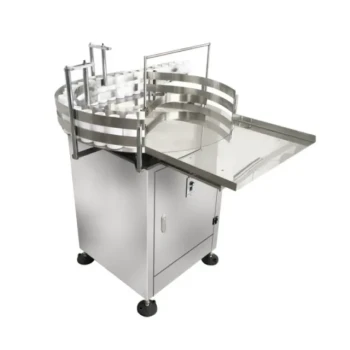
Automated Rotary Bottle Unscrambler: A versatile solution perfect for diverse jar shapes, offering stable and gentle handling for delicate honey containers.
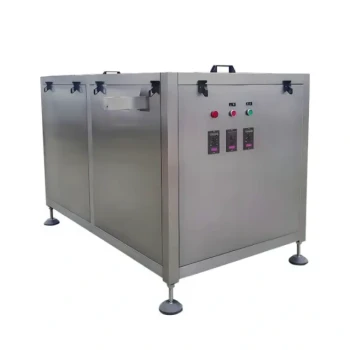
Fully Automatic High-Speed Centrifugal Bottle Unscrambler: Engineered for high-volume operations, capable of processing up to 200 bottles per minute with precision.
Crafted from food-grade stainless steel, these machines are built to withstand the rigorous demands of the honey industry while maintaining the highest hygiene standards.
The Science of Efficiency: HONESTBEE Bottle Unscrambling Solutions
In the competitive landscape of commercial honey production, the difference between a profitable season and a logistical nightmare often lies in the efficiency of your packaging line. HONESTBEE specializes in bridging the gap between raw honey harvesting and retail-ready products through our robust Bottle Unscrambler category. These machines are not merely accessories; they are the mechanical heartbeat of a fully automated honey bottling facility.
Understanding the Mechanism: How Our Bottle Unscramblers Work
The fundamental goal of a bottle unscrambler is to take a bulk quantity of randomly oriented containers and deliver them to a conveyor belt in a uniform, upright, and organized fashion. HONESTBEE utilizes two primary engineering principles to achieve this:
Centrifugal Force (High-Speed Models): Our centrifugal unscramblers use a high-speed rotating disk to move bottles toward the outer edge of a bowl. Precise mechanical guides and sensors detect the orientation of each bottle. If a bottle is not correctly positioned, it is recirculated, while correctly oriented bottles are smoothly transitioned to the discharge conveyor. This method is ideal for lightweight plastic containers and high-velocity lines.
Mechanical Rotary Sorting: Our rotary models are designed for versatility. Using a series of rotating pockets and orientation hooks, these machines gently flip and turn jars of various materials—including glass and high-density plastics—ensuring they land upright on the production line without scuffing or damage.
Key Characteristics and Industry-Leading Advantages
1. Food-Grade Construction and Hygiene
At HONESTBEE, we understand that honey is a premium natural product. Our unscramblers are constructed primarily from SUS304 or SUS316 stainless steel. These materials are resistant to corrosion, easy to sanitize, and fully compliant with international food safety standards. The open design of our machinery allows for quick wash-downs, ensuring no residue or contaminants compromise your honey quality.
2. Versatility and Customization
Commercial apiaries often deal with a wide array of jar shapes—from classic hexagonal glass jars to modern squeeze bottles. Our bottle unscramblers feature adjustable railings and quick-change parts, allowing operators to switch between different container sizes in minutes. We offer customized molds and sorting disks tailored specifically to your unique packaging portfolio.
3. Intelligent Control Systems
Equipped with state-of-the-art PLC (Programmable Logic Controller) systems and intuitive HMI touchscreens, our machines offer seamless integration into your existing production line. Optical sensors monitor the flow of bottles, automatically slowing down or speeding up the unscrambling process based on the demands of the honey filler downstream. This synchronization prevents jams and reduces mechanical wear.
4. Labor Cost Reduction and ROI
Manual bottle loading is one of the most significant labor drains in a honey packing house. By implementing an automated unscrambler, a single operator can manage the entire feeding process by simply dumping bulk bottles into a large-capacity hopper. This allows your workforce to focus on quality control and value-added tasks, significantly improving your return on investment (ROI) within the first few months of operation.
Why Choose HONESTBEE for Your Bottling Infrastructure?
HONESTBEE isn't just a machinery supplier; we are your partners in beekeeping industry growth. We recognize that commercial distributors and large-scale apiaries require equipment that is both durable and technologically advanced.
Our unscramblers are designed to handle the specific challenges of the honey industry. Unlike general-purpose machines, we account for the weight of glass honey jars and the specific center of gravity of uniquely shaped containers. Furthermore, our global supply chain ensures that spare parts and technical support are always within reach, minimizing downtime during the peak honey harvest season.
Integration with the HONESTBEE Ecosystem
A bottle unscrambler is the first step in a high-performance production line. HONESTBEE provides a complete turnkey solution, ensuring our unscramblers integrate perfectly with our:
Honey Filling Machines: Precision volumetric filling for minimal waste.
Capping and Sealing Machines: Ensuring airtight preservation of honey enzymes.
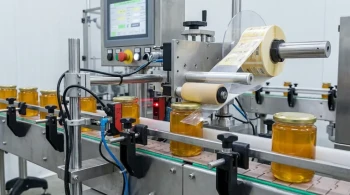
Labeling Machines: Professional finishing for retail excellence.
By sourcing your entire line from HONESTBEE, you ensure mechanical compatibility and a unified control interface, simplifying training for your staff and streamlining maintenance schedules.
Transform Your Production Capacity Today
Is your honey bottling line struggling to keep up with market demand? Are you looking to modernize your facility with equipment that reflects the professionalism of your brand? HONESTBEE is ready to provide the engineering expertise and high-quality machinery you need to scale your operations.
We offer comprehensive customization services, including layout design and machine synchronization, to ensure our bottle unscrambler fits perfectly into your existing floor plan. Our team of experts is available to discuss your specific throughput requirements and container specifications.
Don't let manual processes hold your business back.Click here to contact our technical team and request a personalized quote or a consultation on how to optimize your honey production line. Experience the HONESTBEE advantage—where advanced technology meets the tradition of beekeeping.
FAQ
What Is A Honey Spinner Used For?
A honey spinner, also known as a honey extractor, is used in the artisanal honey industry to extract honey from honeycombs efficiently. It is ideal for beekeepers who focus on quality honey production and packaging.
What Is A Hive Tool Used For In Beekeeping?
A hive tool is a specialized pry bar used by beekeepers to separate hive parts glued together with propolis by honeybees. It is also used to scrape off unwanted propolis and burr comb. It is essential for inspecting and maintaining the hive.
What Is The Purpose Of A Hive Stand?
A hive stand is used to raise the beehive off the ground, protecting the colony from pests like ants and termites, and preventing moisture buildup. It also improves ventilation and makes hive management easier for beekeepers.
What Are The Main Types Of Honey Spinners?
Honey spinners come in various types, including electric and manual models. Electric honey spinners, such as the 8-frame and 48-frame extractors, are designed for efficiency and durability, while manual honey spinners, like the 3-frame extractor, offer a gentle extraction process.
What Are The Main Features Of A Hive Tool?
A hive tool is a multi-tool used in beekeeping for opening the hive, lifting and shifting frames or other hive parts, scraping away wax and propolis, and prying out or re-setting loose nails or staples. It is made of tempered steel and is typically 20 to 25 cm long, with a flattened end and a bent end for prying frames.
What Are The Main Types Of Hive Stands?
The main types of hive stands include metal hive stands and plastic hive stands. Metal stands are durable and provide strong protection, while plastic stands are lightweight and designed for specific hive types like Langstroth hives.
How Does A Honey Spinner Work?
A honey spinner works by using centrifugal force to extract honey from honeycombs. The frames containing honeycomb are placed inside a cylindrical drum and spun gently at first, gradually increasing speed. The honey is flung out of the comb and collected at the bottom or sides of the extractor. After extraction, the honey may be filtered to remove debris or wax particles.
What Is The Principle Behind Using A Hive Tool?
The principle behind using a hive tool is its multipurpose functionality. It is used for scraping unwanted burr comb, prying hive boxes apart, picking up frames, and removing nails. It is considered an essential tool for beekeepers to maintain and inspect hives effectively.
How Does A Hive Stand Protect Against Pests?
A hive stand elevates the hive, making it harder for pests like ants and termites to access. Adding slippery substances like Vaseline to the legs can further deter pests from climbing up.
What Are The Advantages Of Using A Honey Spinner?
Using a honey spinner offers several advantages, including precise and efficient honey extraction, increased productivity, and consistent quality. It also reduces labor costs and ensures a professional touch in the honey production process.
What Are The Advantages Of Using A Hive Tool?
The advantages of using a hive tool include its ability to separate brood and super chambers, loosen frames, scrape hive parts, and remove debris. Made of tempered steel, it is durable and typically 20 to 25 cm long, with a flattened end and a bent end for prying frames, making it an indispensable tool for beekeepers.
What Are The Advantages Of Using A Hive Stand?
Using a hive stand provides several advantages, including improved ventilation, protection from pests and moisture, reduced strain on the beekeeper's back during inspections, and enhanced hive stability.
Why Is A Hive Tool Essential For Beekeepers?
A hive tool is essential for beekeepers because it allows them to effectively separate hive parts, scrape off propolis and burr comb, and perform routine maintenance tasks. Its multifunctional design makes it a crucial tool for ensuring the health and productivity of the hive.
Why Is Ventilation Important In A Hive Stand?
Ventilation is crucial for maintaining a healthy bee colony. A hive stand allows air to circulate beneath the hive, preventing moisture buildup and reducing the risk of diseases that thrive in damp conditions.
How Does A Hive Stand Benefit Beekeepers?
A hive stand reduces the need for beekeepers to bend down too far, which can be beneficial for their back. It also makes hive inspections and management more convenient and efficient.
This website uses cookies to enhance your browsing experience,
analyze site traffic, and serve better user experiences. By continuing to use this site, you consent to our use of
cookies. Learn more in our cookie policy.