Within 8 hours on working days, 24 hours on holidays
Honey Pump
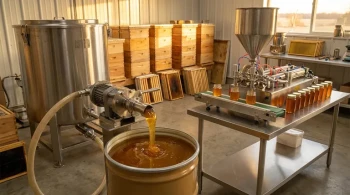
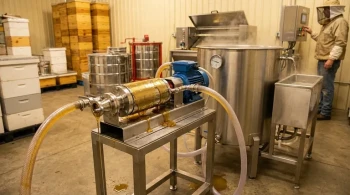
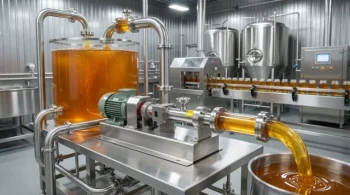
Honey pumps are essential for modern honey processing, facilitating the seamless transfer of honey from extractors and filters to storage tanks or bottling lines. At HONESTBEE, we provide high-performance solutions designed to handle the unique viscosity of honey without compromising its natural quality or texture. Our category includes:
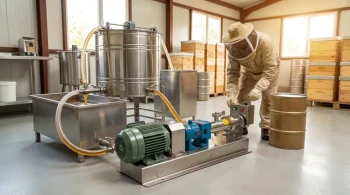
Economy Gear Pump: A versatile and efficient solution for transferring viscous liquids, ideal for cost-conscious commercial setups and distributors.
Screw Honey Pump: Utilizing a precision screw mechanism and food-grade 304 stainless steel, this pump offers superior durability and gentle handling for large-scale processing plants.
Whether you are managing a growing apiary or a high-volume distribution center, our pumps ensure a smooth, regulated flow for every stage of your production.
Optimizing Honey Transfer: High-Efficiency Honey Pumps for Commercial Production
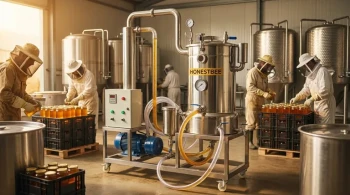
In the professional beekeeping industry, the transition from extraction to bottling is a critical phase where efficiency meets quality control. HONESTBEE’s range of honey pumps is specifically engineered to bridge this gap, providing commercial apiaries and honey distributors with the reliable machinery needed to move high-viscosity liquids safely and effectively. Unlike standard water pumps, our honey pumps are designed to respect the delicate nature of honey, ensuring that the final product maintains its clarity, flavor, and nutritional profile.
The Principle of Positive Displacement
At the core of our honey pump technology is the principle of positive displacement. Because honey is a non-Newtonian fluid with high viscosity, it requires specific mechanical force to move through a system without causing cavitation or overheating.
Our Gear Honey Pumps work by trapping a fixed amount of honey between rotating gears, then discharging it as the gears mesh. This provides a steady, pulse-free flow that is easily adjustable. For more sensitive applications, our Screw Honey Pumps use a progressing cavity principle. A stainless steel rotor turns within a stator, creating a sequence of small, sealed cavities that move the honey toward the discharge port. This method is exceptionally gentle, minimizing shear stress and preventing the incorporation of air bubbles—essential for maintaining the premium appearance of your honey.
Key Characteristics and Material Excellence
Every HONESTBEE pump is built to meet the rigorous demands of food-grade production environments.
304 Stainless Steel Construction: Hygiene is paramount in commercial beekeeping. Our pumps utilize high-quality 304 stainless steel for all contact parts, ensuring corrosion resistance, easy cleaning, and compliance with international food safety standards.
Handling High Viscosity: Whether you are processing thick Manuka honey or standard wildflower honey, our pumps are equipped with high-torque motors capable of handling varying densities and temperatures without stalling.
Adjustable Flow Rates: Precision is key in bottling and blending. Our systems allow for regulated pumping rates, enabling operators to sync the pump speed with the capacity of their honey-filling machines or filtration units.
Durability and Low Maintenance: Designed for the long-haul, our pumps feature heavy-duty seals and robust drive systems that minimize downtime during the peak harvest season.
The Strategic Advantage for Wholesalers and Apiaries
Investing in a dedicated honey pump system offers more than just movement; it offers a competitive edge. By automating the transfer process, you significantly reduce labor costs and eliminate the waste associated with manual pouring or inefficient gravity-fed systems. Furthermore, the ability to move honey smoothly through fine-mesh filters under pressure allows for a cleaner end product with higher market value.
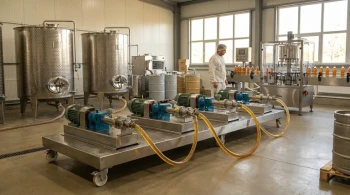
At HONESTBEE, we understand that every commercial operation has unique requirements. A large-scale distributor may require a high-capacity screw pump integrated into a fully automated line, while a mid-sized apiary might prefer the versatility and footprint of our economy gear pumps. We specialize in providing the hardware that grows with your business.
Customization and Professional Support
HONESTBEE is more than a supplier; we are your partner in apiculture infrastructure. We offer customizable options, including different motor voltages for international markets, various hose connection sizes, and integrated control systems. Our expertise in honey-themed machinery ensures that every piece of equipment we provide contributes to the success of your brand.
Are you looking to upgrade your processing facility or expand your wholesale distribution catalog? Our team of experts is ready to help you select the ideal honey pump configuration for your specific volume and viscosity requirements.
What Is The Principle Of A Honey Filtering Machine?
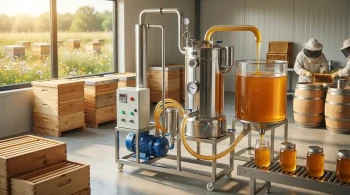
A honey filtering machine removes impurities such as wax, bee parts, and debris by passing honey through a series of progressively finer filters. The honey is heated to liquefy crystals, ensuring smoother filtration. Some machines use pressure systems to enhance speed and efficiency, resulting in clear, pure honey ready for bottling.
What Are The Advantages Of Using A Honey Filtering Machine?
A honey filtering machine provides several benefits, including the removal of impurities such as wax particles, bee parts, pollen, and debris, which improves the taste, texture, and overall quality of honey. It also ensures consistency in texture and appearance, extends the shelf life by removing contaminants, helps comply with regulatory standards, and enhances marketability by producing visually appealing honey.
What Are The Applications Of A Honey Filtering Machine?
A honey filtering machine is used to remove impurities such as wax particles, bee parts, pollen, and debris, which improves the taste, texture, and overall quality of honey. It ensures consistency in texture and appearance, extends the shelf life by removing contaminants, helps comply with regulatory standards, and enhances marketability by producing visually appealing honey. In the artisanal honey industry, these machines are used by producers who focus on the quality of honey and its packaging, using semi-automatic and fully automatic machines to meet quality requirements without compromising the end product.
What Features Does A Honey Filtering Machine Offer?
A honey filtering machine removes impurities such as wax, bee parts, and debris by passing honey through a series of progressively finer filters. The honey is heated to liquefy crystals, ensuring smoother filtration. Some machines use pressure systems to enhance speed and efficiency, resulting in clear, pure honey ready for bottling.
This website uses cookies to enhance your browsing experience,
analyze site traffic, and serve better user experiences. By continuing to use this site, you consent to our use of
cookies. Learn more in our cookie policy.