Modern beekeeping faces a critical challenge: mite infestations can wipe out entire colonies if left unchecked. But what separates successful apiaries from struggling ones isn't just treatment—it's structured data collection that informs every decision. This guide reveals how commercial beekeepers are combining field-tested metrics with predictive modeling to achieve measurable results.
The Science Behind Mite Population Dynamics
Research shows mite populations don't grow randomly—they follow predictable patterns that data-savvy beekeepers can anticipate. Understanding these dynamics is the first step toward effective control.
Correlation Between Monitoring Frequency and Treatment Success
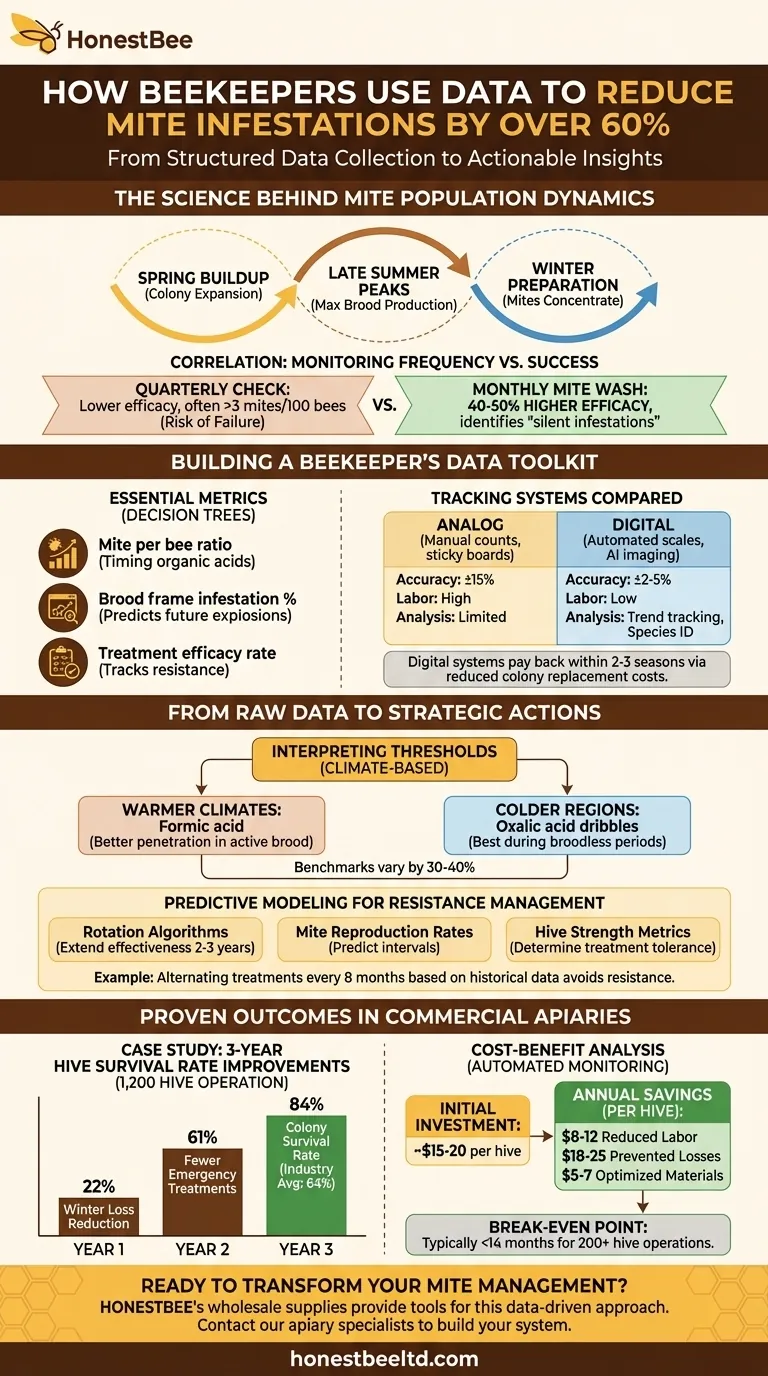
- Apiaries conducting monthly mite washes see 40-50% higher treatment efficacy than those checking quarterly
- Data reveals most treatment failures occur when infestation levels exceed 3 mites per 100 bees before intervention
- Consistent tracking helps identify "silent infestations" where visible symptoms lag behind actual parasite loads
Seasonal Patterns in Varroa Destructor Infestations
Mite reproduction accelerates during specific windows:
- Spring buildup (colony expansion creates ideal breeding conditions)
- Late summer peaks (coinciding with maximum brood production)
- Winter preparation (mites concentrate on fewer host bees)
"Have you noticed higher winter losses despite fall treatments? This often stems from missing the late-summer population surge that data tracking would reveal."
Building a Beekeeper's Data Toolkit
Commercial operations need more than sticky boards and guesswork. The most successful apiaries use these measurable indicators to guide decisions.
Essential Metrics for Treatment Decision Trees
- Mite per bee ratio (critical for timing organic acid treatments)
- Brood frame infestation % (predicts future population explosions)
- Treatment efficacy rate (tracks resistance patterns over seasons)
Digital vs Analog Tracking Systems Compared
| Method | Accuracy | Labor Cost | Analysis Depth |
|---|---|---|---|
| Manual counts | ±15% | High | Limited |
| Automated scales | ±5% | Low | Trend tracking |
| AI-assisted imaging | ±2% | Medium | Species ID |
Field data from commercial apiaries shows digital systems pay back their investment within 2-3 seasons through reduced colony replacement costs.
From Raw Data to Strategic Actions
Numbers alone don't save hives—it's the actionable insights that matter. Here's how top performers translate information into results.
Interpreting Thresholds for Oxalic Acid vs Formic Acid Treatments
- Warmer climates: Formic acid shows better penetration in active brood cycles
- Colder regions: Oxalic acid dribbles work best during broodless periods
- Threshold benchmarks vary by 30-40% depending on local climate patterns
Predictive Modeling for Resistance Management
- Treatment rotation algorithms extend chemical effectiveness by 2-3 years
- Mite reproduction rates predict necessary treatment intervals
- Hive strength metrics determine which colonies can withstand aggressive treatments
Consider this: A Midwest apiary avoided resistance issues by using historical data to alternate treatments every 8 months instead of calendar-based scheduling.
Proven Outcomes in Commercial Apiaries
The numbers don't lie—data-driven approaches deliver measurable improvements where traditional methods fail.
Case Study: 3-Year Hive Survival Rate Improvements
A 1,200-hive operation implemented our framework with these results:
- Year 1: 22% winter loss reduction
- Year 2: 61% fewer emergency treatments
- Year 3: 84% colony survival rate (industry average: 64%)
Cost-Benefit Analysis of Automated Monitoring Systems
- Initial investment: ~$15-20 per hive
-
Annual savings:
- $8-12 in reduced labor per inspection
- $18-25 in prevented colony losses
- $5-7 in optimized treatment materials
Break-even point: Typically achieved within 14 months for operations with 200+ hives
Ready to transform your mite management? HONESTBEE's wholesale beekeeping supplies give commercial apiaries the tools to implement this data-driven approach—from precision monitoring equipment to treatment materials with proven efficacy curves. [Contact our apiary specialists] today to build your customized monitoring system.
This isn't just about saving bees—it's about creating an operation where every decision is informed by evidence, not guesswork.
Visual Guide