The Silent Crisis in Hot, Dry Seasons
Beekeepers face alarming colony losses during extreme heat and drought—but why? Research reveals these conditions trigger a biological domino effect that disrupts every aspect of honey bee survival. Understanding these mechanisms is the first step toward building climate-resilient apiaries.
How Heat and Drought Disrupt the Honey Bee's World
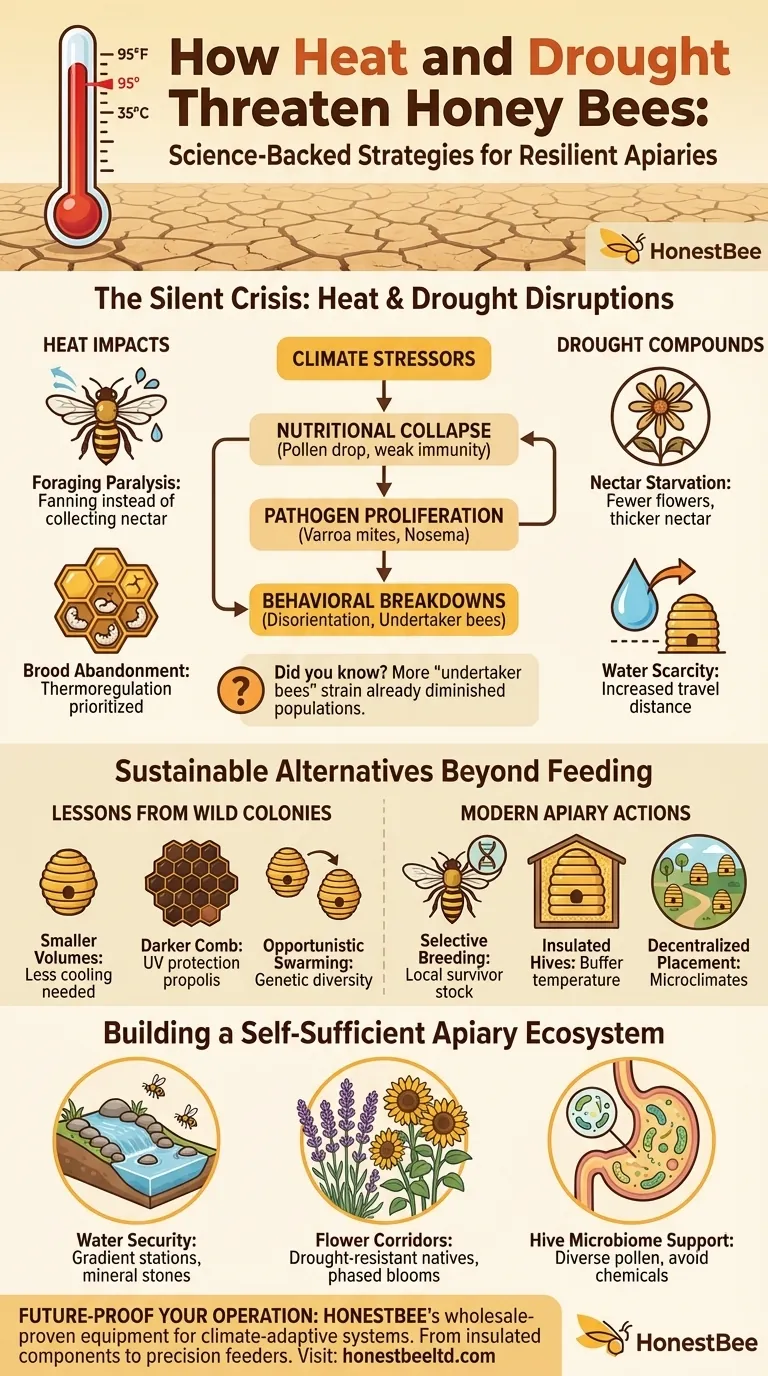
Honey bees thrive within a narrow temperature range. When external temperatures exceed 95°F (35°C), colonies activate emergency cooling behaviors:
- Foraging paralysis: Bees stop nectar collection to fan hives, reducing food stores
- Brood abandonment: Larvae die as worker bees prioritize thermoregulation
- Water scarcity: Dwindling natural sources force bees to travel farther, increasing mortality
Drought compounds these issues by:
- Starving colonies of nectar-producing flowers
- Thickening remaining nectar, making it indigestible
- Depleting propolis sources critical for hive repairs
From Starvation to Stress: The Biological Domino Effect
The cascade of climate stressors leads to:
Nutritional collapse
- Pollen diversity drops by over 60% in drought conditions
- Limited protein intake weakens immune systems
Pathogen proliferation
- Varroa mites reproduce faster in heat-stressed colonies
- Nosema infections spike when bees consume contaminated water
Behavioral breakdowns
- Heat-disoriented foragers fail to return to hives
- Queen rearing decreases as workers prioritize survival
Have you noticed your colonies producing more "undertaker bees" during heatwaves? This adaptive behavior—where workers remove dead hive mates—strains already diminished populations.
Sustainable Alternatives Beyond Supplemental Feeding
While sugar syrups and pollen substitutes provide short-term relief, they don't address root causes. Modern apiaries must emulate the resilience of wild colonies.
Lessons from Resilient Wild Colonies
Feral bees surviving harsh climates exhibit three key traits:
- Smaller hive volumes - Compact nests require less cooling energy
- Darker comb construction - Natural propolis layers provide UV protection
- Opportunistic swarming - Splitting before drought season increases genetic diversity
Beekeepers can replicate these advantages through:
- Selective breeding from local survivor stock
- Insulated hive designs that buffer temperature swings
- Decentralized apiary placements near multiple microclimates
Building a Self-Sufficient Apiary Ecosystem
Transform your operation into a climate buffer with these steps:
Water security
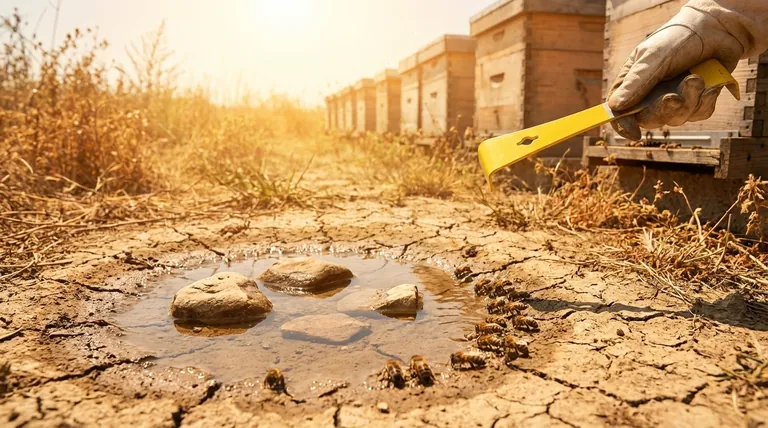
- Install gradient-based watering stations (bees prefer shallow, sloping surfaces)
- Add mineral stones to prevent water source contamination
Flower corridors
- Plant drought-resistant natives like lavender and sunflowers in phased bloom cycles
- Maintain wild forage zones within 1 mile of hives
Hive microbiome support
- Avoid commercial wax foundations that may contain stress-inducing chemicals
- Encourage beneficial gut bacteria through diverse pollen sources
Consider this: A single season of strategic habitat investment can reduce your emergency feeding costs by nearly half while boosting winter survival rates.
Ready to future-proof your beekeeping operation? HONESTBEE's wholesale-proven equipment helps commercial apiaries build climate-adaptive systems—from insulated hive components to precision feeders. Discover how our solutions help distributors equip beekeepers for the era of climate extremes.
Visual Guide