Beekeeping success hinges on recognizing subtle colony health signals and implementing timely interventions. This guide reveals how commercial apiaries can leverage comb patterns, pollen monitoring, and space management to maintain thriving hives—reducing costly interventions while maximizing productivity.
Assessing Colony Vitality in Spring Management
Spring hive inspections provide critical insights into colony health before peak nectar flows. Savvy beekeepers treat comb patterns and space utilization as real-time diagnostics rather than waiting for visible distress signals.
Comb Patterns as Colony Health Barometers
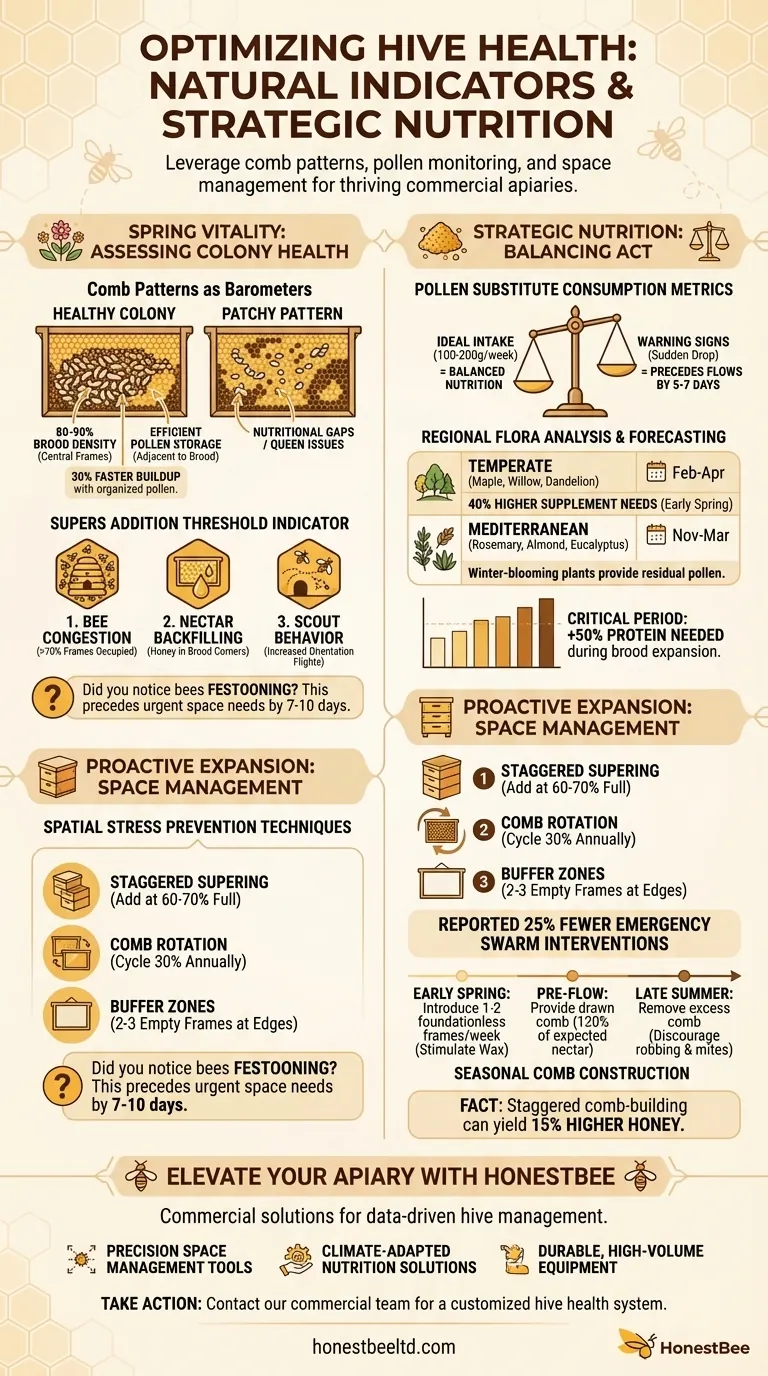
- Brood Frame Density: Healthy colonies maintain 80-90% worker brood coverage on central frames. Patchy patterns often indicate nutritional gaps or queen issues.
- Pollen Storage Location: Colonies storing pollen adjacent to brood nests (rather than scattered) demonstrate efficient nutrient allocation—a key predictor of swarm prevention success.
Research shows colonies that organize pollen within three frames of brood areas achieve 30% faster spring buildup compared to disorganized storage.
The Supers Addition Threshold Indicator
Delayed super addition remains a leading cause of swarming in Langstroth hives. Watch for these telltale signs:
- Bee Congestion: Over 70% of frames occupied with bees during daylight hours
- Nectar Backfilling: Honey stores appearing in brood chamber corners
- Scout Behavior: Increased orientation flights near hive entrances
Have you noticed bees festooning between frames? This natural "measuring" behavior often precedes urgent space needs by 7-10 days.
Natural Nutrition Versus Supplemental Feeding
Modern apiaries balance seasonal pollen availability with strategic supplementation—a dance requiring regional knowledge and precise timing.
Pollen Substitute Consumption Metrics Decoded
- Ideal Intake: Colonies consuming 100-200g/week of supplements typically show balanced nutrition
- Warning Signs: Sudden drops in substitute consumption often precede natural pollen flows by 5-7 days
Temperate climate apiaries report 40% higher supplement needs in early spring compared to Mediterranean operations, where winter-blooming plants provide residual pollen.
Regional Flora Analysis for Pollen Forecasting
| Climate Type | Key Pollen Sources | Critical Monitoring Period |
|---|---|---|
| Temperate | Maple, Willow, Dandelion | February - April |
| Mediterranean | Rosemary, Almond, Eucalyptus | November - March |
Colonies expanding brood areas during these windows require 50% more protein resources. Proactive beekeepers cross-reference local bloom maps with weekly hive weight measurements to anticipate needs.
Proactive Hive Expansion Strategies
Space management separates reactive beekeeping from predictive colony stewardship. These techniques prevent stress while maintaining optimal productivity.
Spatial Stress Prevention Techniques
- Staggered Supering: Add boxes when 60-70% of current space fills, allowing bees to maintain optimal cluster density
- Comb Rotation: Cycle 30% of brood frames annually to prevent compaction of pupal casings
- Buffer Zones: Maintain 2-3 empty frames at hive edges for temperature regulation
Apiaries implementing these methods report 25% fewer emergency swarm interventions during peak flows.
Seasonal Comb Construction Timelines
- Early Spring: Introduce 1-2 foundationless frames per week to stimulate wax production
- Pre-Flow: Provide drawn comb equivalent to 120% of expected nectar volume
- Late Summer: Remove excess comb to discourage robbing and mite harborage
Did you know? Colonies given staggered comb-building opportunities show 15% higher honey yields than those with sudden space increases.
Elevate Your Apiary's Potential with HONESTBEE
Commercial beekeepers trust HONESTBEE's wholesale equipment solutions to support data-driven hive management. Our foundation frames and pollen supplement systems help distributors equip apiaries with:
- Precision space management tools
- Climate-adapted nutrition solutions
- Durable equipment built for high-volume operations
Take Action: Contact our commercial team today to design a hive health system matching your regional pollination contracts and honey flow patterns.
By interpreting colony signals as nature's dashboard and responding with measured interventions, professional beekeepers transform seasonal challenges into predictable productivity—the hallmark of sustainable apiary management.
Visual Guide