The Hidden Crisis of Overheated Beehives
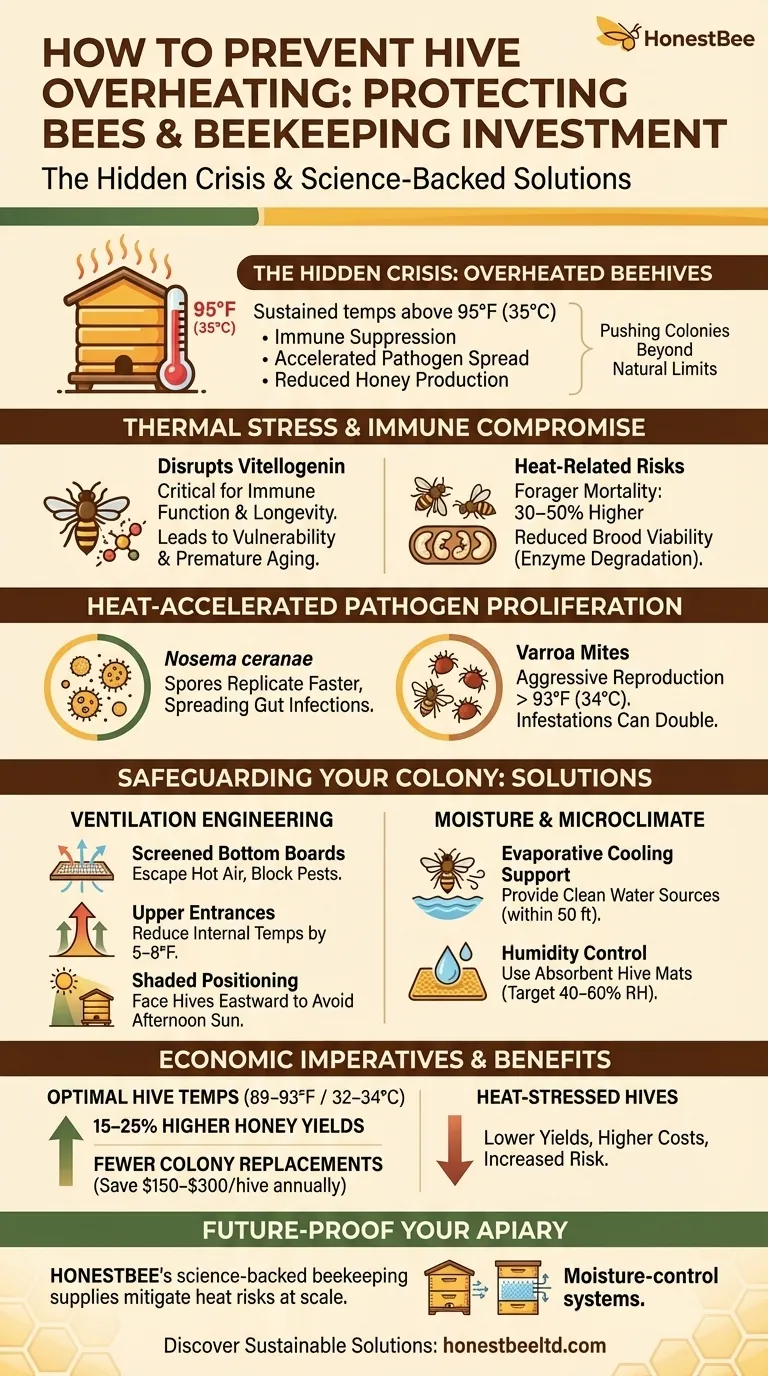
Bees maintain a delicate thermal balance inside their hives, but rising temperatures are pushing colonies beyond their natural limits. Research shows that sustained hive temperatures above 95°F (35°C) trigger cascading health effects—immune suppression, accelerated pathogen spread, and reduced honey production.
How Thermal Stress Compromises Immune Pathways in Honeybees
Heat stress disrupts bees' ability to produce vitellogenin, a protein critical for immune function and longevity. Without it, worker bees become vulnerable to infections and age prematurely. Studies suggest colonies exposed to prolonged heat:
- Show 30–50% higher mortality rates in foragers
- Experience reduced brood viability due to enzyme degradation
Nosema ceranae and Varroa Mites: Heat-Accelerated Pathogen Proliferation
Warmer hives create ideal conditions for parasites:
- Nosema spores replicate faster in heat-stressed bees, spreading gut infections
- Varroa mites reproduce more aggressively when hive temperatures exceed 93°F (34°C), with infestations doubling in some cases
Safeguarding Your Colony
Ventilation Engineering: Top Hive Modifications for Airflow
- Screened bottom boards – Allow hot air to escape while blocking pests
- Upper entrances – Create chimney effects; reduce internal temps by 5–8°F
- Shaded positioning – Face hives eastward to avoid afternoon sun exposure
Moisture vs. Temperature: Balancing Microclimate Parameters
Bees use evaporative cooling (water collection + wing-fanning) to self-regulate. Support this by:
- Providing clean water sources within 50 ft of hives
- Using absorbent hive mats to wick excess humidity (target 40–60% RH)
Economic Imperatives
Correlation Between Hive Temperature and Honey Yield Metrics
Apiaries maintaining optimal hive temperatures (89–93°F / 32–34°C) report:
- 15–25% higher honey yields per colony
- Fewer colony replacements (saving $150–$300 per hive annually)
Ready to Future-Proof Your Apiary?
HONESTBEE’s beekeeping supplies—from ventilated hive bodies to moisture-control systems—help commercial beekeepers and distributors mitigate heat risks at scale. Protect your colonies and profitability with science-backed equipment designed for sustainable beekeeping.
Visual Guide
Related Products
- Ergonomic Two Person Foldable Hive Lifter
- Stainless Steel Round Beehive Air Vents for Ventilation
- Steel Round Disc Entrance Reducer for Flexzion Bee Hive Nuc Box Gate
- Beehive Entrance Reducer Guardian Metal Hive Entrance for Bees
- Professional Insulated Winter Hive Wrap for Beekeeping
Related Articles
- Flow Hive vs. Langstroth: When Does the Premium Price Deliver Real Savings?
- How Langstroth Hive Design Optimizes Bee Colony Growth and Honey Production
- Mastering Seasonal Langstroth Hive Management: Timelines, Techniques, and Troubleshooting
- 8-Frame vs. 10-Frame Langstroth Hives: A Practical Guide for Beekeepers
- How Langstroth Hives Solve Universal Beekeeping Challenges Through Smart Design