As temperatures drop, beekeepers face a critical question: How can we best support our colonies through winter? The answer lies in understanding the biological and practical advantages of a 2:1 sugar-to-water syrup ratio—a gold standard for fall feeding. This guide unpacks why this ratio matters, how to implement it effectively, and common pitfalls to avoid.
Fall Feeding Fundamentals
Why 2:1 Syrup Supports Autumn Bee Health
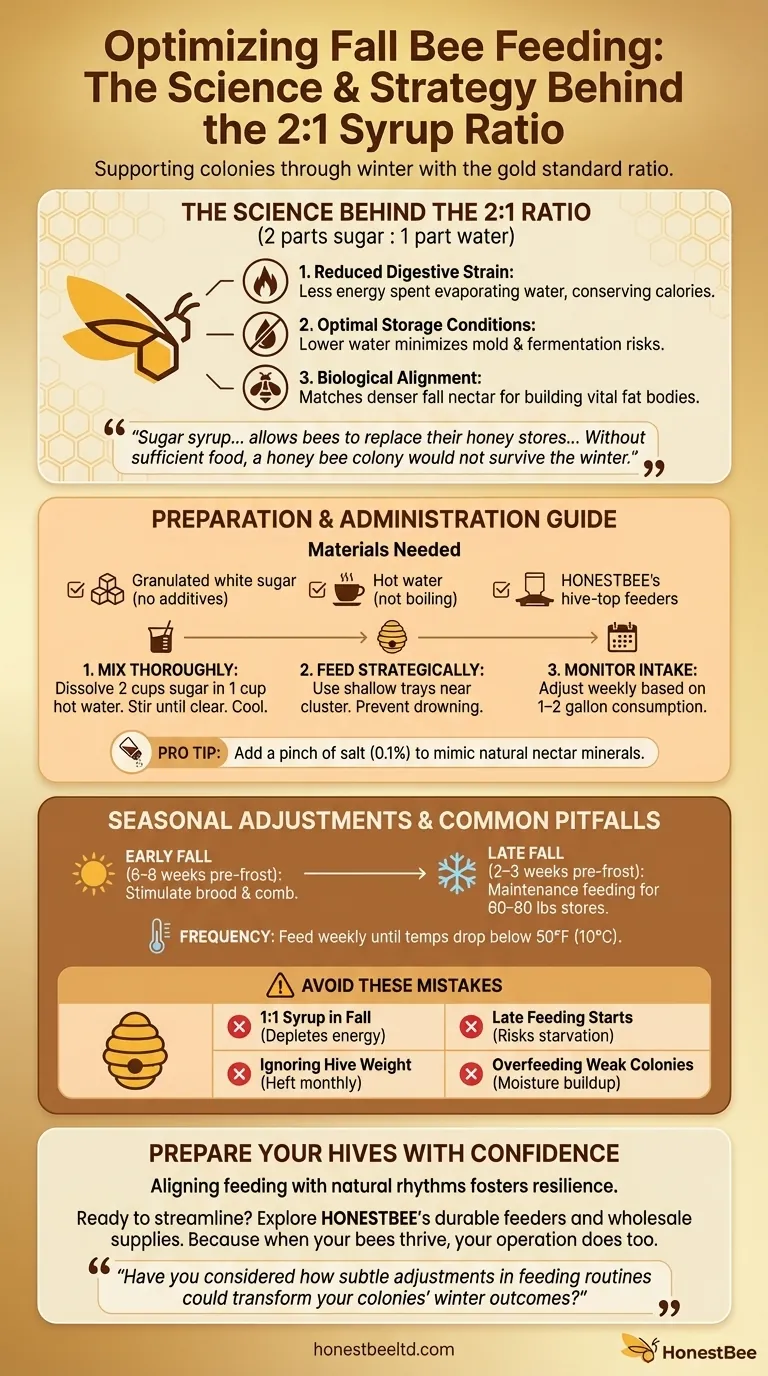
Bees process syrup differently in cooler weather. A thicker 2:1 ratio (2 parts sugar to 1 part water) mirrors the low moisture content of natural nectar in late-season flora, offering three key benefits:
-
Reduced Digestive Strain
- Bees expend less energy evaporating excess water, conserving calories for winter clustering.
- Research shows concentrated syrup is processed faster, allowing bees to store it as honeycomb reserves efficiently.
-
Optimal Storage Conditions
- Lower water content minimizes fermentation risks in the hive, preventing mold and dysentery.
-
Biological Alignment
- In fall, bees naturally seek denser food sources to build fat bodies—vital for surviving cold months.
"Sugar syrup acts as a substitute for nectar, allowing bees to replace their honey stores after harvest. Without sufficient food, a honey bee colony would not survive the winter."
Step-by-Step Guide to Preparing and Administering Syrup
Materials Needed:
- Granulated white sugar (avoid organic or brown sugars—additives harm bees)
- Hot water (not boiling, to preserve sugar structure)
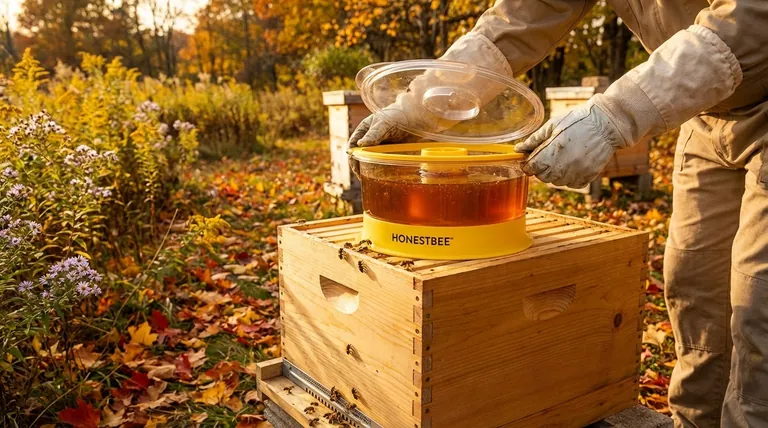
- HONESTBEE’s hive-top feeders for easy access
Steps:
- Mix Thoroughly: Dissolve 2 cups sugar into 1 cup hot water. Stir until clear. Cool to room temperature.
-
Feed Strategically:
- Use shallow trays or internal feeders to prevent drowning.
- Place feeders near the cluster to reduce energy expenditure.
- Monitor Intake: A strong colony typically consumes 1–2 gallons weekly in early fall. Adjust based on local climate and hive strength.
Pro Tip: Add a pinch of salt (0.1% of syrup weight) to mimic mineral content in natural nectar.
Seasonal Beekeeping Adjustments
Timing and Frequency for Fall Feeding
Key Windows:
- Early Fall (6–8 weeks before first frost): Begin feeding to stimulate brood rearing and comb building.
- Late Fall (2–3 weeks before frost): Shift to maintenance feeding—ensure stores reach 60–80 lbs per hive.
Frequency:
- Feed weekly until daytime temperatures consistently drop below 50°F (10°C).
- Reduce portions if syrup remains unconsumed after 48 hours (indicates sufficient stores).
Common Mistakes to Avoid
-
Using 1:1 Syrup in Fall
- Diluted syrup forces bees to work harder evaporating water, depleting energy reserves prematurely.
-
Late Feeding Starts
- Colonies need 4–6 weeks to convert syrup into sealed honey. Delaying risks starvation.
-
Ignoring Hive Weight
- Heft hives monthly. A light hive signals urgent feeding needs.
-
Overfeeding Weak Colonies
- Small clusters can’t process excess syrup, leading to moisture buildup and rot.
Prepare Your Hives with Confidence
The 2:1 syrup ratio isn’t just tradition—it’s a science-backed strategy to give bees their best shot at winter survival. By aligning your feeding practices with their natural rhythms, you’re not just sustaining colonies; you’re fostering resilience.
Ready to streamline your fall beekeeping? Explore HONESTBEE’s durable feeders and wholesale supplies, trusted by commercial apiaries to deliver efficiency at scale. Because when your bees thrive, your operation does too.
Have you considered how subtle adjustments in feeding routines could transform your colonies’ winter outcomes?
Visual Guide