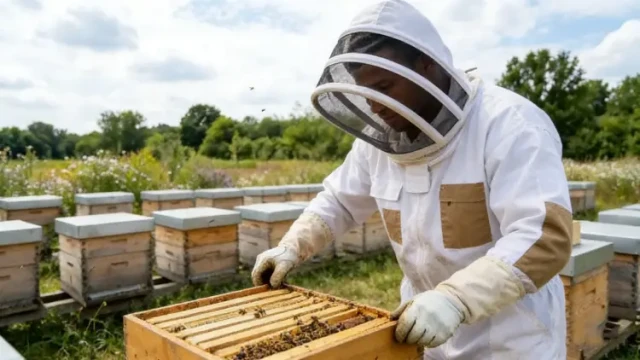
For commercial beekeepers, a beehive is not just a wooden box; it is a factory, a biological asset, and a livelihood. Unfortunately, as the value of honey and wax rises globally, so does the incidence of beehive theft and vandalism. This is a challenge faced by beekeepers worldwide, but we have heard specifically from our valued partners across Africa that this is becoming a critical operational risk.
At HONESTBEE, we don't just supply equipment; we aim to support the sustainability of your business. Below is a detailed guide on how to secure your apiaries against human interference and destruction.
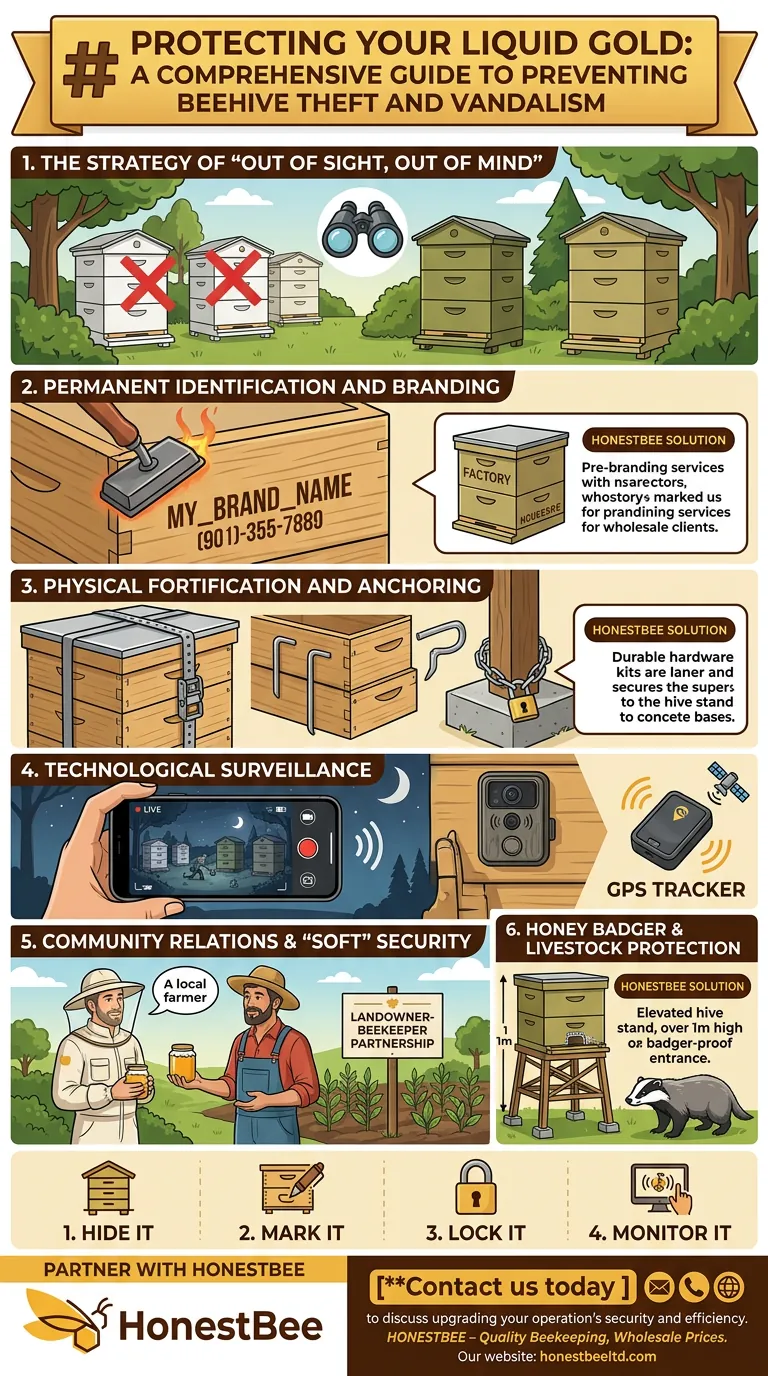
1. The Strategy of "Out of Sight, Out of Mind"
The most effective security measure is often the simplest: concealment. If thieves cannot see your hives from the main road, they are less likely to target them.
- Camouflage Painting: While white hives are traditional for heat reflection, they act as beacons for thieves. Consider painting your hives in olive drab, khaki, or bush-green to blend in with the local vegetation.
- Natural Barriers: Utilize the landscape. Place hives behind dense thickets, hills, or in dip areas that are not visible from public pathways.
- Access Control: Avoid creating clear, beaten paths that lead directly from a main road to your apiary. If possible, use gates or natural thorny barriers to restrict vehicle access.
2. Permanent Identification and Branding
Thieves steal hives to sell them or to harvest the products. Making your equipment easily identifiable makes it "too hot to handle" for resale and easier to recover if found by police or other beekeepers.
- Hot Branding: Burn your company name, registered brand, or phone number deep into the wood of the brood boxes, supers, and even the frames. Paint can be sanded off; a burn mark is permanent.
- Distinctive Markings: Use a unique color combination on your landing boards or lids.
HONESTBEE Solution: We understand that branding thousands of boxes can be tedious. HONESTBEE offers customization services for our wholesale clients. We can provide hive bodies with your company logo or serial numbers already branded or engraved during the manufacturing process, ensuring every piece of equipment you deploy is stamped with your ownership before it even reaches the field.
3. Physical Fortification and Anchoring
Making a hive difficult to move or open is a strong deterrent. Opportunistic thieves often look for "easy pickings." If a hive takes too long to steal, they will likely abandon the attempt.
- Hive Staples and Strapping: Use heavy-duty metal staples to lock the supers to the brood box, or tightly strap the entire unit. This prevents thieves from simply lifting off the honey supers.
- Anchoring Systems: Secure the hives to the stand or a concrete base using chains and padlocks.
- The "Buddy System": Lock hives together in groups of four on a pallet. Moving four full hives simultaneously without a forklift is nearly impossible for manual thieves.
HONESTBEE Solution: Security requires durable hardware. HONESTBEE supplies high-tensile hive strapping kits, heavy-duty hive staples, and galvanized locking mechanisms specifically designed for commercial durability. Ask our sales team about our bulk security hardware packages.
4. Technological Surveillance
For high-value apiaries, modern technology offers a way to monitor assets remotely. While this involves an initial investment, the cost of losing a fully established colony often outweighs the cost of the tech.
- GPS Trackers: Small, battery-operated GPS units can be hidden inside the hive frame or lid. If the hive moves, you receive an alert on your phone with its location.
- Cellular Trail Cameras: Motion-activated cameras with night vision can send photos instantly to your phone. Even dummy cameras (fake cameras) can serve as a psychological deterrent if placed visibly near the entrance.
5. Community Relations and "Soft" Security
Sometimes the best fence is a good relationship with the local community.
- Landowner Incentives: If your hives are on someone else’s land, pay them in honey or a small rental fee. If the landowner has a vested interest in your success, they become your security guards.
- Education: In some areas, vandalism occurs due to fear of bees. Educating locals about the benefits of bees for their own crops can reduce malicious destruction.
6. Dealing with Honey Badgers and Livestock
While this article focuses on human theft, we know that in many African regions, Honey Badgers (Ratels) and wandering livestock can cause immense damage.
- Elevated Stands: Stands should be at least 1 meter high to deter badgers.
- Badger-Proof Entrances: Restrict the entrance so bees can pass, but larger claws cannot rip it open.
HONESTBEE Solution: We supply reinforced hive stands and metal entrance reducers that are resistant to animal tampering. Our wholesale metal fabrication team can also design custom anti-theft cages for hives upon request.
Summary
Securing an apiary requires a layered approach:
- Hide it (Location & Camouflage).
- Mark it (Branding).
- Lock it (Hardware & Anchors).
- Monitor it (Community & Tech).
Partner with HONESTBEE
At HONESTBEE, we are dedicated to serving commercial apiaries and dealers with professional-grade equipment. Whether you need 500 hives custom-branded with your logo, heavy-duty strapping tools, or reinforced protective gear, we are your one-stop wholesale partner.
Contact us today to discuss how we can help upgrade your operation’s security and efficiency.
HONESTBEE – Quality Beekeeping, Wholesale Prices.
Visual Guide
Related Products
- Stainless Steel Round Beehive Air Vents for Ventilation
- Wholesales Dadant Size Wooden Bee Hives for Beekeeping
- Metal Hive Feet Bee Hive Stand for Ant Protection
- Metal Bee Hive Stand Bee Box Stand for Beekeeping
- Wooden Bee Hive Frames for Beekeeping and Wholesale
Related Articles
- How to Optimize Beehive Ventilation: Prevent Disease and Boost Colony Health
- The Silent Killer in the Hive: Why Moisture, Not Cold, Is Winter's Greatest Threat
- Beyond the Bee Box: Why Your First Apiary Investment Determines Your Success
- The Precision of Chaos: Navigating the Biological Risks of Commercial Beehive Transportation
- Beyond the Box: Why Hive Architecture Is Your Apiary's Core Operating System













