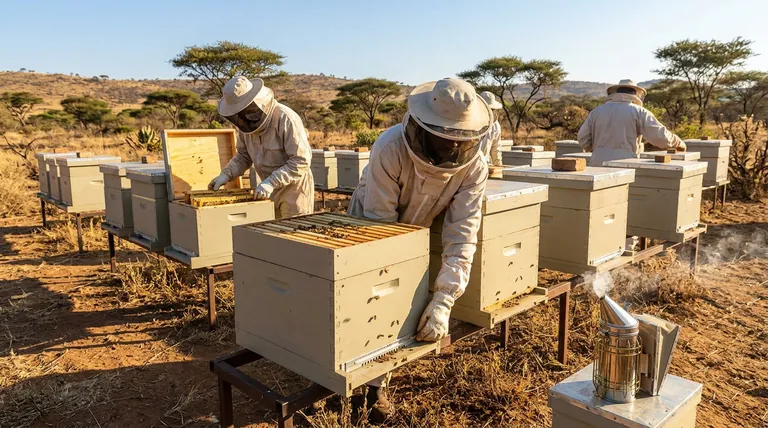
For any beekeeper, the sight of a strong colony is a joy. However, in the distinct climates of Africa, where dry seasons (dearth) can be harsh and sudden, the instinct for survival can turn bees against each other. This phenomenon is known as Robbing.
Robbing is not merely a nuisance; for the aggressive African honey bee (Apis mellifera scutellata), a robbing frenzy can trigger massive defensive attacks, destroy weak colonies, and spread disease across your entire apiary.
At HONESTBEE, we understand the unique challenges faced by commercial apiaries and distributors in Africa. We have prepared this guide to help you protect your investment.
What is Robbing?
Robbing occurs when foraging bees from a strong colony (or even wild colonies) invade another hive to steal its nectar and honey. This usually happens during a nectar dearth—when flowers are scarce and bees are desperate for food.
Why is it dangerous?
- Colony Loss: The victim colony is often killed fighting to defend their stores, or they die of starvation after being robbed out.
- Disease Transmission: Robbers carry pests (like Varroa) and diseases from weak hives back to their own healthy hives.
- Aggression: In the context of African bees, robbing causes extreme agitation, making the apiary dangerous for livestock and humans nearby.
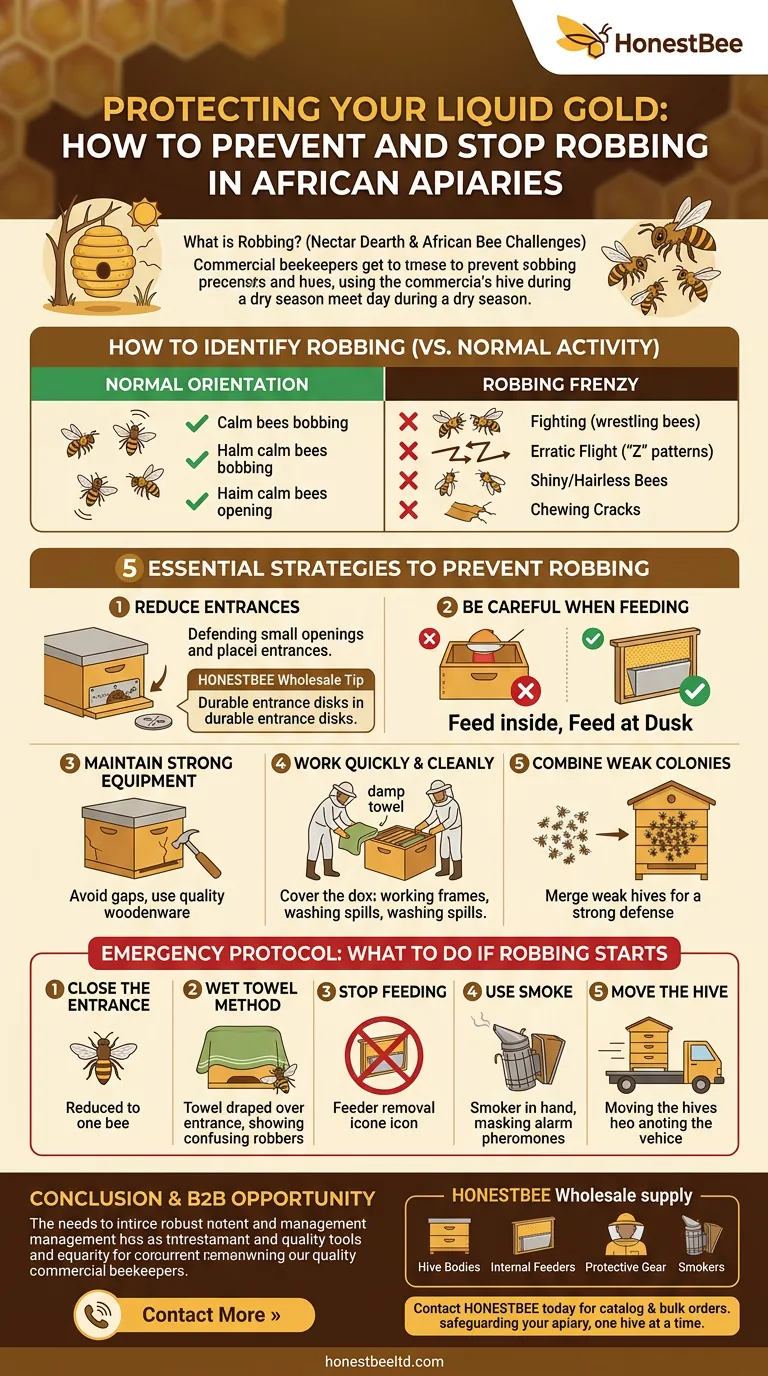
How to Identify Robbing (Vs. Normal Activity)
New beekeepers often confuse robbing with orientation flights. Here is how to tell the difference:
- Normal Orientation: Bees hover gently in front of the hive, facing it, bobbing up and down. They are calm.
- Robbing:
- Fighting: You see bees wrestling or stinging each other at the hive entrance.
- Erratic Flight: Robber bees fly in a swaying "Z" pattern, trying to dodge guards.
- Sticky Bees: Bees leaving the hive look heavy, shiny, or black (hairless) from fighting.
- Chewing: You may see bees trying to enter through cracks in the supers or chewing at the entrance block.
5 Essential Strategies to Prevent Robbing
Prevention is far better than cure. Once African bees start a robbing frenzy, it is incredibly difficult to stop.
1. Reduce Entrances During Dearth
When nectar flow stops, a wide entrance is too difficult for a smaller colony to defend. You must reduce the entrance size so that only one or two bees can pass at a time. This allows the guard bees to easily defend their home.
HONESTBEE Professional Tip: Reliability is key. We supply wholesale entrance reducers and guards designed to fit standard Langstroth and Dadant hives perfectly. For our commercial partners, stocking durable entrance disks is essential for seasonal inventory.
2. Be Careful When Feeding
Feeding is necessary during the dry season, but "open feeding" (leaving syrup buckets outside) is a dinner bell for robbers. It creates a frenzy in the air that quickly turns into hive-to-hive combat.
- Use Internal Feeders: Always feed inside the hive.
- Feed at Dusk: Pour syrup late in the evening when foraging has stopped. By morning, any spills will be cleaned up, and the scent will have dissipated.
Product Spotlight: HONESTBEE offers high-capacity Frame Feeders and Top Feeders for bulk orders. These tools ensure the syrup remains accessible only to the colony inside, significantly reducing the scent that attracts robbers.
3. Maintain Strong Equipment
Old, rotting boxes with cracks are invitations for robbers to bypass the guards at the front door. African bees are excellent at finding these weaknesses. Ensure your woodenware is tight and secure.
HONESTBEE Quality: As a dedicated wholesale supplier, we ensure our hive boxes and supers are manufactured with precision joinery to eliminate gaps. We help distributors provide equipment that stands the test of time and weather.
4. Work Quickly and Cleanly
When inspecting hives during a dearth:
- Do not leave hive bodies open for long.
- Do not leave frames of honey leaning against the hive.
- Cover open boxes with a damp towel while you work.
- If you spill syrup, wash it away with water immediately.
5. Combine Weak Colonies
In the wild, the weak do not survive. A weak colony is the number one target for robbers. Instead of nursing a weak hive through a drought, combine it with a stronger hive. A strong, populous hive is your best defense against robbery.
Emergency Protocol: What to Do If Robbing Starts
If you see the signs of active robbing, you must act immediately.
- Close the Entrance: Reduce the entrance of the victim hive to the width of a single bee immediately.
- The "Wet Towel" Method: Drape a wet towel over the hive entrance. The evaporation cools the hive, and the confusion often stops robbers while allowing resident bees to find their way in underneath.
- Stop Feeding: If you are feeding, remove all feeders immediately.
- Smoke: Use a smoker to mask the alarm pheromones, but be aware that smoke can sometimes confuse the guards.
- Move the Hive: In extreme cases, move the victim hive to a new location at least 3km away.
Conclusion
Beekeeping in Africa requires robust management and durable equipment. By recognizing the signs of robbing early and using the right tools to prevent it, you protect not only your honey yield but the safety of your apiary.
Are you a beekeeping equipment distributor or a commercial honey producer?
HONESTBEE is here to support your business. We specialize in the wholesale supply of:
- Precision-milled Hive Bodies
- Internal Feeders (Frame & Top)
- Protective Gear for African Bee Management
- Stainless Steel Smokers and Hive Tools
We provide the quality tools your customers need to succeed, at factory-direct wholesale prices.
Contact HONESTBEE today to request our catalog and discuss your bulk order needs.
Safeguarding your apiary, one hive at a time.
Visual Guide