Understanding bee metamorphosis isn't just academic—it's essential for beekeepers aiming to optimize hive health and productivity. This guide explores the biology of bee development, caste-specific timelines, and practical beekeeping interventions.
The Biology of Bee Development
Egg to Larva: Universal Early Stages
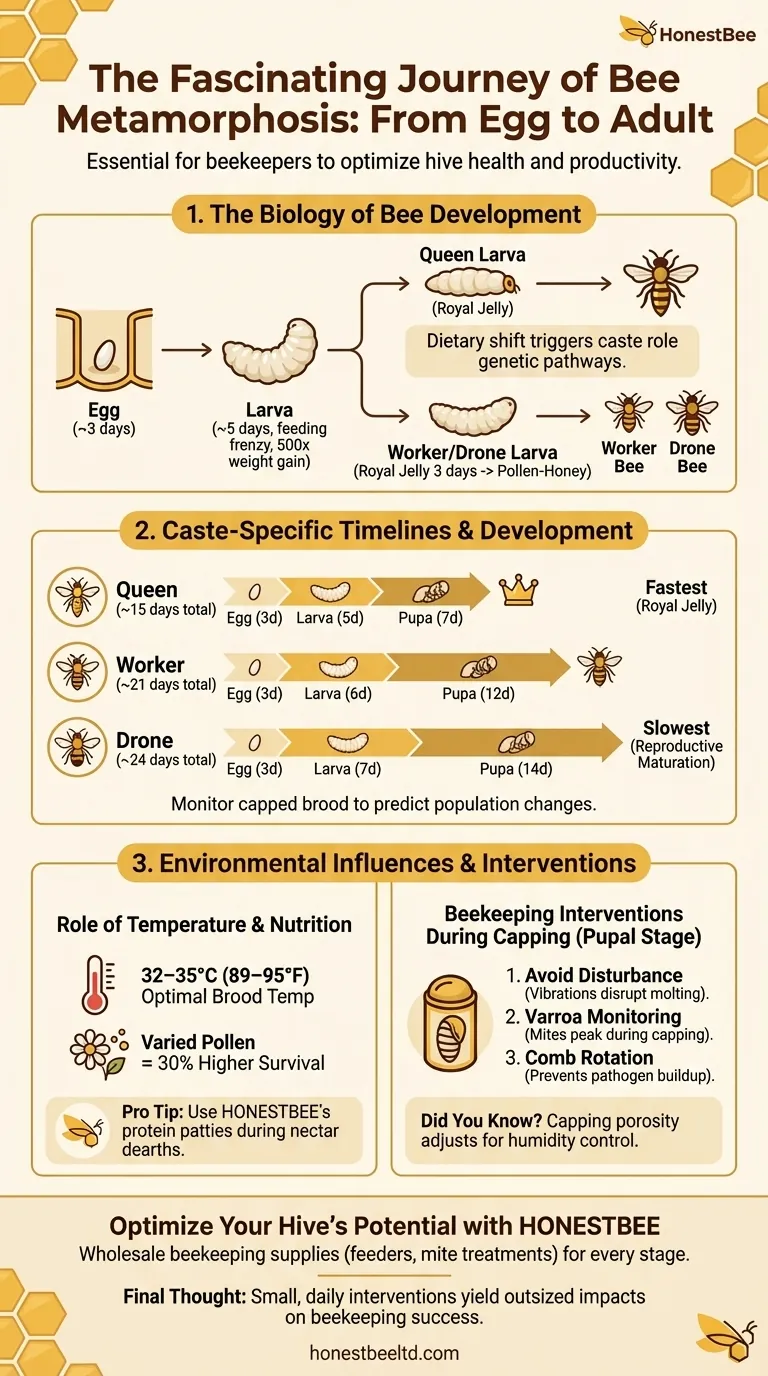
All bees begin as tiny, rice-shaped eggs laid by the queen. Within a few days, these hatch into larvae, entering a feeding frenzy phase. Research shows larvae increase their body weight by over 500 times in just five days, relying entirely on nurse bees for food.
Key differences emerge early:
- Queen larvae receive royal jelly throughout development.
- Worker/drone larvae switch to pollen-honey mix after three days.
This dietary shift triggers genetic pathways that determine caste roles—a process beekeepers can influence through hive management.
Caste Divergence: Queen, Worker, and Drone Timelines
Metamorphosis duration varies significantly by caste:
| Caste | Egg Stage | Larval Stage | Pupal Stage | Total Development |
|---|---|---|---|---|
| Queen | ~3 days | ~5 days | ~7 days | ~15 days |
| Worker | ~3 days | ~6 days | ~12 days | ~21 days |
| Drone | ~3 days | ~7 days | ~14 days | ~24 days |
Critical Insight: Queens develop fastest due to nutrient-dense royal jelly, while drones (males) require extended pupation for reproductive organ maturation. Beekeepers monitoring capped brood can use these timelines to predict hive population changes.
Environmental Influences on Growth
Role of Temperature and Nutrition
Hive conditions dramatically impact metamorphosis success:
- Temperature: Brood requires 32–35°C (89–95°F). Deviations beyond ±2°C cause developmental abnormalities.
- Nutrition: Poor pollen diversity leads to undersized workers. Studies link varied floral sources to 30% higher larval survival rates.
Pro Tip: During nectar dearths, supplemental feeding with HONESTBEE’s protein patties can sustain larval growth.
Beekeeping Interventions During Capping
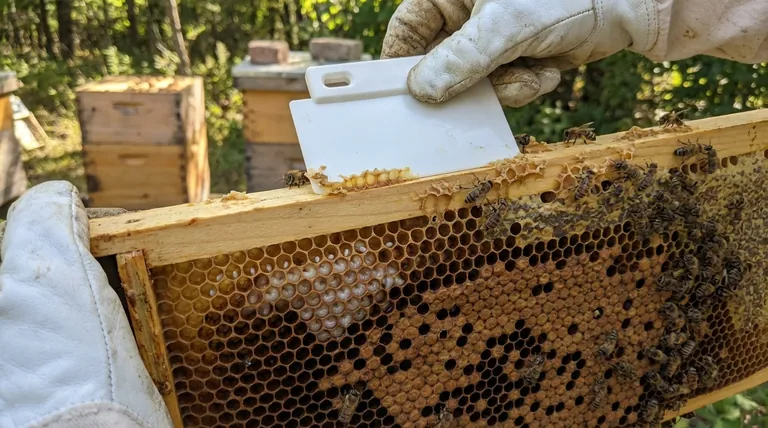
The pupal stage—when bees seal cells with wax—is a high-risk period. Best practices include:
- Avoiding Disturbance: Vibrations disrupt pupal molting.
- Varroa Monitoring: Mite infestations peak during capping.
- Comb Rotation: Replacing old comb prevents pathogen buildup.
Did you know? Worker bees adjust capping porosity based on humidity—a natural climate control system beekeepers can support through hive placement.
Optimize Your Hive’s Potential with HONESTBEE
Whether you’re a commercial apiary or equipment distributor, understanding metamorphosis timelines helps you anticipate hive needs. HONESTBEE’s wholesale beekeeping supplies—from feeders to mite treatments—are designed to support each stage of bee development. Explore our solutions today to nurture stronger, more productive colonies.
Final Thought: Bee metamorphosis is a marvel of nature—and a reminder that small, daily interventions in hive management can yield outsized impacts on your beekeeping success.
Visual Guide