It’s a frustratingly familiar scene for any commercial beekeeper. You find a determined line of ants marching straight into one of your most productive hives. You check the hive body—it’s the high-density plastic model you invested in specifically to prevent this. There are no cracks, no rot, no weaknesses. Yet, the invasion is underway, threatening to weaken the colony, contaminate honey, and cost you money.
You’ve built a fortress, but the enemy just walked in the front door. Why?
The Costly Cycle of Treating Symptoms
This isn’t a unique failure; it’s a systemic problem across the industry. When faced with a pest invasion, the typical response is a series of reactive, often temporary, measures.
Beekeepers might:
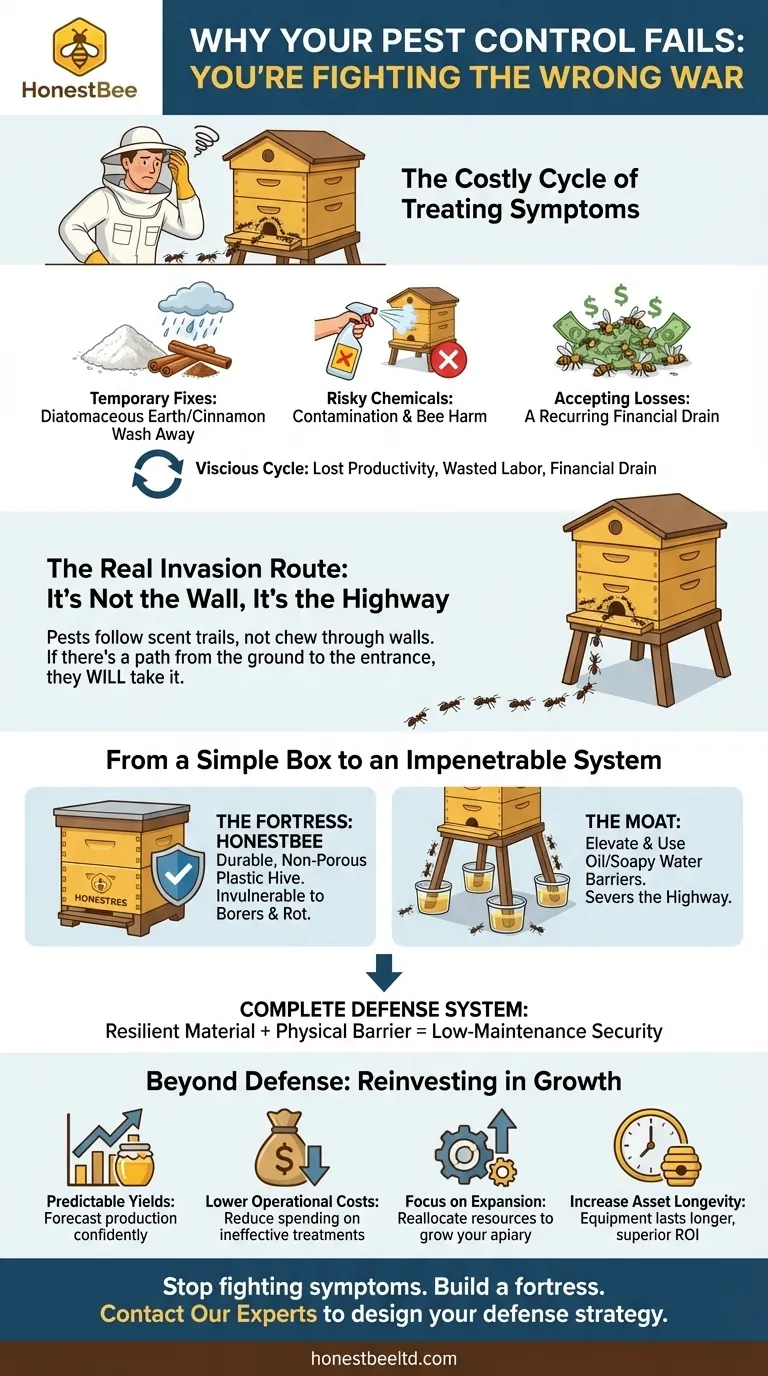
- Spread diatomaceous earth or cinnamon, only to see it wash away in the next rain.
- Resort to chemical sprays around the base, risking contamination and harm to their bees.
- Accept colony losses to pests as a recurring, unavoidable "cost of doing business."
Each of these "solutions" treats the immediate symptom—the visible pests—but fails to address the cause. This leads to a costly cycle of lost productivity, wasted labor hours spent on ineffective treatments, and the constant financial drain of replacing weakened or lost colonies. For a commercial operation, these unpredictable losses can cripple growth and damage your reputation for reliability.
The Real Invasion Route: It’s Not the Wall, It’s the Highway
The fundamental mistake is focusing on the hive body itself. Pests like ants aren't chewing their way through a solid wall; they are relentless foragers following a scent trail to the food source inside your hive. They don't care if the wall is made of wood, plastic, or steel. If they can walk from the ground to the entrance, they will.
Your problem isn't a breach in the hive's material. Your problem is the unobstructed highway leading from the ground straight to your colony's front door.
This is why simply switching to a plastic hive—while a critical first step—is not a complete solution on its own. It addresses the threat from boring insects and rot, but it does nothing to stop an army from climbing up the side. Relying on the material alone is like building a castle with impenetrable walls but forgetting to install a gate or a moat.
From a Simple Box to an Impenetrable System
To truly solve the problem, you must shift your thinking from the hive material to the entire defense system. A successful system does two things:
- It severs the highway from the ground.
- It ensures the fortress itself remains invulnerable to decay and burrowing pests over the long term.
This is where equipment designed with a deep understanding of the problem makes all the difference. The solution is not just a plastic hive; it's a plastic hive used as the core of a strategic defense.
The Fortress: A Durable, Non-Porous Hive Body
The foundation of your system is a hive that pests cannot compromise from within. HONESTBEE's high-density plastic beehives provide this foundation. Being inedible and non-porous, they are inherently invulnerable to wood borers and eliminate the rot and decay that can turn wooden hives into nesting sites for ant colonies. This is the "set-it-and-forget-it" core of your defense.
The Moat: Cutting Off the Highway
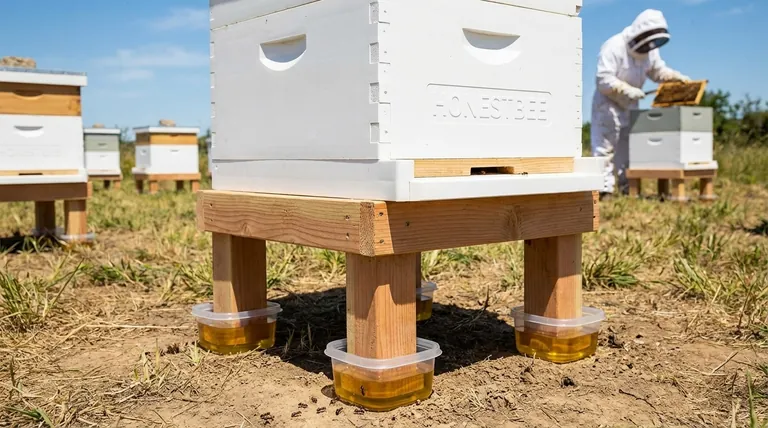
The single most effective action you can take against climbing pests is to elevate your hive on a stand and place the legs of the stand in small containers of oil or soapy water. This simple, inexpensive "moat" creates an impassable physical barrier. It completely severs the ground-based invasion route, stopping ants before they ever reach the hive body.
When you combine the material resilience of a HONESTBEE hive with this simple elevation and moat strategy, you create a nearly perfect, low-maintenance defense system. The moat stops the climbers, and the hive's material ensures the fortress itself never develops a weakness.
Beyond Defense: Reinvesting Your Resources in Growth
When the constant, nagging worry of pest management becomes an afterthought, it unlocks significant potential for your business. Imagine an operation where you are no longer budgeting for unpredictable colony losses or dedicating weekly hours to fighting invasions.
With a truly secure system in place, you can:
- Achieve Predictable Yields: Confidently forecast your honey production and pollination capacity without factoring in pest-related losses.
- Lower Operational Costs: Drastically reduce spending on temporary treatments, repairs, and hive replacements.
- Focus on Expansion: Reallocate your time, capital, and energy from defense to offense—securing new pollination contracts, expanding your apiary, and growing your bottom line.
- Increase Asset Longevity: Your equipment lasts longer, providing a superior return on investment for years to come.
Stop fighting a losing battle against symptoms. By addressing the root cause of pest invasions with a complete system, you can transform your apiary from a defensive operation into a thriving, growing business. Our team can help you design a defense strategy tailored to the unique challenges of your commercial operation. Contact Our Experts.
Visual Guide