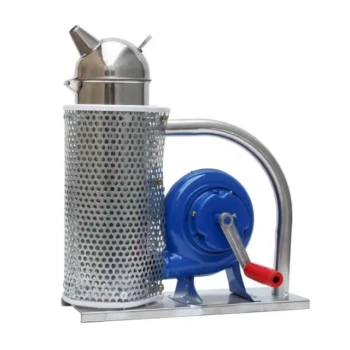
Manual high-precision sprayers are the critical standardizing tool used to apply uniform concentrations of microbial agents, such as Bacillus thuringiensis, directly onto honeybees during toxicity testing. By providing meticulous control over spray pressure and droplet size, these devices ensure every specimen receives a consistent dosage, which is the foundational requirement for generating reliable, scientifically valid mortality data.
High-precision manual sprayers eliminate the variables of inconsistent application, allowing researchers and professional testers to simulate field conditions with enough accuracy to determine the exact contact toxicity thresholds for biological pesticides.
Precision Control in Toxicity Assessment
Achieving Uniform Active Ingredient Distribution
To assess how a biological pesticide affects honeybee health, the active ingredient must be distributed evenly across the test group. High-precision sprayers convert liquid agents into fine, uniform droplets that cover the bee’s surface without causing physical drowning or uneven exposure.
Standardizing Dosage via Pressure Regulation
Variation in spray pressure can lead to fluctuating droplet volumes, which compromises the integrity of a toxicity study. These manual devices allow operators to maintain a constant pressure environment, ensuring that the volume applied—often as precise as 2 milliliters per specific area—remains identical across all test subjects.
Simulating Field Application Environments
Testing in a vacuum does not provide actionable data for the agricultural sector. Manual high-precision equipment allows researchers to replicate real-world application scenarios, providing distributors and end-users with confidence that the biological pesticides will behave as expected in the field.
The Role of Equipment in Pollination and Protection
Mitigating Environmental Drift and Residue
Beyond toxicity testing, high-precision spraying technology is vital for reducing chemical drift. By ensuring the pesticide only reaches the target crop, these sprayers minimize the risk of bees accidentally entering toxic spray zones or ingesting contaminated pollen.
Supporting Colony Health and Recruitment
Precision sprayers are also used to apply synthetic pheromones or attractants like eugenol and citronella. Evenly spreading these substances across petals and buds simulates natural signals, which optimizes honeybee recruitment and improves overall pollination management for commercial growers.
Comprehensive Coverage for Colony Maintenance
In direct colony applications, these sprayers ensure that diluted honey products or protective extracts reach the spaces between combs. This level of coverage is essential for protecting the sealed brood and ensuring the entire colony receives the necessary treatment or nutritional supplement.
Understanding the Trade-offs and Limitations
Manual Calibration vs. Automated Precision
While manual high-precision sprayers offer excellent control, they rely heavily on operator technique. Inconsistent pumping rhythm or improper nozzle height can introduce human error that automated systems might otherwise eliminate.
Maintenance and Nozzle Clogging
Biological pesticides, particularly microbial agents like Bacillus thuringiensis, can contain suspended solids. Without rigorous cleaning protocols, high-precision nozzles are prone to clogging, which can lead to uneven pressure and skewed toxicity results.
Scaling for Large-Volume Testing
Manual sprayers are ideal for controlled laboratory or small-scale field assessments. However, for distributors managing large-scale industrial trials, manual equipment may become a labor-intensive bottleneck compared to integrated mechanical spraying systems.
Making the Right Choice for Your Inventory
Selecting the right high-precision equipment depends on your clients' specific research or application goals. Our deep industry expertise ensures you receive the exact technical specifications required for sensitive biological testing.
- If your primary focus is Scientific Research and Toxicity Testing: Prioritize models with adjustable pressure gauges and ultra-fine micron nozzle kits to ensure data reproducibility.
- If your primary focus is Commercial Pollination Management: Focus on durable, portable units optimized for the rapid application of pheromones and attractants across large orchard areas.
- If your primary focus is One-Stop Sourcing for Large Projects: Leverage our full-spectrum product portfolio and ultra-fast delivery to provide your clients with both the biological agents and the precision tools needed for application.
By integrating high-precision manual sprayers into your professional catalog, you provide the essential link between biological innovation and environmental safety.
Summary Table:
| Key Feature | Contribution to Toxicity Assessment | Practical Outcome |
|---|---|---|
| Pressure Regulation | Standardizes dosage volume (e.g., 2ml/area) | Ensures scientifically valid, repeatable mortality data |
| Precision Nozzles | Creates uniform droplet distribution | Prevents specimen drowning and uneven chemical exposure |
| Field Simulation | Replicates real-world application environments | Validates pesticide behavior for commercial agricultural use |
| Versatile Design | Supports pheromone and attractant application | Optimizes colony recruitment and pollination management |
Scale Your B2B Business with HONESTBEE
Looking to supply your clients with the gold standard in beekeeping technology? HONESTBEE is the premier partner for distributors and B2B resellers, offering a one-stop sourcing solution for everything from high-precision sprayers to industrial honey-filling machines.
- Comprehensive Portfolio: Full spectrum of beekeeping tools, specialized hardware, and honey-themed cultural merchandise.
- Reliable Fulfillment: Benefit from ultra-fast delivery, OEM/ODM support, and efficient order processing to maximize your profit margins.
- Expert Support: Leverage our deep professional industry expertise and rapid response times to meet the demands of commercial apiaries.
Contact our wholesale team today to access premium pricing and secure your supply chain!
References
- Deodoro Magno Brighenti, Stephan Malfitano Carvalho. Bioatividade do Bacillus thuringiensis var. kurstaki (Berliner, 1915) para adultos de Apis mellifera Linnaeus, 1758 (Hymenoptera: Apidae). DOI: 10.1590/s1413-70542007000200003
This article is also based on technical information from HonestBee Knowledge Base .
Related Products
- Heavy Duty Manual Bee Smoker Blower for Beekeeping
- Commercial Rotary Honey Filling Machine for Production
- Precision Durable Efficient HONESTBEE Rotary Honey Filling Machine
- Stainless Steel Manual Honey Press with Guard for Pressing Honey and Wax
People Also Ask
- What are bee smokers made out of? Choose the Right Material for Your Apiary
- What are the advantages of a manual bee smoker? Enhance Hive Safety with Controlled Cool Smoke Technology
- What is the primary function of a manual bee smoker? Master Hive Control for Safe Inspections
- What is the proper technique for applying smoke to a beehive? Master Calm and Effective Hive Management
- What is the purpose of using a bee smoker for Small Hive Beetle inspections? Master Chemical Control & Hive Safety