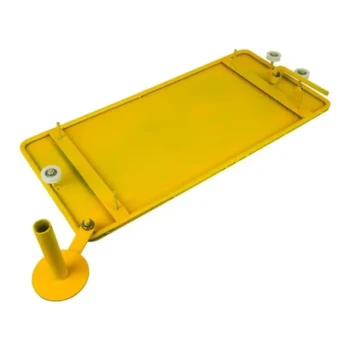
The primary purpose of using a debris board and entrance reducer with an IPM screened board is to ensure successful hive unity during critical transition periods. Specifically, when installing a new bee package or re-queening, inserting these components encloses the queen's pheromone, forcing the scent to circulate within the hive rather than escaping through the open screen or a wide entrance.
By temporarily sealing the bottom screen and restricting the entrance, you create a contained environment that concentrates the queen's scent. This concentration is the biological signal required to unite a colony and ensure the acceptance of new leadership.
The Mechanics of Hive Unity
The Importance of Pheromone Containment
Honey bees rely heavily on chemical signals to function as a cohesive unit. The queen's pheromone is the "glue" that binds the colony together.
When a colony is new or a queen is being replaced, the bees must be rapidly exposed to her specific scent to accept her.
If the hive is too open, this vital scent dissipates into the environment, delaying acceptance and risking rejection.
How the Components Work Together
An Integrated Pest Management (IPM) board typically features a mesh screen designed for ventilation and pest drop.
Inserting the debris board effectively seals this bottom screen, stopping airflow from pulling the scent downward and out of the hive.
Simultaneously, the entrance reducer shrinks the front opening, further limiting air exchange and keeping the pheromone concentration high inside the brood chamber.
Critical Scenarios for Use
There are two specific instances where this configuration is non-negotiable for success.
The first is installing a new bee package, where a loose swarm must adopt a new home and a new queen simultaneously.
The second is re-queening an existing hive, where the colony must be convinced to accept a foreign queen rather than killing her.
Understanding the Trade-offs
Temporary Use vs. Long-Term Ventilation
While sealing the hive is necessary for unity, it restricts the ventilation benefits of the IPM board.
Once the colony is established and the queen is laying, the debris board generally should be removed or cleaned regularly to allow for airflow and pest monitoring.
Leaving the hive sealed indefinitely can lead to moisture buildup or overheating in warmer climates.
The Dual Role of the Debris Board
It is important to distinguish between the board's role in unity versus monitoring.
During unity (package installation), the board acts as a seal for pheromones.
During routine maintenance, the gridded surface of the board is used to monitor Varroa mite drop and assess the effectiveness of hygienic behavior, a core tenant of the IPM strategy.
Making the Right Choice for Your Goal
To manage your hive effectively, you must alternate your equipment configuration based on the colony's current needs.
- If your primary focus is installing a package or re-queening: Insert both the debris board and entrance reducer immediately to trap pheromones and ensure the colony unites.
- If your primary focus is routine pest monitoring: Insert the debris board for a short period (e.g., 24 hours) to count mite drop, then remove or clean it to maintain ventilation.
- If your primary focus is summer ventilation: Remove the debris board entirely to allow maximum airflow through the screened bottom.
Mastering the timing of these components turns a simple piece of equipment into a precise tool for colony management.
Summary Table:
| Component | Primary Function (During Unity) | Long-Term Benefit |
|---|---|---|
| Debris Board | Seals bottom screen to trap queen pheromones | Enables Varroa mite monitoring and counts |
| Entrance Reducer | Limits air exchange to maintain scent concentration | Protects hive from robbers and maintains heat |
| IPM Screened Board | Provides the base for ventilation and pest drop | Enhances hive hygiene and reduces mite load |
Maximize Your Apiary Productivity with HONESTBEE
Successful colony establishment starts with the right equipment and management strategy. HONESTBEE is dedicated to supporting commercial apiaries and distributors with a comprehensive range of high-quality beekeeping tools, machinery, and essential consumables.
Whether you need precision hive-making machines, efficient honey-filling lines, or a bulk supply of IPM-compatible hardware, we provide the specialized equipment necessary to scale your operations. From foundational tools to honey-themed cultural merchandise, our wholesale portfolio is designed to bring unmatched value to your business.
Ready to elevate your beekeeping business? Contact us today to explore our wholesale offerings and discover how our expertise can drive your success.
Related Products
- Australian Pine Wood Langstroth Screen Bottom Board for Wholesale
- Langstroth Screen Bottom Board for Beekeeping Wholesale
- HONESTBEE Durable Frame Wiring Board with Integrated Tensioner
People Also Ask
- How are screen bottom boards and sticky boards utilized to detect Varroa mites? Master Passive Apiary Monitoring
- What is the primary function of a screen bottom board? Achieve Accurate Varroa Mite Assessment in Your Apiary
- Why is the combination of a screen bottom board and a sticky trap board essential for monitoring Varroa mite? Guide
- What is the primary function of a standard screen bottom board when assessing honeybee grooming behavior? - Key Mite Data
- What role do screen bottom boards and monitoring inserts play in assessing Varroa mite mortality and maintaining hive hygiene in Langstroth hives?