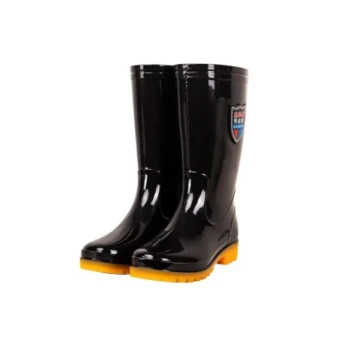
Industrial Wellington boots are considered fundamental safety equipment for apiary management because they provide a specialized barrier against both biological and environmental hazards. They are specifically designed to shield the vulnerable ankle area from bee stings and snake bites while delivering the heavy-duty traction necessary to navigate the complex, muddy terrain often found in wild or semi-forested apiaries.
Core Takeaway In apiary environments, standard footwear leaves the beekeeper vulnerable to lower-leg injuries and slip hazards. Industrial Wellington boots solve this by combining a puncture-resistant barrier against wildlife and vegetation with the structural stability required for uneven, operational ground.
The Critical Barrier Against Biological Threats
Protecting Vulnerable Anchor Points
Standard beekeeping suits often leave the ankle area exposed or covered only by thin fabric. Industrial Wellington boots bridge this gap, providing a seamless, impenetrable layer that prevents bees from stinging the ankles, a common high-risk zone in apiaries.
Defense Against Wildlife
Apiaries situated in wild or semi-forested areas often harbor hidden wildlife threats in tall grass. These boots provide essential resistance against snake bites, acting as a primary shield when visibility of the ground is compromised.
Shielding from Flora
Beyond wildlife, the terrain itself poses risks from sharp vegetation, such as thorns and brambles. The robust construction of industrial Wellingtons deflects these abrasive elements, preventing cuts and punctures that lighter footwear cannot withstand.
Ensuring Stability on Unpredictable Terrain
Mastering Muddy Conditions
Apiary management frequently continues regardless of weather, leading to slippery, mud-heavy work environments. Industrial Wellingtons are engineered with superior grip, preventing slips and falls that could be dangerous when carrying heavy hive boxes.
Navigating Complex Topography
Wild apiaries rarely sit on manicured, flat ground. Beekeepers must traverse complex and uneven terrains to access hives. The structural rigidity of these boots supports the foot and ankle, ensuring operational safety where the ground is unpredictable.
Understanding the Trade-offs
Balancing Protection with Agility
While these boots offer maximum protection, their heavy-duty construction is designed for wild and semi-forested environments. In a strictly urban, flat-surface apiary, the weight and bulk of industrial Wellingtons might reduce agility compared to lighter footwear, though they remain superior for safety.
The Limits of Grip
Although the boots provide superior grip, reliance on footwear alone is a pitfall. The grip is effective in mud, but deep, shifting soil or extreme gradients still require caution; the boot is a tool for stability, not a guarantee against all terrain failures.
Making the Right Choice for Your Goal
Select your footwear based on the specific environmental risks of your apiary site.
- If your primary focus is biological safety: Prioritize boots with high shafts and thick rubber construction to maximize defense against stings and snake bites.
- If your primary focus is terrain management: Ensure the sole features a deep, aggressive tread pattern to handle mud and uneven forest floors effectively.
Invest in boots that address your most severe environmental variables to ensure long-term operational safety.
Summary Table:
| Safety Feature | Protective Benefit | Ideal Environment |
|---|---|---|
| High-Shaft Rubber | Seamless barrier against bee stings and snake bites | Wild or semi-forested apiaries |
| Puncture Resistance | Protection from thorns, brambles, and sharp flora | Overgrown or unmanaged land |
| Aggressive Tread | Superior traction and stability in slippery mud | Wet, rainy, or uneven topography |
| Structural Rigidity | Ankle support for carrying heavy hive boxes | Complex and unpredictable terrain |
Elevate Your Apiary Safety Standards with HONESTBEE
At HONESTBEE, we understand the unique challenges faced by commercial apiaries and distributors. Protecting your team is as vital as protecting your colony. We provide a comprehensive wholesale range of professional-grade beekeeping tools, specialized machinery, and essential consumables designed for the toughest environments.
Whether you need robust safety gear, hive-making equipment, or honey-filling machines, our portfolio is built to support your growth. Contact us today to discover how our wholesale solutions and industry expertise can bring superior efficiency and safety to your beekeeping operations!
References
- Emmanuel Bintaayi Jeil, Michael Adjaloo. Livelihood security along beekeeping value chain: lessons from Ghana’s beekeeping experience. DOI: 10.1007/s10708-019-09982-4
This article is also based on technical information from HonestBee Knowledge Base .
Related Products
- Professional PVC Beekeeping Shoes with Integrated Non-Slip Sole
- White PVC Beekeeping Shoes with Non-Slip Safety Sole
People Also Ask
- What dual protection do professional beekeeping boots provide in tropical environments? Essential Safety for Apiarists
- What should be done if a bee gets inside a beekeeping shoe? A Guide to Safe, Sting-Free Removal
- What are the common types of shoes used by beekeepers? Select the Best Footwear for Apiary Safety and Comfort
- How does proper coverage contribute to the effectiveness of beekeeping shoes? Secure Your Feet Against Stings
- Why is it beneficial for beekeeping shoes to be easy to clean? Enhance Safety and Traction in Your Apiary