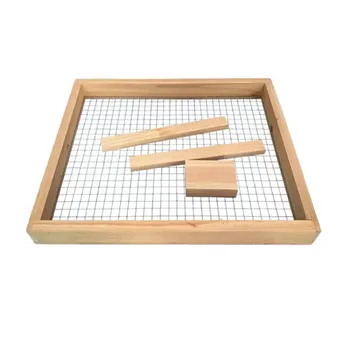
Supplemental sugar syrup feeding equipment is necessary because kiwifruit flowers provide pollen but little or no nectar. Commercial honeybee colonies therefore cannot obtain enough carbohydrate energy while working the crop, creating a risk of reduced activity, starvation, or movement toward competing flowers. Hive feeders and commercial syrup systems deliver that energy directly inside the hive, helping maintain colony strength and keep bees working the contracted crop.
The equipment closes the energy gap created by nectarless crops: it sustains the colony, supports consistent foraging, and reduces the risk that bees abandon the target orchard for more rewarding wild blossoms.
Why Kiwifruit Pollination Creates a Feeding Challenge
Kiwifruit supplies pollen, not sufficient energy
Honeybees require carbohydrates from nectar or syrup to power flight, foraging, thermoregulation, and other colony activities. Kiwifruit may offer abundant pollen, but its flowers generally provide little or no nectar.
This means bees can collect the protein source needed by the colony while still lacking the energy required to continue intensive foraging.
Commercial pollination increases colony demand
Contract pollination places colonies in a concentrated flowering area and expects sustained activity during a limited bloom window. Bees may need to make repeated flights throughout the day, increasing their energy consumption precisely when the crop cannot supply nectar.
Without intervention, colonies may reduce activity, lose population strength, or search for alternative forage outside the orchard.
How Supplemental Feeding Equipment Supports Pollination
It delivers energy where bees need it
A hive feeder or commercial syrup feeding system supplies sugar syrup directly inside the hive. Bees can access the carbohydrate source without spending additional energy searching for distant nectar.
This makes feeding practical across multiple colonies and helps maintain a more stable energy supply during the pollination contract.
It helps keep bees focused on the target crop
If nearby wildflowers offer nectar, bees may prefer those flowers over kiwifruit. Supplemental syrup reduces the severity of that energy shortage and helps discourage colonies from straying in search of better forage.
Feeding does not guarantee that every bee will visit the crop, but it supports the colony conditions needed for consistent work in the orchard.
It protects colonies from starvation and decline
A nectarless crop can create a negative energy balance: the colony spends more energy foraging than it receives from the flowers. Reliable feeding helps prevent colony reduction, weakened worker populations, and absconding during periods of scarce natural forage.
Maintaining colony strength is especially important when several hives must perform continuously across a commercial orchard.
Why Equipment Matters as Much as the Syrup
Manual feeding is difficult at commercial scale
Small containers may be adequate for occasional feeding, but commercial pollination often involves many hives and strict timing. Manual refilling can be labor-intensive, inconsistent, and difficult to manage during the peak flowering period.
High-capacity feeders and centralized or purpose-built syrup systems improve refill efficiency and make feeding schedules easier to standardize.
Consistent delivery supports consistent colony performance
Pollination results depend on more than placing bees in the orchard. Colonies must remain sufficiently energized throughout the flowering window, including periods when weather prevents natural foraging.
Appropriately sized equipment helps avoid interruptions caused by empty feeders, uneven distribution, or inadequate syrup capacity.
The system must suit the operating environment
For distributors, resellers, and beekeepers, equipment selection should consider hive compatibility, capacity, refill speed, leakage control, cleaning requirements, and transport durability. The most suitable system is the one that can be deployed and serviced efficiently across the customer’s entire apiary.
Reliable supply and rapid fulfillment also matter because pollination feeding equipment is often required within a narrow seasonal window.
Feeding Can Support Colony Readiness
Pre-bloom feeding may simulate a nectar flow
Supplemental syrup before peak flowering can imitate the colony signal associated with a natural nectar flow. This may encourage greater worker activity and support brood-rearing when other conditions are suitable.
The objective is to have a strong foraging workforce ready when the kiwifruit flowers open, rather than trying to rebuild colony strength after the bloom has already passed.
Energy availability supports pollen collection
When carbohydrate energy is available, bees can better sustain the flights needed to collect pollen. In kiwifruit orchards, this is important because pollen transfer—not nectar collection—is the principal pollination service.
Feeding should therefore be viewed as an operational support measure for pollen-foraging activity, not as a substitute for good hive placement, colony health, or orchard management.
Feeding does not replace protein nutrition
Sugar syrup provides carbohydrate energy, but it does not supply the complete nutritional value of pollen. In large monoculture areas, bees may also encounter limited pollen diversity and nutritional imbalance.
Where necessary, beekeepers may use appropriate protein, amino-acid, or other nutritional supplements in addition to syrup, based on colony condition and professional guidance.
Understanding the Trade-offs
Feeding requires labor and monitoring
Supplemental systems must be inspected, refilled, and kept clean. Poor maintenance can lead to leakage, contamination, robbing, or uneven access between colonies.
Equipment that reduces handling time is valuable, but it does not eliminate the need for regular apiary checks.
Syrup can attract unwanted bee activity
Improperly managed feeders may encourage robbing or attract bees from neighboring colonies. Secure designs, correct placement, and controlled access are important safeguards.
Feeders should also be selected and operated to minimize spillage around the hives.
Feeding cannot overcome weak colonies
Syrup may support a healthy colony under nutritional pressure, but it cannot compensate for inadequate worker populations, disease, poor queen performance, or unsuitable hive placement.
Commercial pollination success requires a complete system: strong colonies, appropriate stocking density, good orchard conditions, and reliable supplemental feeding.
Feeding practices must match the objective
The concentration and timing of syrup should reflect whether the goal is short-term foraging stimulation or longer-term food storage. A single feeding formula is not appropriate for every season or management objective.
Beekeepers should follow local regulations, crop requirements, and established apicultural practice when selecting syrup concentration and feeding schedules.
Making the Right Choice for Your Goal
Supplemental feeding equipment should be evaluated as part of the complete commercial pollination operation.
- If your primary focus is consistent kiwifruit pollination: Use reliable hive feeders or commercial syrup systems that maintain carbohydrate access throughout the flowering window and help keep colonies active near the crop.
- If your primary focus is managing many commercial hives: Prioritize high-capacity, fast-refill equipment that reduces labor and provides consistent delivery across the apiary.
- If your primary focus is colony survival during forage shortages: Select secure, easy-to-monitor feeders and combine carbohydrate feeding with appropriate broader nutritional management.
- If your primary focus is distribution or resale: Build a dependable product range covering feeder capacity, hive compatibility, consumables, replacement parts, and rapid seasonal fulfillment.
The right feeding system turns a nectarless crop from an energy liability into a manageable commercial pollination environment.
Summary Table:
| Challenge | Role of Feeding Equipment |
|---|---|
| Kiwifruit flowers offer pollen but little nectar | Provides essential carbohydrate energy to bees |
| High energy demand during contracted pollination | Sustains colony strength and foraging activity |
| Risk of bees abandoning crop for wildflowers | Reduces energy shortage, keeps bees on target |
| Potential starvation and colony decline | Prevents negative energy balance and absconding |
| Manual feeding impractical at scale | Enables efficient, consistent delivery across many hives |
Equip your apiary for successful kiwifruit pollination with HONESTBEE's comprehensive range of commercial feeding systems. Our wholesale solutions ensure rapid delivery and reliable performance, helping you maintain strong, productive colonies. Discover how our equipment can elevate your pollination services — contact us today to discuss your needs!
Related Products
- HONESTBEE Round Hive Top Bee Feeder for Syrup
- Heavy-Duty Candy Board with Galvanized Mesh for Beekeeping
People Also Ask
- What can the round hive top feeder be used for? A Guide to Efficient, Safe Bee Feeding
- What types of hive boxes is the round hive top feeder compatible with? Universal Fit for 8 & 10-Frame Langstroth Hives
- What is the capacity of the round hive top feeder for syrup and pollen? A Guide to Targeted Apiary Support
- What types of feed can be used with the round hive top feeder? Versatile Feeding for Optimal Apiary Health
- How do you use a top feeder for bees? Expert Guide to Installation and High-Volume Hive Feeding