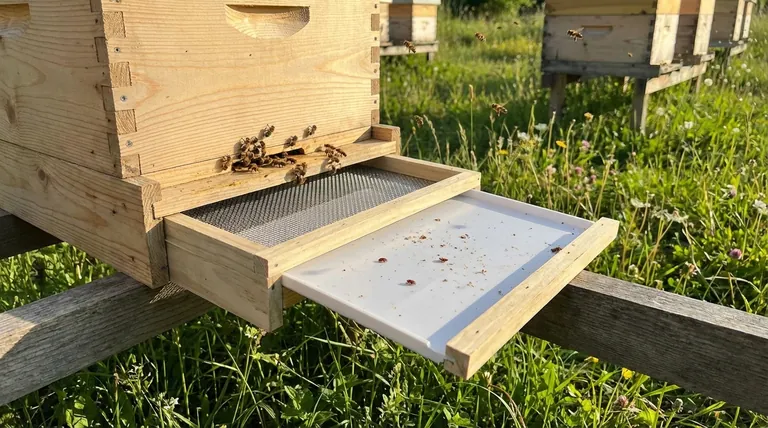
Varroa mites pose one of the most significant threats to honeybee colonies worldwide. For beekeepers seeking sustainable solutions, screened bottom boards offer a passive yet effective tool to reduce mite populations when integrated into broader pest management strategies. This guide explores their scientific basis, practical implementation, and synergy with other mite control methods—helping you protect colonies without over-reliance on chemical treatments.
Screened Bottom Boards: A Passive Defense Against Varroa
How Bee Behavior and Physics Drive Mite Removal
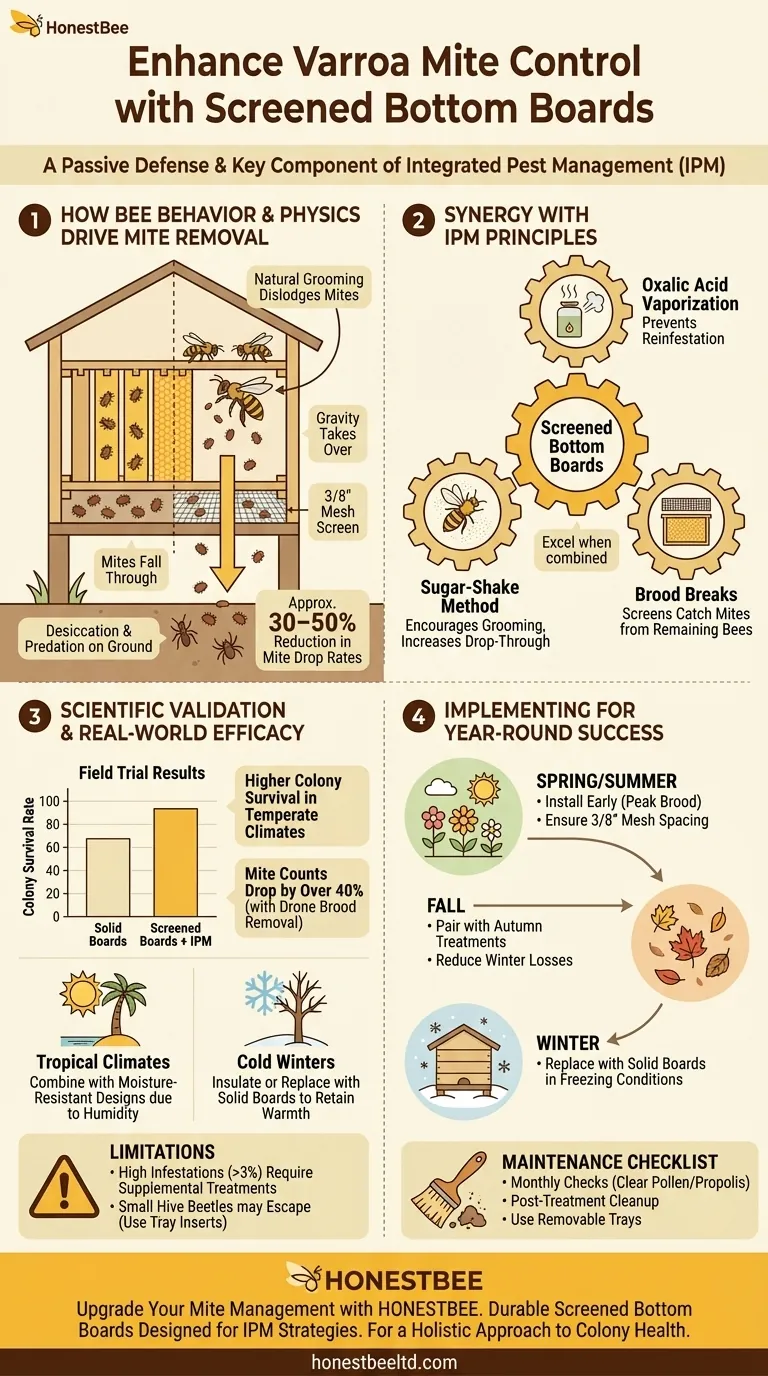
Screened bottom boards capitalize on natural bee grooming behaviors. When bees dislodge mites during cleaning, gravity takes over: mites fall through the screen onto the ground, where they desiccate or are eaten by predators. Research shows this method can reduce mite drop rates by approximately 30–50% compared to solid boards, which trap mites inside the hive where they may reattach to hosts.
Key advantages:
- Non-invasive: No chemical residues or hive disruption.
- Continuous action: Works year-round alongside bee activity.
- Low maintenance: Unlike sticky boards, screens rarely need cleaning.
Synergy with Integrated Pest Management (IPM) Principles
Screened boards alone won’t eliminate mites but excel when combined with other IPM tactics:
- Oxalic acid vaporization: Mites dislodged by treatments fall through screens, preventing reinfestation.
- Sugar-shake method: Powdered sugar encourages grooming, increasing mite drop-through rates.
- Brood breaks: Temporarily removing frames reduces mite reproduction; screens catch falling mites from remaining bees.
Scientific Validation and Real-World Efficacy
Key Studies on Mite Drop Rates and Colony Survival
Field trials reveal screened boards contribute to higher colony survival rates in temperate climates, where mites drop more consistently. In one study, apiaries using screens alongside drone brood removal saw mite counts drop by over 40% within eight weeks.
However, efficacy varies by environment:
- Tropical climates: High humidity may reduce mite desiccation; combine screens with moisture-resistant hive designs.
- Cold winters: Screens can lower hive temperatures. Insulate or replace with solid boards in freezing conditions.
Limitations: When Screened Boards Aren’t Enough
- High infestations (>3 mites per 100 bees): Requires supplemental treatments like formic acid.
- Small hive beetles: Screens may allow beetles to escape; use tray inserts with diatomaceous earth.
Implementing Screened Boards for Year-Round Success
Installation Best Practices by Season
- Spring/Summer: Install screens early to catch mites during peak brood production. Ensure 3/8" mesh spacing to prevent worker bees from falling through.
- Fall: Pair screens with autumn mite treatments to reduce winter colony losses.
- Winter: Replace screens with solid boards in freezing temperatures to retain warmth.
Maintenance to Prevent Debris Clogging
While screens require less cleaning than sticky boards, follow these steps:
- Monthly checks: Clear pollen or propolis buildup blocking mesh.
- Post-treatment cleanup: After vaporizing oxalic acid, remove dead mites trapped in debris below screens.
- Tray systems: Use removable trays for easier monitoring in wet climates.
Upgrade Your Mite Management with HONESTBEE
For commercial apiaries and distributors, HONESTBEE’s durable screened bottom boards are designed to withstand heavy use while supporting IPM strategies. Pair them with our vaporization tools for a holistic approach to colony health—because thriving bees start with smarter equipment.
By integrating screened boards into your mite control plan, you’re not just removing pests; you’re fostering a resilient beekeeping practice that aligns with nature’s rhythms. Whether you’re managing 50 hives or supplying equipment to thousands, these unassuming screens quietly shift the balance in favor of your bees.
Products You Might Be Looking For:
Explore durable beekeeping bottom boards
Visual Guide
Related Products
- Australian Pine Wood Langstroth Screen Bottom Board for Wholesale
- Langstroth Screen Bottom Board for Beekeeping Wholesale
- Solid Bottom Board Australian Pine Wood Langstroth Bottom Board for Wholesale
- Langstroth Solid Bottom Board for Beekeeping
Related Articles
- Why Your Hive Pest Control Is an Uphill Battle—And the Foundational Fix You're Overlooking
- Beyond Pest Control: Why Your Bottom Board Choice Is Directly Impacting Your Apiary's Profitability
- Beyond the Solid Floor: A Systems Approach to Hive Ventilation and Pest Control
- Your Hive's Foundation: The Hidden Key to Summer Productivity and Pest Control
- Hive Engineering: The Bottom Board as a Critical Climate and Pest Control System


