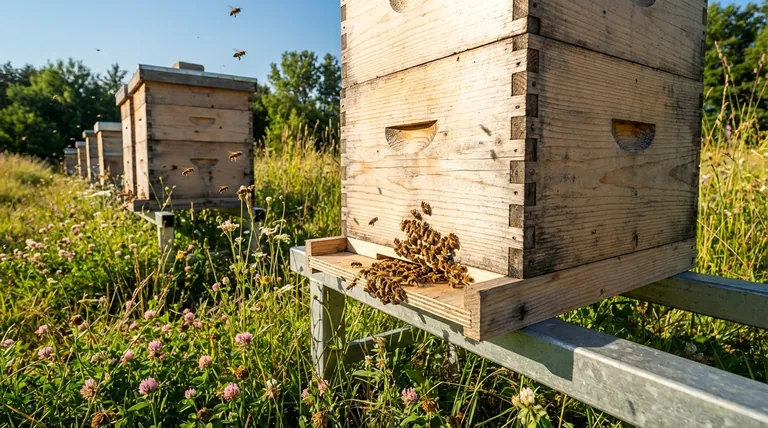
It's a frustratingly common scene in the peak of summer. You walk your apiary and see it: thick clusters of bees hanging on the front of your hives, a dense "beard" of workers who should be out foraging for nectar. Instead, they are grounded, desperately fanning in a futile attempt to cool a colony on the verge of overheating. This isn't just a sign of a hot day; it's a red flag for a hive in distress and a direct threat to your operation's productivity.
The Vicious Cycle of Ineffective Fixes and Hidden Costs
If you're a commercial beekeeper, you've likely seen this play out. You know that a heat-stressed colony is an unproductive one. You may have tried the standard workarounds: propping up lids for a bit of extra ventilation, ensuring water sources are nearby, or even creating artificial shade. Yet, the problem persists. The bees keep bearding, the brood nest suffers, and honey production stagnates.
This isn't just an inconvenience; it's a significant business problem.
- Lost Productivity: Every hour a bee spends fanning at the entrance is an hour it's not foraging. Across hundreds of hives, this translates directly into lower honey yields and reduced revenue.
- Increased Stress & Disease: Overheating weakens the entire colony, making it more susceptible to diseases and parasites. A chronically stressed hive is less likely to build up the strength needed for winter.
- Wasted Effort: Your time is spent on temporary, low-impact fixes instead of on strategic tasks that grow your operation, like splitting healthy hives or managing queen genetics.
You're stuck in a cycle of treating symptoms, watching your colonies struggle उत्पादन, and wondering what fundamental piece of the puzzle you're missing.
The Root of the Problem: Your Hive Can't Breathe
The problem isn't your bees, your location, or even the sun itself. It's physics. And the culprit is often the very foundation of the hive: the solid bottom board.
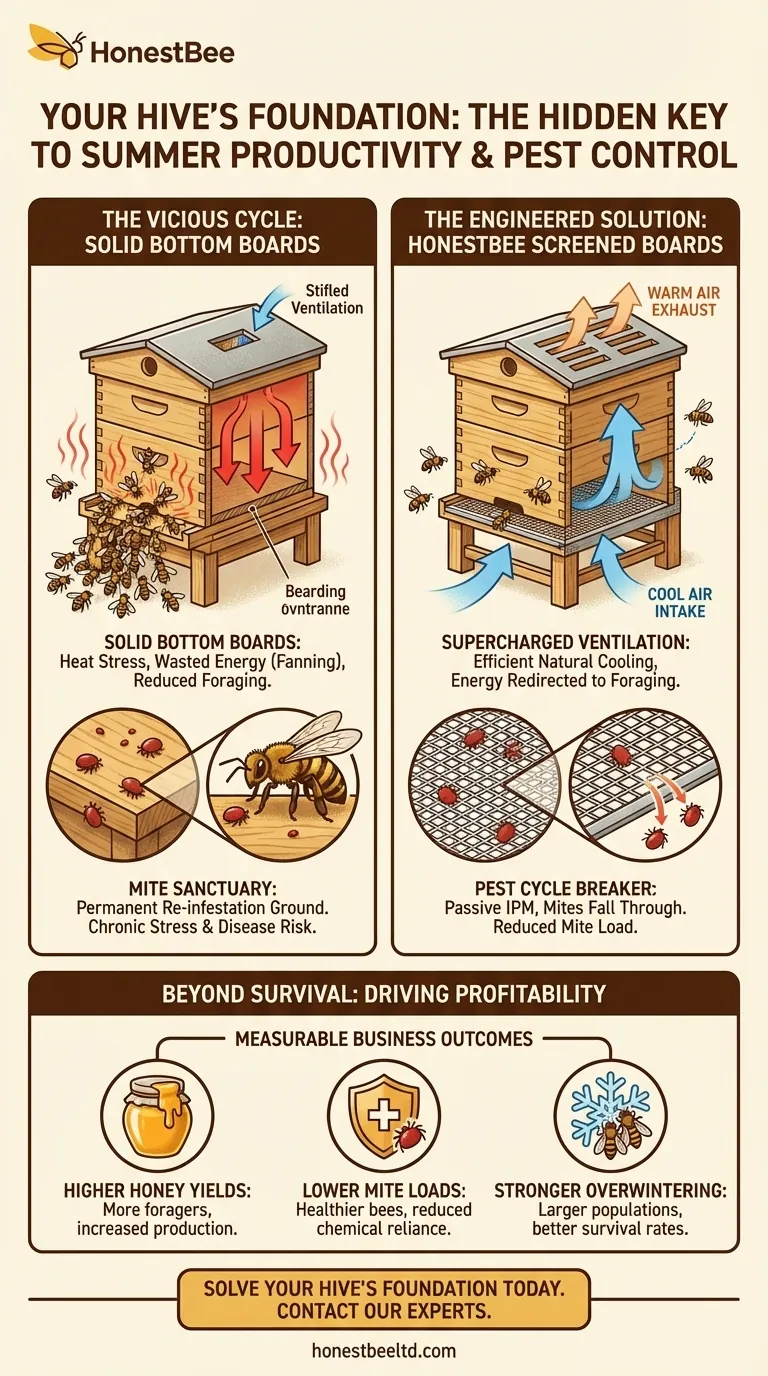
A beehive is a living engine that generates a tremendous amount of heat. To stay cool, the colony relies on air circulation. Cooler, denser air needs to enter from the bottom, absorb heat, and rise as warmer, lighter air to exit at the top. This is the "chimney effect," and it is essential for thermoregulation.
A solid bottom board completely blocks this natural airflow. It seals the air intake, forcing the bees to expend massive amounts of energy to manually ventilate the hive by fanning their wings. Trying to cool a hive with a solid floor by propping the lid is like trying to cool a house by only opening a window in the attic—it’s fundamentally inefficient because you’ve blocked the primary air source.
A Second Enemy: The Solid Floor as a Mite Sanctuary
There's a second, more insidious problem that a solid bottom board creates. It acts as a safety net for one of beekeeping's most destructive pests: the Varroa mite.
When mites naturally fall off a bee, a solid floor gives them a safe place to land. They can simply wait for another bee to walk by and climb back on, continuing their life cycle инфекция the colony. The floor becomes a permanent staging ground for re-infestation.
The common "solutions" fail because they don't address these two root causes. They don't fix the blocked ventilation, and they don't remove the pest sanctuary.
The Right Tool for the Job: An Engineered Solution
To truly solve this, you don't need a more complicated workaround. You need to work with the hive's natural biology, not against it. You need a tool designed to master airflow and disrupt pests.
This is the role of the screened bottom board.
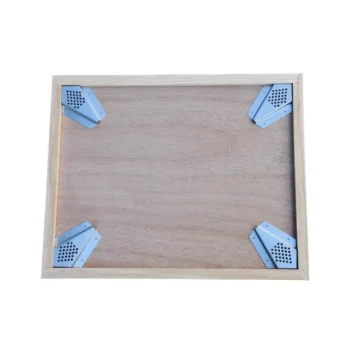
It is not just a floor with holes; it's a purpose-built ventilation and pest-management system. By replacing the solid floor with a durable mesh screen, you immediately solve both root problems:
- It Unlocks Natural Ventilation: The screen allows cool air to be drawn into the hive from below, supercharging the natural chimney effect. The bees can now regulate their temperature with a fraction of the effort, freeing up the entire workforce to focus on foraging and brood care.
- It Breaks the Pest Cycle: When Varroa mites fall off a host, they now fall straight through the mesh and out of the hive. The floor is no longer a safe harbor. This simple, passive mechanism constantly reduces the mite load in the colony, forming a cornerstone of any Integrated Pest Management (IPM) strategy.
At HONESTBEE, our screened bottom boards are engineered for this exact purpose. Built for the rigors of commercial use, they provide the structural integrity you need with the superior ventilation and pest-control benefits that a healthy, productive colony requires.
Beyond Survival: From Fighting Fires to Driving Productivity
When you solve the chronic stress of heat and pests, you're not just fixing a summer problem—you're unlocking your apiary's full potential. With their energy redirected from survival to production, your colonies become more robust and profitable.
This translates to measurable business outcomes:
- Higher Honey Yields: More foragers in the field means more honey in the supers.
- Lower Mite Loads: Reduced reliance on chemical treatments, saving you time and money while promoting healthier bees.
- Stronger Overwintering: Colonies that thrive in the summer enter winter stronger and with larger populations, dramatically improving survival rates and reducing your spring replacement costs.
You move from a defensive position of trying to keep weak hives alive to an offensive position of managing a healthy, thriving, and scalable operation.
Solving summer ventilation is just one piece of building a more resilient and profitable apiary. Our team understands the operational challenges of commercial beekeeping, from seasonal equipment strategy to large-scale logistics. Let's discuss how the right equipment can improve the health and profitability of your entire operation. Contact Our Experts
Visual Guide
Related Products
- Solid Bottom Board Australian Pine Wood Langstroth Bottom Board for Wholesale
- Australian Pine Wood Langstroth Screen Bottom Board for Wholesale
- Langstroth Solid Bottom Board for Beekeeping
- Langstroth Screen Bottom Board for Beekeeping Wholesale
- HONESTBEE Top Bar & Bottom Bar Forming Machine | Bee Frame Machine
Related Articles
- Hive Engineering: The Bottom Board as a Critical Climate and Pest Control System
- Optimizing Hive Health: How Your Bottom Board Choice Impacts Colony Survival
- Flow Hive vs. Langstroth: When Does the Premium Price Deliver Real Savings?
- How the Langstroth Hive Solves Beekeeping Challenges for Hobbyists and Professionals
- The Tyranny of a Quarter-Inch: How Bee Space Defines the Modern Hive