
To prevent bees from drowning in your fountain, you must eliminate areas of deep, open water where they can get trapped. The solution is to provide safe, non-submerged landing pads or create extremely shallow "shorelines" using materials like stones, marbles, or cork, allowing them to drink without risk.
The core principle is simple: Bees can't swim. Your goal is not just to provide water, but to offer a safe "dock" from which they can drink and easily fly away, preventing them from ever becoming trapped by the water's surface tension.
Why Fountains Are a Hazard for Bees
Understanding the specific dangers helps in creating an effective solution. A standard fountain, regardless of its beauty, presents several critical threats to small pollinators.
The Problem of Surface Tension
For an insect as small as a bee, the surface tension of water acts like a sticky trap. Once a bee falls in and its wings get wet, breaking free from this surface tension is nearly impossible.
Exhaustion and Slippery Surfaces
Most fountains are built from smooth materials like ceramic, metal, or sealed stone. If a bee falls in, it can find no grip to climb out, leading to exhaustion and eventual drowning.
The Need for a Stable Perch
Bees instinctively seek out shallow water sources like puddles, damp soil, or dewy leaves. They need a stable place to stand where they can lower their proboscis (tongue) to drink without their body touching the open water.
Creating Safe Landing Zones and Access Points
Modifying your fountain is straightforward and can be adapted to your aesthetic. The key is to add elements that break the water's surface and provide stable, dry perches.
Use Filler Materials for a Shoreline
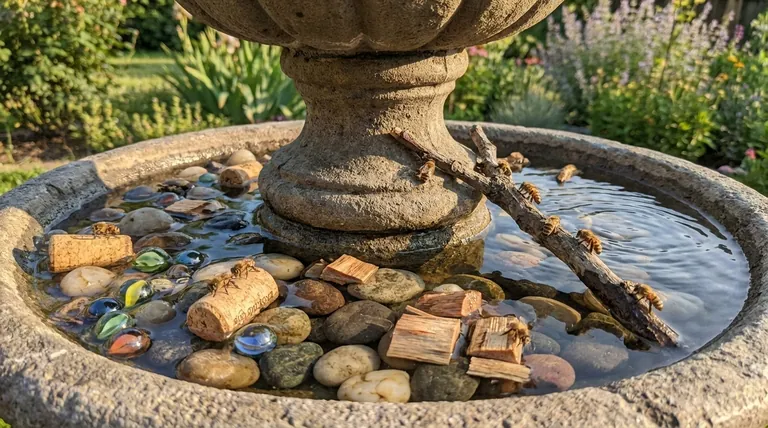
The easiest method is to fill a basin or tier of your fountain with a material that displaces the water, creating a bee-safe "beach."
Place marbles, glass beads, or river stones in a basin until the objects are just breaking the surface. This creates countless tiny, shallow pools of water that bees can safely access.
Add Floating "Islands"
If you prefer to keep the look of open water, you can add floating elements that act as life rafts.
Pieces of cork or small, untreated wood chips work perfectly. They provide a natural-looking, buoyant platform for bees to land on, drink from, and take off again.
Build an "Exit Ramp"
Think of this as a ladder for any bee that accidentally falls in. This is especially important for fountains with deeper basins.
A strategically placed stick or small branch that extends from the bottom of the basin to well above the water's edge provides a crucial escape route.
Understanding the Trade-offs
While these solutions are effective, they require some consideration to maintain the health and beauty of your fountain.
Material Choices
Natural materials like wood will eventually degrade and need to be replaced. Sponges are not recommended as they can quickly harbor bacteria and become slimy, fouling your water.
Regular Cleaning
Adding fillers like stones or marbles will create more surfaces for algae to grow. You may need to clean your fountain more frequently to keep the water fresh and clear.
Maintaining Water Levels
Ensure the water level remains high enough to keep your "shoreline" of stones or marbles wet. If the water drops too low, the bees won't be able to reach it.
Making the Right Choice for Your Fountain
Select a method that matches your fountain's design and your maintenance commitment.
- If your primary focus is aesthetics: Use decorative glass beads, colorful marbles, or smooth river stones to create a visually pleasing and safe drinking area.
- If your primary focus is low-cost simplicity: Use natural materials like clean sticks, wine corks, or small branches to serve as landing platforms and exit ramps.
- If you have a deep basin with steep sides: It is critical to combine a filler material with a larger "exit ramp" to ensure any trapped bee has a reliable way to climb out.
By making these simple modifications, you transform your water feature from a potential hazard into a vital, life-sustaining resource for local pollinators.
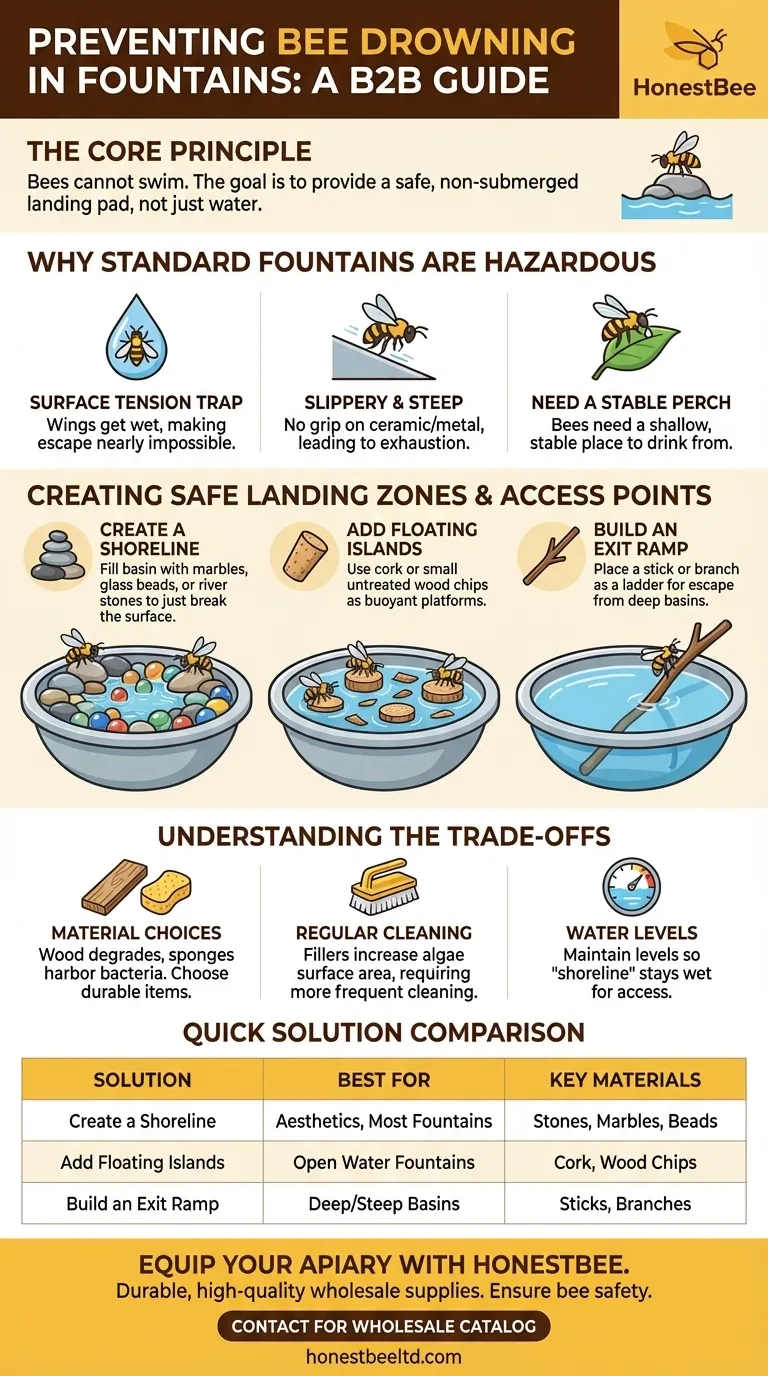
Summary Table:
| Solution | Best For | Key Materials |
|---|---|---|
| Create a Shoreline | Most fountains, aesthetic control | Marbles, glass beads, river stones |
| Add Floating Islands | Fountains with open water | Cork, untreated wood chips |
| Build an Exit Ramp | Deep basins, steep sides | Sticks, small branches |
Equip your apiary with the best. HONESTBEE supplies durable, high-quality beekeeping supplies and equipment to commercial apiaries and distributors through our wholesale-focused operations. Ensure the health and safety of your bees with our reliable products. Contact our team today to discuss your needs and request a wholesale catalog!
Visual Guide
Related Products
People Also Ask
- What types of bee feeders are available for beginners? Start with the Simple Entrance Feeder
- What are the advantages and disadvantages of using an entrance feeder for bees? Balance Convenience and Hive Security.
- How does a bee entrance feeder work? A Simple Guide to Convenient Hive Feeding
- What is a bee entrance feeder and what are its drawbacks? Essential Guide to Hive Security and Feeding Efficiency
- How to make an entrance feeder for bees? A DIY Guide for Safe & Effective Feeding
