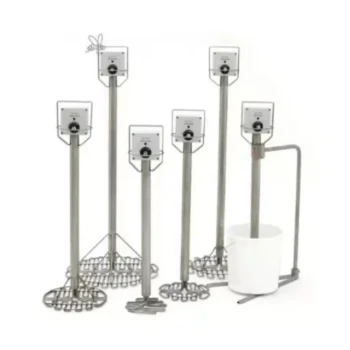
Digital thermostatic heating plates serve as the foundational tool for preparing honey samples by ensuring the material is in the correct physical state for analysis without altering its chemical composition. Specifically, these devices are applied to dissolve crystallized sugars, facilitate specific chemical reactions, and reduce natural viscosity to allow for uniform homogenization.
Core Insight: Success in honey analysis depends on balancing physical liquefaction with chemical preservation. Digital thermostatic plates provide the precise temperature control necessary to prepare samples, ensuring that heat-sensitive markers remain intact for accurate data collection.
Managing the Physical State of Honey
To obtain accurate analytical data, honey must often be transformed from its raw, viscous, or semi-solid state into a uniform liquid.
Dissolving Crystallization
Honey frequently exists in a crystallized state. Before analysis can occur, the sample must be returned to a liquid phase.
Digital heating plates apply controlled heat to dissolve these crystals efficiently. This creates a consistent liquid matrix required for most testing protocols.
Reducing Viscosity
In its natural state, honey is highly viscous. This thickness makes it difficult to handle and mix.
By maintaining the sample (or diluent) at a specific warm temperature, the heating plate reduces the natural viscosity of the honey. This physical change is critical for the subsequent steps of sample preparation.
Ensuring Uniform Homogenization
Viscosity reduction is directly linked to sample uniformity. When honey is too thick, suspended particles—specifically pollen grains—cannot be distributed interactions.
Heating allows the sample to be homogenized effectively. This ensures that pollen is distributed uniformly throughout the mixture, preventing statistical bias caused by uneven sedimentation.
Preserving Chemical Integrity
While physical preparation is necessary, it presents a risk to the sample's chemical makeup. The "digital" aspect of these plates—offering precise thermal regulation—is the solution to this problem.
Protecting Heat-Sensitive Components
Honey is a biologically active substance containing enzymes and sugars that are highly sensitive to thermal stress.
Standard heating methods risk denaturing these enzymes or caramelizing sugars. Digital thermostatic plates prevent this degradation by capping temperatures at safe levels.
Facilitating Chemical Reactions
Certain pretreatment protocols require specific temperature thresholds to trigger necessary chemical reactions.
The heating plate provides the stable energy source required to facilitate these reactions without exceeding the thermal tolerance of the sample.
Guaranteeing Data Validity
The ultimate goal of using precise heating is data integrity.
By preventing thermal damage, the device ensures that the resulting experimental data accurately reflects the physical and chemical properties of the honey in its natural state, rather than artifacts created by the preparation process.
Common Pitfalls to Avoid
While digital plates offer precision, the operator must understand the boundaries of thermal pretreatment.
The Risk of Accelerated Heating
There is often a temptation to increase the temperature to dissolve crystals faster.
However, even brief exposure to excessive heat can permanently destroy enzymatic activity. You must avoid trading sample integrity for speed.
Incomplete Liquefaction
Conversely, failing to apply enough heat or maintaining the temperature for an insufficient duration can result in incomplete liquefaction.
This leaves micro-crystals or areas of high viscosity in the sample. This lack of uniformity will lead to non-representative sampling and inaccurate physical readings.
Making the Right Choice for Your Goal
The application of heat should be tailored to the specific type of analysis you are performing.
- If your primary focus is Chemical or Enzymatic Analysis: Prioritize lower temperatures and precise control to prevent the degradation of heat-sensitive sugars and enzymes.
- If your primary focus is Melissopalynology (Pollen Analysis): Focus on thermal application sufficient to lower viscosity, ensuring the sample is fully homogenized for an unbiased pollen count.
By leveraging precise thermal control, you transform a variable, crystallized raw material into a consistent, analyzable sample that yields reproducible results.
Summary Table:
| Application | Purpose | Key Benefit |
|---|---|---|
| Dissolving Crystallization | Liquefy semi-solid samples | Creates a consistent matrix for testing |
| Viscosity Reduction | Lower fluid resistance | Easier handling and precise measurement |
| Homogenization | Uniform particle distribution | Eliminates statistical bias in pollen counts |
| Thermal Regulation | Protect heat-sensitive enzymes | Preserves chemical integrity and data validity |
| Reaction Facilitation | Stable energy source | Triggers specific pretreatment chemical reactions |
Elevate Your Honey Processing Efficiency with HONESTBEE
At HONESTBEE, we understand that precision is the backbone of a successful apiary operation. Whether you are a commercial apiary or a global distributor, our comprehensive wholesale solutions are designed to optimize your workflow.
We provide a full spectrum of professional tools, including:
- Advanced Machinery: From hive-making to honey-filling and precise thermal processing equipment.
- Specialized Hardware: Durable beekeeping tools and essential industry consumables.
- Cultural Merchandise: Unique honey-themed products to expand your market reach.
Partner with us to access high-quality equipment that ensures your honey maintains its natural integrity from the hive to the lab.
Ready to scale your operation? Contact us today to discuss your wholesale needs!
References
- Devi Adityarini, Sri Darmanti. Kualitas Madu Lokal Berdasarkan Kadar Air, Gula Total dan Keasaman dari Kabupaten Magelang. DOI: 10.14710/baf.5.1.2020.18-24
This article is also based on technical information from HonestBee Knowledge Base .
Related Products
- Professional Thermostatic Conical Honey Melter
- Professional Electric Honey Uncapping Knife with Heated Digital Temperature Control for Beekeeping
- Digital Display Electric Honey Uncapping Knife for Beekeeping and Decapping
- Electric Hot Honey Uncapping Knife with Thermostat
- Honey Tank Heater Drum Heating Blanket for Honey Barrel
People Also Ask
- What is melter honey used for? A Low-Cost Ingredient for Bakers and Brewers
- How does a honey melter address the issue of crystallized honey in storage? Restore Flow and Quality Efficiently
- How do you melt a bucket of honey? Safely Reliquefy Crystallized Honey Without Damage
- When is a honey melter necessary? Optimize Your Facility's Workflow for Crystallized Honey
- What factors should be considered when selecting a heater for honey containers? Optimize Your Warming Efficiency