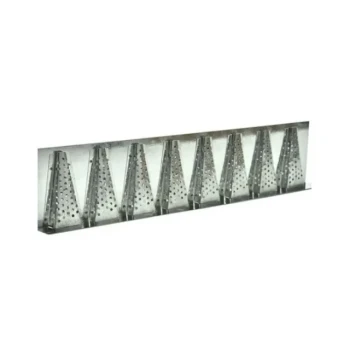
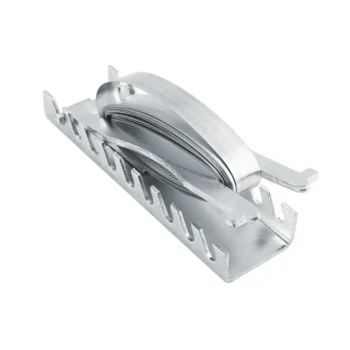
The primary role of beehive anti-hornet nets and defense guards is to establish a selective physical perimeter around the hive entrance. These devices are engineered to mechanically block larger Asian hornets from entering the colony while preserving the ability of smaller honey bees to pass through. By securing the entrance, these tools significantly reduce the predator's hunting success rate and prevent the devastating disruption of normal hive activity.
The Core Protection Principle While these tools physically stop invasion, their deeper value lies in stabilizing colony behavior. By lowering predation pressure at the threshold, they mitigate the "foraging paralysis" that typically leads to colony decline.
The Mechanics of Physical Defense
Selective Entry Control
The fundamental operation of these guards relies on precise size differentiation. The mesh or grid structure acts as a selective filter at the hive's most vulnerable point.
The apertures are sized strictly to allow honey bees to enter and exit without obstruction. Conversely, the openings are too small for the larger thorax of the Asian hornet, physically rendering hive invasion impossible.
Reducing Hunting Efficiency
Asian hornets typically hunt by "hawking" (hovering) directly in front of the landing board to snatch returning foragers.
Defense guards create a spatial buffer. This restricts the hornets' access to the immediate landing zone, forcing them to hunt from a distance where their success rate is significantly reduced.
Preserving Colony Function
Mitigating Foraging Disruption
The threat of Asian hornets extends beyond the individual bees they eat; their presence causes stress that disrupts the entire colony's workflow.
Without protection, colonies often cease foraging due to fear, cutting off the supply of nectar and pollen. Anti-hornet nets mitigate this disruption, allowing the colony to maintain the critical foraging behavior necessary for survival.
Preventing Colony Decline
The ultimate goal of these defenses is to arrest the downward spiral caused by predation pressure.
By securing the entrance and allowing resource gathering to continue, the guards prevent the starvation and population collapse that typically characterize colony decline during hornet season.
Understanding the Limitations
Mitigation, Not Eradication
It is critical to understand the distinction between protection and elimination. These tools are designed to mitigate pressure, not to kill the predator.
According to the reference data, the guards reduce the success rate of the hornets and stop them from entering. However, they do not remove the hornets from the apiary environment; the predators remain present, simply less effective.
Making the Right Choice for Your Goal
To effectively deploy these defenses, you must align them with your specific colony management objectives.
- If your primary focus is preventing hive invasion: Prioritize guards with rigid spacing that physically prohibits the hornet from breaching the hive body.
- If your primary focus is maintaining honey production: Utilize nets that create a wide buffer zone to minimize stress and encourage consistent foraging flights.
By integrating these physical barriers, you convert a vulnerable colony into a defensible fortress, stabilizing the hive against external aggression.
Summary Table:
| Feature | Primary Function | Key Benefit |
|---|---|---|
| Selective Mesh | Filters entry based on size | Allows bees to pass while blocking larger hornets |
| Spatial Buffer | Forces predators away from landing boards | Reduces hunting success rate and 'hawking' efficiency |
| Stress Mitigation | Lowers colony anxiety | Prevents foraging paralysis and maintains honey production |
| Physical Guard | Hard perimeter defense | Prevents total hive invasion and population collapse |
Secure Your Apiary’s Future with HONESTBEE
Protecting your commercial honey production from Asian hornet predation requires more than just luck—it requires professional-grade equipment. HONESTBEE specializes in supporting commercial apiaries and distributors with a comprehensive range of beekeeping tools, from precision-engineered defense guards and hive-making machinery to honey-filling equipment and essential consumables.
Whether you are scaling up your distribution or securing a large-scale honey operation, we provide the wholesale hardware and industry expertise you need to thrive. Contact HONESTBEE today to explore our full-spectrum beekeeping solutions and learn how we can bring superior value and protection to your business.
References
- Daniel N. Franklin, Matt J. Keeling. Invasion dynamics of Asian hornet, Vespa velutina (Hymenoptera: Vespidae): a case study of a commune in south-west France. DOI: 10.1007/s13355-016-0470-z
This article is also based on technical information from HonestBee Knowledge Base .
Related Products
- Metal Hive Feet Bee Hive Stand for Ant Protection
- Beehive Entrance Reducer Guardian Metal Hive Entrance for Bees
- 8-Cone Galvanized Steel Bee Robber Guard
- High Security Emlock Strap System
- Beekeeping Gloves Goatskin Leather with Long Cotton Sleeve for Beekeepers
People Also Ask
- What are the benefits of elevating a bee hive with a stand or base? Protect Your Colony and Your Back
- How does a beehive stand protect against predators and pests? Essential Strategies for Colony Security
- How should the height of a beehive stand be determined? Find Your Ergonomic Sweet Spot
- What to stand a beehive on? The Best Foundation for a Healthy, Manageable Apiary
- What is the best base for a beehive? Choose the Right Stand for Colony Health