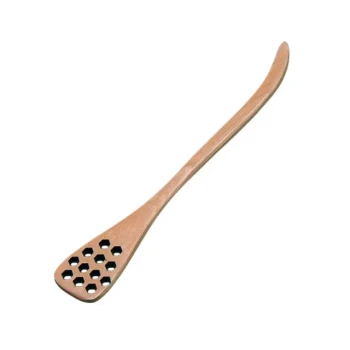
Ceramic cooking pots are the primary tools used for the thermal treatment of harvested honeycombs. This process involves heating the combs to melt the beeswax, which facilitates the efficient separation of honey from the wax structure. This thermal step is essential for improving the flow and purity of the honey and for obtaining clean, high-quality beeswax products for commercial sale.
Ceramic pots serve as a specialized thermal medium that ensures the efficient separation of honey and wax while maintaining the purity and shelf-life of the final product.
The Role of Thermal Processing in Honey Extraction
Facilitating the Separation of Honey and Wax
Thermal treatment in ceramic pots melts the solid wax structure of the harvested honeycomb. This process significantly reduces the viscosity of the honey, allowing it to be separated from the wax with minimal waste.
Enhancing Product Purity and Quality
Controlled heating ensures that the honey reaches the necessary flow state without damaging its delicate chemical composition. This step is critical for removing impurities, resulting in a premium liquid honey that meets high-end market standards.
Maximizing Wax Yield
By using ceramic pots for melting, processors can recover high-quality beeswax as a secondary product. This wax is then used in various industrial applications, from cosmetics to candle making, providing an additional revenue stream for distributors.
Industry Context: From Natural Storage to Industrial Processing
Bridging the Gap Between Hive and Market
While bees naturally seal honey in wax structures to manage moisture levels, human processing requires external heat to extract the honey for bottling. Ceramic pots act as the bridge between the raw hive state and a shelf-ready consumer product.
Managing Moisture and Shelf Life
Effective processing must maintain honey moisture levels below 20% to inhibit yeast growth. Professional-grade ceramicware allows for the precise, even temperature control necessary to preserve the honey's natural preservative properties during extraction.
Understanding the Trade-offs in Processing Equipment
Thermal Stability vs. Material Fragility
Ceramic offers superior heat retention and distribution compared to metal, which prevents "hot spots" that can scorch honey. However, ceramic is more fragile than stainless steel, requiring distributors to partner with suppliers who offer robust packaging and efficient fulfillment to prevent transit damage.
Cleaning and Maintenance Requirements
Ceramic surfaces are generally non-reactive, which helps maintain the purity and flavor profile of the honey. While they are easier to keep sterile than some materials, they require careful handling to avoid chipping or cracking during high-volume processing cycles.
Optimizing Your Sourcing Strategy for Processing Tools
As a distributor or wholesaler, providing the right equipment is about more than just the product; it is about ensuring your clients can maintain a reliable production line. Partnering with a supplier that offers a full-spectrum portfolio and deep industry expertise ensures your customers receive the best tools for their specific processing needs.
- If your primary focus is product quality and purity: Prioritize high-grade ceramic pots that offer even heat distribution to protect the honey’s natural enzymes and flavor.
- If your primary focus is supply chain efficiency: Partner with a one-stop trading expert who offers a comprehensive product range and ultra-fast delivery to keep your inventory levels optimized.
- If your primary focus is long-term reliability: Leverage suppliers with dedicated customer service and professional expertise to navigate technical requirements and order fulfillment.
By selecting the right ceramic processing tools, you empower your clients to produce honey and wax of the highest professional caliber.
Summary Table:
| Feature | Benefit in Honey Processing | Impact on Final Product |
|---|---|---|
| Superior Heat Retention | Even melting of beeswax structures | Prevents scorching; preserves natural enzymes |
| Non-Reactive Surface | Maintains chemical stability | Ensures flavor purity and high-end market appeal |
| Viscosity Reduction | Facilitates efficient honey-wax separation | Maximizes yield and minimizes extraction waste |
| Precise Temp Control | Manages moisture levels below 20% | Inhibits yeast growth and extends shelf life |
Scale Your B2B Beekeeping Supply with HONESTBEE
Maximize your profit margins and supply reliability by partnering with HONESTBEE. We offer a one-stop sourcing solution tailored specifically for distributors and wholesalers, providing a comprehensive full-spectrum portfolio that includes everything from precision processing tools and honey-filling machinery to hive-making equipment and essential consumables.
Why choose HONESTBEE?
- Deep Industry Expertise: Professional guidance to help you navigate technical requirements.
- Ultra-Fast Delivery: Efficient order fulfillment to keep your inventory optimized.
- Dedicated Service: Exceptional support and rapid response times for all B2B resellers.
Ready to enhance your product offering? Contact our team today to discuss wholesale opportunities!
References
- David Quixal Santos, Paula Jardón Giner. El registro material del colmenar ibérico de la Fonteta Ràquia (Riba-Roja, València). DOI: 10.14198/lvcentvm2016.35.02
This article is also based on technical information from HonestBee Knowledge Base .
Related Products
People Also Ask
- What is the proper method for cleaning a honey dipper? Maintain Pure Flavor with These Easy Pro Tips
- What is a honey dipper and what is it used for? A Guide to Mess-Free Drizzling
- What is a honey dipper? Master the Art of the Perfect Drizzle with This Essential Tool
- What is a honey taking spoon called? Discover the Tool for a Perfect, Mess-Free Drizzle
- How do you clean and store a honey dipper? Simple Steps for Long-Lasting Performance