The primary driver is economic scalability. While industrial-grade compression load cells provide superior accuracy and reliability, their high unit cost makes them impractical for high-volume applications like individual beehive frame monitoring. Because a single hive requires up to 20 separate sensors to track every frame, the cumulative expense of industrial hardware renders the system commercially unviable for large-scale apiaries.
In applications requiring high sensor density, such as monitoring 20 frames per beehive, the prohibitive cost of industrial load cells necessitates a shift toward affordable alternatives like Force Sensitive Resistors to achieve commercial feasibility.
The Hardware Economics of Hive Monitoring
The Multiplier Effect
The central challenge in frame-by-frame monitoring is the sheer volume of hardware required. A standard beehive is not a single unit of measurement; it is an aggregate of many moving parts.
To effectively monitor individual frames, a system may require up to 20 sensors per hive. This multiplier effect turns a reasonable unit price into a significant capital investment.
The Cost Barrier
Industrial-grade compression load cells are engineered for exacting standards. They offer high reliability and maintaining error rates under 1%.
However, this precision commands a high price. When that price is multiplied by 20 for a single hive—and then multiplied again by hundreds of hives in a commercial apiary—the total cost becomes prohibitive.
Understanding the Trade-offs
Precision vs. Viability
The decision to switch sensors is a calculated compromise between measurement accuracy and project feasibility.
Developers often select Force Sensitive Resistors (FSRs) as the alternative. These sensors are significantly more affordable, allowing for the high-density deployment required to monitor every frame.
Accepting Lower Accuracy
By moving away from industrial load cells, engineers accept a reduction in data precision. FSRs generally do not match the sub-1% error rates of industrial load cells.
However, in the context of commercial beekeeping, the trend is to prioritize commercial viability. The goal is to gather actionable trend data across the entire apiary rather than achieving laboratory-grade precision on a single frame.
Making the Right Choice for Your Goal
When selecting sensors for agricultural monitoring, your choice depends entirely on the scale and intent of your project.
- If your primary focus is scientific research: Stick with industrial-grade load cells to ensure error rates remain under 1% for precise data collection.
- If your primary focus is commercial scalability: Utilize cost-effective sensors like Force Sensitive Resistors to enable affordable, high-volume monitoring across multiple frames.
Ultimately, the best sensor is the one that provides sufficient data quality without breaking the project's economic model.
Summary Table:
| Feature | Industrial Load Cells | Force Sensitive Resistors (FSR) |
|---|---|---|
| Accuracy | High (Error < 1%) | Moderate (Trend-focused) |
| Unit Cost | High / Prohibitive | Low / Cost-effective |
| Scalability | Low (Scientific focus) | High (Commercial focus) |
| Primary Use | Research & Lab Data | Large-scale Hive Monitoring |
Scale Your Apiary Efficiency with HONESTBEE
Are you looking to optimize your commercial beekeeping operations without compromising on economic viability? At HONESTBEE, we specialize in serving commercial apiaries and distributors with a comprehensive range of professional tools and machinery.
From high-precision hive-making and honey-filling machines to a full spectrum of essential consumables and beekeeping hardware, we provide the equipment you need to grow your business. Whether you are building a custom monitoring system or stocking your distribution center, our team is ready to support your success with competitive wholesale offerings.
Ready to elevate your honey production? Contact us today at HONESTBEE to explore our tailored solutions and industry-leading equipment portfolio.
References
- Navid Shaghaghi, Peter Ferguson. Identifying Beehive Frames Ready For Harvesting. DOI: 10.1109/ghtc46095.2019.9033045
This article is also based on technical information from HonestBee Knowledge Base .
Related Products
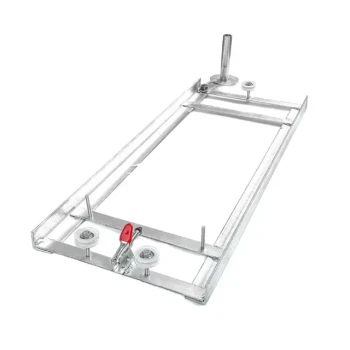
- Professional Galvanized Steel Frame Rest for Beehives
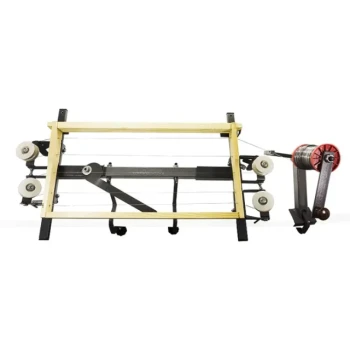
- HONESTBEE Durable Frame Wiring Board with Integrated Tensioner
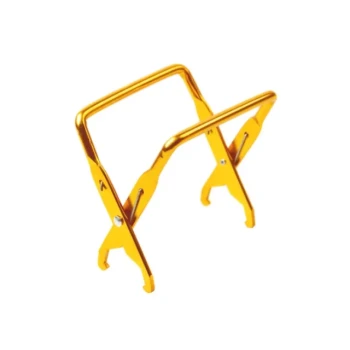
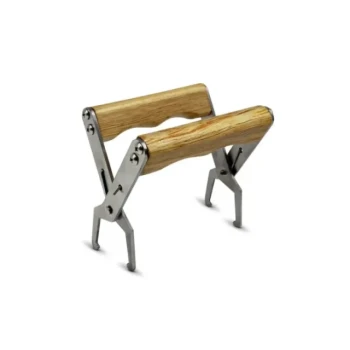
- Heavy-Duty Stainless Steel Frame Grip
- Heavy-Duty Stainless Steel Clip-On Frame Perch
- Wooden Bee Hive Frames for Beekeeping and Wholesale
People Also Ask
- What are the standard dimensions for frame rests in a beehive? Essential Guide for Perfect Bee Space
- How does balancing the number of frames impact hive productivity? Optimize Your Apiary's Biological Output
- What are the main considerations when choosing between wooden and plastic bee hive frames? Optimize Your Apiary's Efficiency
- How do wooden and plastic hive frames compare in terms of durability? Wood vs. Plastic Longevity & Repairability
- What are the main types of beehive frames used in modern beekeeping? Find the Perfect Fit for Your Apiary