Yes, smoke can be used to pacify wasps, but it is not a method for getting rid of them. While smoke does disrupt their defensive behavior, using it as a DIY removal technique is extremely dangerous and often ineffective. The risk of enraging the colony or starting a fire is significant, making this a strategy best left to theoretical understanding rather than practical application.
The core principle to understand is this: smoke is a tool for temporary pacification, not eradication. Attempting to use fire and smoke for DIY wasp removal introduces severe personal safety and fire risks that far outweigh any potential benefit over proven, safer methods.

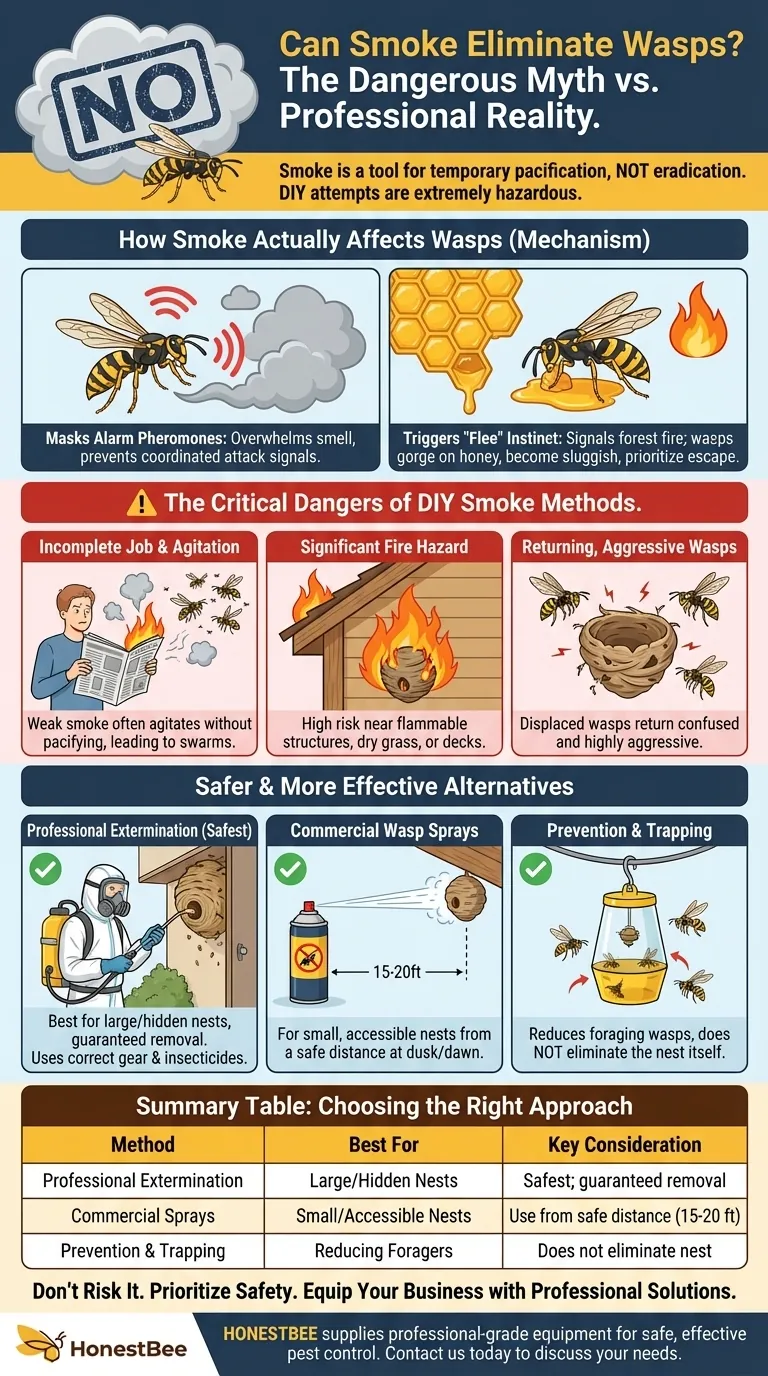
How Smoke Actually Affects Wasps
To understand the risks, you must first understand the mechanism. The idea of using smoke is not baseless; it's a technique primarily used by beekeepers, but wasps and bees react in similar ways.
It Masks Alarm Pheromones
When a wasp feels threatened, it releases alarm pheromones. These chemical signals alert the rest of the colony, triggering a coordinated, defensive swarm attack.
Smoke, particularly thick smoke, effectively masks these pheromones. It overwhelms the wasps' sense of smell, preventing the distress signal from spreading and organizing a large-scale attack.
It Triggers a "Flee" Instinct
On a more primal level, smoke signals a forest fire. This triggers a survival instinct in the insects to abandon their nest.
Their immediate priority becomes consuming as much honey or nectar as possible to have the energy to fly away and establish a new home. This makes them sluggish, preoccupied, and less interested in defending the nest.
The Critical Dangers of the DIY Smoke Method
While the science is sound, the practical application for an amateur is fraught with peril. The simplistic advice to "light up a rolled-up newspaper" is a recipe for disaster.
The High Risk of an Incomplete Job
To be effective, you need a large volume of cool, thick smoke, as generated by a professional beekeeper's smoker.
A burning newspaper or a small fire creates minimal, hot smoke. This is more likely to agitate a few wasps without pacifying the whole colony, turning a controllable situation into an immediate swarm attack. You do not want to be near an angry nest when your smoke "tool" fails.
The Significant Fire Hazard
Wasp nests are frequently built on or inside flammable structures like house eaves, wooden sheds, or decks. They are also common in dry, grassy areas or dead trees.
Attempting to use an open flame or smoldering material in these locations presents an obvious and severe fire hazard. A moment of distraction can lead to catastrophic property damage.
The Problem of Returning Wasps
Even if you succeed in driving the wasps away and removing the physical nest, the problem is not solved. The wasps are not gone; they are merely displaced.
They will return to the site of their former home. Finding it destroyed, they will be agitated, confused, and highly aggressive, lingering in the area for days and posing a continued threat.
Safer and More Effective Alternatives
Addressing the core problem—safely removing a wasp nest—is better accomplished with methods designed for that specific purpose.
Option 1: Professional Extermination
This is the safest and most effective solution, especially for large nests, aggressive species like yellow jackets or hornets, or nests located in difficult-to-reach places (like inside a wall). Professionals have the correct protective gear, equipment, and potent insecticides to do the job right.
Option 2: Commercial Wasp Sprays
For small, visible, and easily accessible nests, a commercial wasp and hornet spray can be an effective DIY option. These products are designed to shoot a stream from a safe distance (often 15-20 feet).
Always spray at dusk or dawn when wasps are less active and inside the nest. Ensure you have a clear escape path, and never stand directly under the nest.
Option 3: Prevention and Trapping
To manage foraging wasps away from the nest, commercial traps that use a lure are very effective. Place them at the edges of your property, away from seating areas. This won't eliminate a nest but will reduce the number of wasps bothering you.
Choosing the Right Approach for Your Wasp Problem
Your strategy should be dictated by your primary goal, balancing safety, cost, and effectiveness.
- If your primary focus is safety and guaranteed removal: Hire a professional exterminator, especially for large nests or nests inside your home's structure.
- If you are attempting a DIY solution on a small, accessible nest: Use a specially formulated wasp and hornet spray, following the safety instructions precisely and operating from a safe distance.
- If you simply want to reduce the number of wasps in your yard: Use commercial wasp traps placed away from your main living areas to intercept foragers.
Ultimately, confronting a wasp nest requires prioritizing personal safety over unverified and dangerous home remedies.
Summary Table:
| Method | Best For | Key Consideration |
|---|---|---|
| Professional Extermination | Large nests, aggressive species, nests in walls/structures | Safest option; guaranteed removal |
| Commercial Wasp Sprays | Small, visible, accessible nests | Use from a safe distance (15-20 ft) at dusk/dawn |
| Prevention & Trapping | Reducing foraging wasps in the yard | Does not eliminate the nest itself |
Don't Risk a Dangerous DIY Approach—Let the Professionals Handle It
Dealing with a wasp infestation is a serious safety concern. While smoke might seem like a simple solution, it's an ineffective and hazardous method that can lead to aggressive swarms or property damage.
HONESTBEE supplies professional-grade beekeeping and pest control equipment to commercial apiaries and equipment distributors. Our partners rely on effective, safe tools to manage stinging insects.
If you are a commercial operator or distributor seeking reliable equipment for safe pest control, our experts can help you find the right solution.
Contact HONESTBEE today to discuss your needs and ensure safe, effective results.
Visual Guide
Related Products
- Gourd Shaped Hanging Wasp Trap Professional Wasp Catcher
- Professional Bucket Style Wasp and Moth Pheromone Trap
- Professional Multi-Component Bucket Wasp Trap
- Reusable Wasp Trap Bottle Converter
People Also Ask
- How do professional wasp traps function? Master Physical Control of Oriental Hornets to Protect Your Apiary
- What are the practical advantages of using professional wasp traps and protective equipment in apiary management? Scale Up
- Why replace sugar syrup bait in wasp traps every three days? Ensure Maximum Attraction and Catch Rates
- What role do specialized wasp traps play in wasp control? Enhance Apiary Security and Pest Monitoring
- How can commercial apiary operators mitigate wasp predation around hives using specialized trapping equipment? Effective strategies for wasp control