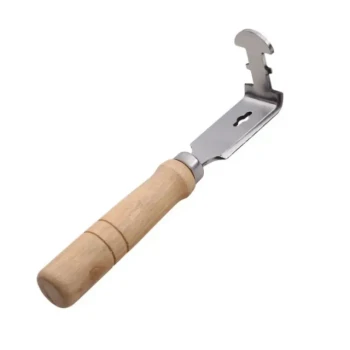
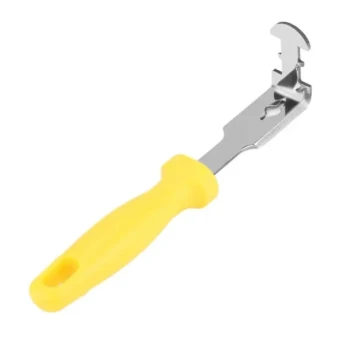
Propolis can be harvested directly from hive scrapings by collecting the material removed during the cleaning of honey supers or while maintaining frame edges and inner walls. The significant drawback to this method is the high level of contamination, as the raw material is inevitably mixed with impurities like beeswax, wood chips, and dead bees.
Core Takeaway: While scraping is a fundamental and accessible method for collecting raw resin, it produces "crude propolis" that requires significant purification. It is best suited for volume collection where high initial purity is not the primary immediate constraint.
The Mechanics of Manual Collection
Utilizing Routine Maintenance
The most common opportunity to collect propolis arises during the honey harvest. As you clean honey supers, use a manual scraper to physically remove resin deposits from hive covers, frames, and inner walls.
Tools and Technique
Manual scrapers are the fundamental tool for this process. While the operation is simple, it requires a systematic approach to ensure you acquire a sufficient volume of raw resin material from the hive's architectural gaps.
The Challenge of Contamination
Identifying Impurities
The primary limitation of scraping is that it is an indiscriminate process. Along with the propolis, you will inevitably collect contaminants such as bits of wax, wood shavings from the frames, soil, and dead bees.
The "Crude" Classification
Because of this mixture, the resulting harvest is classified as "crude propolis." This lower purity level makes the material unsuitable for immediate high-end use without undergoing a cleaning process to separate the resin from the debris.
Methods for Refining Raw Material
The Water Soak Method
To remove lighter contaminants, soak the scrapings in a pail of water. Debris such as beeswax, wood chips, and dead bees tend to float, while the denser propolis sinks, allowing for effective separation.
The Heat Separation Method
For a deeper clean, place scrapings in an oven-proof container covered with two to three inches of water and bake at 200°F for at least two hours. The wax melts and floats to the top while the propolis settles at the bottom.
Finalizing the Product
Once the container cools, remove the waxy surface layer and water. Freezing the remaining material makes the propolis brittle, allowing you to chip it out and dry it on paper or cardboard.
Understanding the Trade-offs
Equipment vs. Labor
Scraping requires no specialized equipment like plastic traps, making it cost-effective for obtaining raw volume. However, the "savings" in equipment costs are often offset by the increased labor required to filter out wood and wax later.
Structural Factors
Using high-precision, industrial-grade hives can mitigate some contamination by reducing gaps where soil accumulates. However, even with quality hives, manual scraping will always yield lower purity than methods that leverage the bees' instinct to fill specific, clean gaps (such as plastic traps).
Making the Right Choice for Your Apiary
To determine if scraping is the right collection method for you, consider your end goals:
- If your primary focus is low-cost volume: Rely on scraping during routine maintenance to build up a stock of raw material without purchasing extra equipment.
- If your primary focus is high purity: Consider using plastic propolis traps instead of scraping to minimize wood and wax inclusions from the start.
Mastering the purification process turns the humble by-product of hive cleaning into a valuable, usable resource.
Summary Table:
| Collection Method | Equipment Needed | Purity Level | Key Advantages | Major Drawback |
|---|---|---|---|---|
| Manual Scraping | Manual scraper | Low (Crude) | Cost-effective; no extra gear | High contamination (wax/wood) |
| Water Soak | Pail & water | Medium | Removes floating debris | Time-consuming process |
| Heat Separation | Oven & water | High | Separates wax efficiently | Requires energy & cooling time |
Scale Your Propolis Production with HONESTBEE
Are you looking to transition from manual scraping to professional-grade collection? HONESTBEE specializes in supporting commercial apiaries and distributors with high-performance beekeeping machinery and equipment. From precision-built hive components that minimize contamination to specialized processing tools, we provide everything you need to turn raw resin into premium-grade propolis.
Our value to you:
- Wholesale Excellence: Bulk supply of essential industry consumables and beekeeping tools.
- Industrial Machinery: High-efficiency honey-filling and hive-making machines to streamline your operations.
- Market Expansion: Unique honey-themed cultural merchandise to diversify your product line.
Ready to enhance your apiary's efficiency and output? Contact our expert team today to discover tailored solutions for your business!
Related Products
- 8 Frame and 10 Frame Propolis Trap Collector Screen for Propolis Collection
- Professional Stainless Steel Frame Cleaner with Ergonomic Wood Handle
- Heavy Duty Stainless Steel Frame Cleaner with Plastic Handle
- Heavy-Duty Ergonomic Grip Galvanized Pollen Shovel
People Also Ask
- Why is a specific wooden frame required when installing a propolis screen? Optimize Your Propolis Harvest Efficiency
- What are the advantages of using propolis collector screens? Elevate Your Harvest to Pharmaceutical Purity
- How do propolis collection screens work? Discover material specs for commercial harvesting equipment
- How does the mesh size of a propolis collection screen influence the efficiency of propolis harvesting? Optimize Yields!
- How do commercial-grade plastic screens compare to custom fine-mesh screens? Maximize Your Propolis Yield & ROI