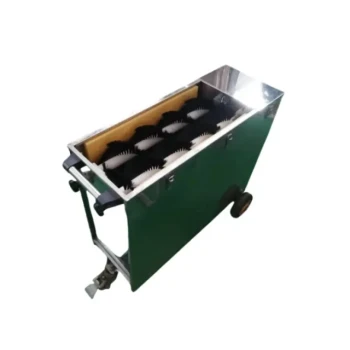
Industrial-grade pollen collectors preserve honey yield through a combination of precision engineering and biological safeguarding. By utilizing stripping plates with specifically calculated hole diameters, these devices remove pollen pellets from the legs of returning worker bees without impeding their movement or causing physical harm. This design ensures that the colony retains the workforce and energy required to continue foraging for nectar, the raw material for honey.
Core Takeaway Maximizing honey yield while harvesting pollen requires maintaining the physical health of the worker bee. High-quality collectors achieve this by preventing wing damage and ensuring the colony retains enough pollen to meet its nutritional requirements, keeping the foraging force strong.
The Engineering Behind Sustainable Harvesting
To understand how honey yield is protected, one must look at how the equipment interacts with the biological needs of the bee.
Precision-Calibrated Stripping Plates
The primary mechanism for collection is the stripping plate. These plates feature openings with specific diameters designed to gently dislodge pollen pellets from the bees' legs as they enter the hive.
By calibrating these openings, the device collects a calculated percentage of pollen. It does not strip every grain, ensuring a significant portion bypasses the collector to feed the colony.
Protecting Flight Capacity
Honey production relies entirely on the flight endurance of worker bees. Lower-quality collectors often have rough edges or incorrect sizing that can tear or fray delicate wings.
Industrial-grade collectors feature scientifically designed openings specifically engineered to prevent physical damage to the wings. Preserving wing integrity is critical; a bee with damaged wings cannot fly the long distances required to gather nectar, directly reducing honey production.
Balancing Nutrition and Production
The relationship between pollen collection and honey yield is not just mechanical; it is nutritional.
Managing Nutritional Requirements
Pollen is the primary protein source for the hive, essential for rearing new brood. If a collector removes too much pollen, the colony's population growth stalls.
High-quality collectors are designed to balance the collection rate with the nutritional requirements of the colony. This balance ensures that enough pollen remains to rear strong, healthy larvae that will grow into the next generation of nectar foragers.
Sustaining the Workforce
A malnourished colony produces fewer bees, and fewer bees result in a lower honey yield.
By regulating the intake rather than blocking it entirely, industrial collectors ensure the hive population remains robust. A strong, well-fed population is the only way to ensure high volumes of nectar gathering.
Critical Considerations and Trade-offs
While industrial collectors are designed to minimize impact, operators must be aware of inherent limitations.
Dependency on Equipment Quality
Not all "industrial" collectors meet the highest standards. Equipment with poorly machined stripping plates can still cause wing damage, which leads to a rapid decline in the foraging workforce.
The Limits of Automation
Even the best engineered collector cannot completely eliminate the stress on the hive. If a colony is already weak or struggling with disease, the slight reduction in pollen intake caused by the collector can impact brood rearing, subsequently lowering honey yields later in the season.
Optimizing Your Hive Management
To ensure your pollen harvesting does not negatively impact your honey crop, select your equipment and strategy based on your specific operational goals.
- If your primary focus is maximum honey production: Select collectors with larger stripping plate apertures to lower the pollen harvest rate, ensuring the colony maximizes brood production for nectar foraging.
- If your primary focus is dual-commodity harvesting: Prioritize equipment explicitly engineered with "wing-safe" openings to maintain the flight longevity of your current workforce.
Success lies in using equipment that treats the bee as a renewable asset rather than a disposable resource.
Summary Table:
| Feature | Impact on Honey Yield | Mechanism |
|---|---|---|
| Precision Stripping Plates | Prevents colony malnutrition | Calibrated openings ensure enough pollen reaches the brood. |
| Wing-Safe Engineering | Maintains foraging distance | Smooth, scientifically sized apertures prevent wing damage and flight loss. |
| Regulated Intake | Sustains workforce population | Balances pollen harvest with hive nutritional needs for brood rearing. |
| Low-Stress Design | Optimizes nectar gathering | Minimizes physical fatigue, keeping worker bees active for honey production. |
Partner with HONESTBEE for High-Yield Commercial Beekeeping
At HONESTBEE, we understand that your success depends on the delicate balance between pollen harvesting and honey production. We provide commercial apiaries and distributors with premium, industrial-grade equipment designed to treat your bees as a renewable asset.
Our comprehensive wholesale offering includes:
- Advanced Machinery: Precision-engineered pollen collectors, hive-making machines, and honey-filling systems.
- Full-Spectrum Supplies: From high-quality beekeeping tools and essential consumables to honey-themed cultural merchandise.
- Industrial Durability: Equipment built to withstand the rigors of commercial-scale operations while prioritizing bee welfare.
Ready to scale your production without sacrificing quality?
Contact HONESTBEE today to discover how our specialized hardware and wholesale solutions can optimize your apiary’s efficiency and yield.
References
- Ramón Rebolledo R, Alfonso Aguilera P. Estudio comparativo de la producción de polen y miel en un sistema de doble reina versus una por colmena en La Araucanía, Chile. DOI: 10.4067/s0718-34292011000200018
This article is also based on technical information from HonestBee Knowledge Base .
Related Products
- Heavy-Duty Ergonomic Grip Galvanized Pollen Shovel
- Stainless Steel Pollen Shovel with Wooden Handle
- Plastic Bee Pollen Trap Strips Comb Catcher Collector
- 30 cm Plastic Entrance Hole Bee Pollen Trap and Collector
- Removable Plastic Pollen Trap With Ventilated Tray for Bees Pollen Collector
People Also Ask
- For what reasons do beekeepers collect bee pollen? Boost Hive Health and Unlock New Revenue Streams
- Why should commercial apiaries focus on the collection of diversified bee products? Maximize Your Hive’s Profit Potential
- How do bee pollen collection tools affect the quality of bee pollen used in functional dairy ice cream production?
- How does a specialized pollen collector facilitate the harvesting of diverse bee products? Automate High-Value Yields
- What is the impact of pollen collectors and associated equipment on the cost structure of pollen production? Maximize ROI