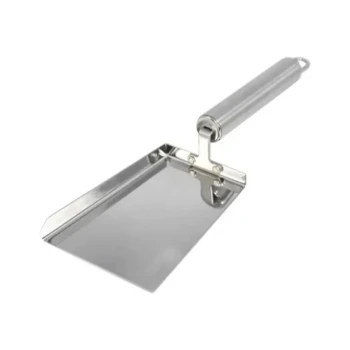
Pollen transfer devices serve as a mechanical enhancement to the natural foraging behaviors of honeybees. By installing these specialized hardware components at the hive entrance, you physically coat bees with specific, pre-collected pollen as they exit, turning them into immediate vectors for cross-pollination before they even reach the first flower.
The core function of these devices is to artificially increase the load of heterologous pollen on foraging bees, transforming a biological process into a controllable agricultural lever that optimizes both crop yield and quality.
The Mechanics of Enhanced Pollination
Physical Intervention at the Source
The device functions by creating a controlled bottleneck at the hive entrance. As bees traverse this specialized hardware to exit the hive, they are subjected to a mechanical application process.
This physical contact ensures that the bees are dusted with a specific type of pollen relevant to the target crop.
Ensuring Heterologous Transfer
Natural pollination relies on bees moving between different plant varieties to pick up diverse genetic material. Pollen transfer devices bypass the randomness of this process.
By applying heterologous pollen (pollen from a different genetic source) directly to the bee's body, the device guarantees that the bee carries the necessary genetic diversity required for effective fertilization.
Impact on Agricultural Output
Maximizing Crop Potential
The primary value of this intervention is the significant enhancement of cross-pollination potential. By ensuring bees are vectors of the correct pollen type from the moment they leave the hive, the probability of successful fertilization increases.
Optimizing Quality and Quantity
The reference material indicates a direct correlation between this mechanical intervention and agricultural outcomes.
Using these devices leads to an optimization of both agricultural yield and quality. This suggests that better pollination rates result not just in more fruit or seeds, but in superior morphological characteristics of the crop.
Operational Considerations and Trade-offs
Dependence on Specific Inputs
While these devices enhance efficiency, they introduce a logistical requirement: the sourcing of specific pollen.
Unlike natural foraging where bees source their own pollen, this system requires the beekeeper to supply the correct heterologous pollen to load into the device.
Hardware Complexity
Introducing "specialized beekeeping hardware" adds a layer of complexity to hive management.
This requires moving from a passive pollination approach to an active management style, where the physical intervention at the hive entrance must be monitored to ensure the device functions correctly without impeding bee traffic.
Implementing This Strategy
To determine if pollen transfer devices are the right solution for your agricultural needs, consider your specific objectives:
- If your primary focus is Volume (Yield): Implement these devices to maximize the probability of fertilization for every flower visited, ensuring the highest possible fruit set.
- If your primary focus is Crop Quality: Use these devices to guarantee the delivery of high-quality, heterologous pollen, which is often the key factor in fruit size and shape uniformity.
By integrating mechanical pollen transfer into your apiary management, you effectively upgrade the honeybee from a passive forager to a precision agricultural instrument.
Summary Table:
| Feature | Mechanism | Impact on Crop |
|---|---|---|
| Pollen Application | Physical dusting at hive entrance | Immediate fertilization capability |
| Genetic Diversity | Delivery of heterologous pollen | Improved seed set and fruit morphology |
| Foraging Logic | Bypasses random natural collection | Increased probability of cross-pollination |
| Output Focus | Controlled agricultural lever | Maximized yield and superior crop quality |
Maximize Your Agricultural Potential with HONESTBEE
At HONESTBEE, we understand that for commercial apiaries and distributors, efficiency is the key to profitability. Whether you are looking to optimize crop yields with specialized hardware or require high-performance honey-filling machines and hive-making equipment, we provide the full spectrum of industrial beekeeping solutions.
Our value to your business:
- Comprehensive Wholesale Offering: A one-stop shop for all beekeeping tools and consumables.
- Specialized Machinery: Advanced hardware designed to streamline large-scale operations.
- Tailored Solutions: Supporting distributors with everything from hardware to honey-themed cultural merchandise.
Ready to upgrade your apiary into a precision agricultural instrument? Contact us today to explore our wholesale catalogs and discover how HONESTBEE can support your growth.
References
- Anurag Kumar Sonker. A Review: On the Parasitic Mites and Its Impact on the Honey Bee Spp. (Apis mellifera) and Their Colony. DOI: 10.70558/ijst.2025.v2.i2.241040
This article is also based on technical information from HonestBee Knowledge Base .
Related Products
- Stainless Steel Pollen Shovel with Wooden Handle
- Heavy-Duty Ergonomic Stainless Steel Pollen Shovel
- Heavy-Duty Ergonomic Grip Galvanized Pollen Shovel
- Removable Plastic Pollen Trap With Ventilated Tray for Bees Pollen Collector
- Plastic Chinese Queen Grafting Tool for Bee Queen Rearing
People Also Ask
- How do bee pollen collection tools affect the quality of bee pollen used in functional dairy ice cream production?
- Why should commercial apiaries focus on the collection of diversified bee products? Maximize Your Hive’s Profit Potential
- How does a specialized pollen collector facilitate the harvesting of diverse bee products? Automate High-Value Yields
- What is the impact of pollen collectors and associated equipment on the cost structure of pollen production? Maximize ROI
- What is the technical significance of using specialized cutting tools for propolis? Master Precision Pollen Harvesting