For commercial beekeeping, pure beeswax foundation prioritizes fast bee acceptance, while plastic foundation prioritizes durability and operational consistency. Bees generally draw natural beeswax more quickly, making it well suited to spring comb expansion and early honey production. Plastic foundation is stronger, more resistant to wax moth damage, and better suited to repeated handling and high-speed extraction, but it usually requires stronger nectar flow and may be accepted more slowly.
The right choice depends on the operation’s priority: use pure beeswax for rapid comb drawing and natural acceptance; use plastic for long service life, reduced maintenance, and demanding commercial extraction workflows. Many commercial apiaries achieve the best balance by using both.
How the Two Foundation Types Perform
Pure Beeswax Provides Faster Colony Acceptance
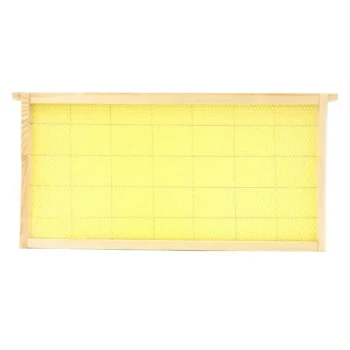
Pure beeswax carries a natural scent that bees readily recognize. Its embossed hexagonal pattern helps colonies begin drawing uniform comb quickly for brood rearing and honey storage.
This makes beeswax particularly valuable during spring expansion, when rapid comb production can support earlier colony growth and honey accumulation.
Plastic Foundation Provides Greater Structural Strength
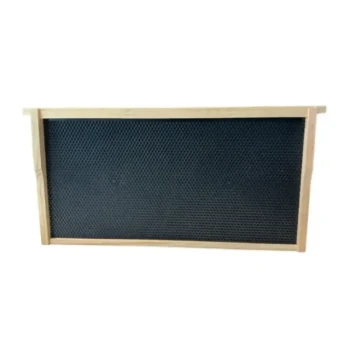
Plastic foundation is molded as a rigid, embossed sheet and generally does not require embedded support wires. It withstands handling, transport, heavy honey loads, and repeated extraction better than unreinforced wax.
For commercial operations using mechanical extractors, this strength can reduce comb breakage, frame replacement, and downtime.
Acceptance Speed Can Affect Early-Season Productivity
Bees typically draw natural beeswax faster than plastic foundation. Plastic often performs best when colonies are strong and a substantial nectar flow is available.
Where early comb construction is the primary objective, wired beeswax usually has the operational advantage.
Commercial Advantages of Pure Beeswax Foundation
Faster Comb Drawing
Natural wax and pre-embossed cell patterns encourage bees to begin construction rapidly. This can shorten the time required to expand brood chambers or prepare additional honey-storage frames.
For distributors and commercial beekeepers, this makes beeswax foundation a strong choice for customers focused on fast colony establishment and early-season yields.
Suitable for Natural and Specialty Honey Products
Thin, unreinforced beeswax foundation is well suited to cut-comb, chunk, and section honey applications. The material integrates naturally with the finished product and supports a traditional presentation.
Thicker wired beeswax sheets are more appropriate when the frames must carry heavier honey loads or undergo extraction.
Natural Hive Material
Pure beeswax creates a familiar material environment for the colony and avoids concerns associated with potential additives in some plastic products. However, the quality and cleanliness of the wax supply remain important.
Bulk or recycled beeswax can contain trace pesticide residues or pathogens if it has not been properly sourced and processed.
Commercial Advantages of Plastic Foundation
Higher Durability During Handling and Extraction
Plastic foundation resists bending, tearing, and breakage during installation, transport, harvesting, and cleaning. This is especially important in high-volume apiaries where frames circulate repeatedly through the same workflow.
Its rigidity also supports high-speed mechanical extraction more reliably than thin, unsupported beeswax.
Lower Installation and Maintenance Requirements
Embossed plastic sheets generally eliminate the need for foundation wiring. One-piece molded plastic frames can also remove frame assembly steps, reducing labor requirements for large-scale operations.
This can simplify purchasing, storage, and fulfillment for distributors supplying standardized commercial equipment.
Strong Resistance to Wax Moth Damage
Plastic itself is not consumed by wax moth larvae and offers substantially better resistance to wax moth damage than beeswax. Any wax coating can still be affected, so proper hive management and storage practices remain necessary.
Plastic foundation is therefore advantageous for stored equipment, warm conditions, and operations seeking longer component life.
Which Foundation Fits Each Frame Application?
Brood Chambers
Wired beeswax is effective when rapid acceptance and fast brood expansion are priorities. Its support wires help prevent sagging under the weight of developing comb and honey.
Plastic is preferable when frames must tolerate frequent handling, long service cycles, or intensive commercial extraction and storage.
High-Volume Extracted Honey
For extracted honey operations, choose thicker reinforced beeswax or plastic foundation. Thin, unsupported wax is more vulnerable to deformation and damage from centrifugal extraction.
Plastic is generally the more forgiving option for high-throughput systems, particularly when labor and equipment durability are major concerns.
Cut-Comb, Chunk, and Section Honey
Thin pure beeswax foundation is often the better fit for specialty products where the comb itself is sold or presented as part of the honey.
Plastic foundation is less suitable when the finished product requires an all-wax comb structure.
Spring Comb Expansion
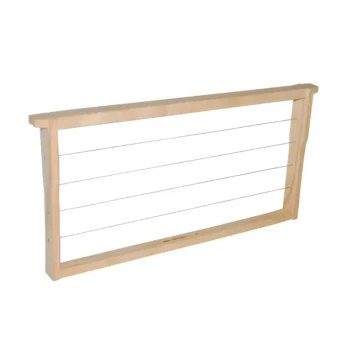
Pre-wired beeswax installed in grooved wooden frames offers a practical balance of rapid acceptance and mechanical support. This configuration is especially useful when the commercial goal is to maximize early comb production.
Plastic can still perform well, but colonies may need stronger population strength and nectar availability before drawing it efficiently.
Understanding the Trade-offs
Beeswax Requires More Care
Pure beeswax is fragile, particularly in cold temperatures or under heavy honey loads. It can crack during installation, transport, or frame handling if it lacks adequate support.
Commercial users should consider pre-wired sheets, wedge strips, sidebar support pins, and proper storage procedures.
Plastic May Delay Comb Construction
Plastic foundation can remain partially undrawn when colonies are weak or nectar flow is limited. A thin beeswax coating improves acceptance, but it does not always match the speed of natural wax.
This matters when equipment must generate early-season production rather than simply provide long-term durability.
Initial Cost Is Not the Entire Cost
A lower purchase price may be offset by additional wiring labor, breakage, and replacement requirements. Conversely, the higher durability of plastic may be less valuable if slow acceptance delays production.
Commercial buyers should evaluate total operating cost, including installation time, frame longevity, extraction losses, storage, and replacement frequency.
Product Quality and Sourcing Matter
Pure beeswax should be sourced from reliable suppliers with appropriate quality controls, especially when customers require clean, natural, or premium hive materials.
Plastic foundation should be specified as food-grade and sourced with clear material and manufacturing information. For distributors, dependable stock availability and consistent dimensions are as important as the material itself.
How to Apply This to Your Operation
The most efficient commercial strategy is often a product portfolio rather than a single universal foundation type.
- If your primary focus is rapid spring expansion: Choose pre-wired pure beeswax foundation in grooved wooden frames to encourage fast acceptance and early comb production.
- If your primary focus is high-volume honey extraction: Choose plastic or thick wired beeswax foundation for greater resistance to centrifugal forces and repeated handling.
- If your primary focus is cut-comb or specialty honey: Choose thin pure beeswax foundation to support an all-wax comb product.
- If your primary focus is reduced labor and long service life: Choose plastic foundation or one-piece molded plastic frames to minimize wiring, assembly, and replacement work.
- If your primary focus is wholesale or distribution flexibility: Stock both materials, frame formats, and support accessories so customers can match foundation choice to their production system.
A well-matched foundation program combines beeswax for speed and acceptance with plastic for durability, efficiency, and long-term commercial reliability.
Summary Table:
| Feature | Pure Beeswax Foundation | Plastic Foundation |
|---|---|---|
| Acceptance | Fast, natural scent | Slower, requires strong nectar flow |
| Durability | Fragile, needs wiring | High, resists breakage and wax moths |
| Best For | Spring expansion, cut-comb honey | High-volume extraction, long service life |
| Maintenance | Requires careful handling and storage | Low, no wiring needed |
| Cost | Lower initial cost but higher replacement rate | Higher initial cost but longer lasting |
Maximize your apiary's efficiency with the right foundation. At HONESTBEE, we supply premium pure beeswax and durable plastic foundations tailored to commercial beekeepers and distributors. Benefit from our one-stop sourcing, rapid delivery, and expert support. Contact us today to discuss your needs and get the best pricing for bulk orders.
Related Products
- Beeswax Foundation Sheets Beehive Foundation for Wholesale
- Beeswax Machine Press Embosser Wax Foundation Mold Printer Bee Hive Equipment Making Sheet
- Notebook Style Beeswax Foundation Mould Wax Foundation Mold
- Colorful Silicone Beeswax Foundation Mold Mould for Beekeeping
- Electric Beeswax Foundation Machine With Operating Tray and Wax Foundation Roller
People Also Ask
- What are the technical advantages of beeswax foundations and feeding tools? Optimize Your Bee Breeding Phase
- Why is the regular exchange and replacement of beeswax foundations encouraged? Boost Honey Yield & Hive Biosafety
- What are the negative consequences of using old or contaminated beeswax in foundations? Protect Your Hive Today
- Why is high-purity natural beeswax essential for foundations? Prevent Larval Mortality & Boost Colony Health
- What are the specific advantages of regular comb replacement? Boost Hive Health with New Beeswax Foundations