Uncapping tools open the comb, while stainless-steel strainers clean the harvest. In commercial honey processing, electrically heated uncapping knives, forks, and rollers remove wax cappings so honey can flow from the comb during centrifugal extraction. After spinning, a double stainless-steel strainer captures wax fragments and other impurities before the honey moves through a gate valve to storage or packaging.
Efficient honey processing depends on a coordinated sequence: cleanly uncap the frames, recover the wax, extract the honey, and filter it with food-contact equipment. The right tools improve throughput, product cleanliness, comb preservation, and overall workflow reliability.
How Uncapping Tools Prepare Frames for Extraction
Removing the barrier over each honey cell
Bees seal mature honey with a protective layer of wax. Uncapping knives, forks, and rollers remove this layer so honey can escape from the cells when the frame enters the centrifugal extractor.
Without effective uncapping, the wax seals restrict honey flow and reduce extraction efficiency. Uncapping is therefore a necessary preparation step, not merely a cosmetic part of harvesting.
Choosing between heated and manual tools
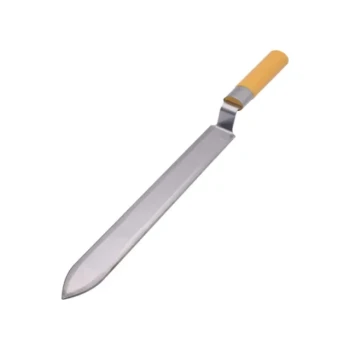
Electrically heated knives soften and slice through wax efficiently, making them suitable for repetitive commercial work. Their smooth cutting action can help preserve the underlying comb when used correctly.
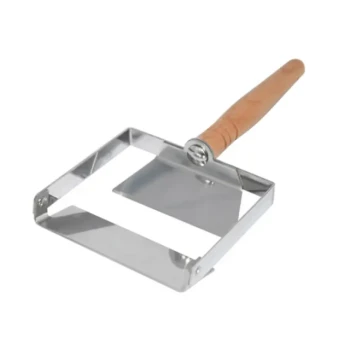
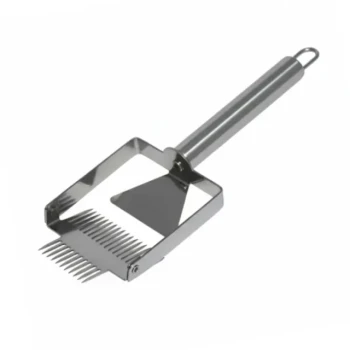
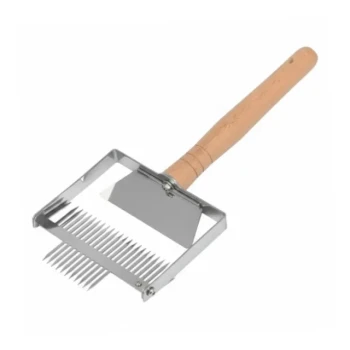
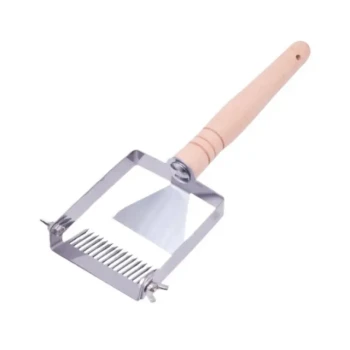
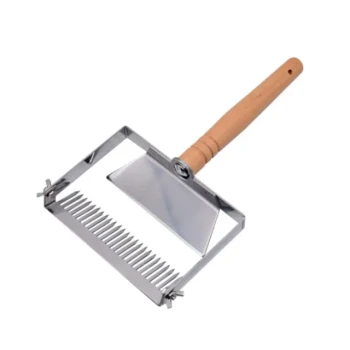
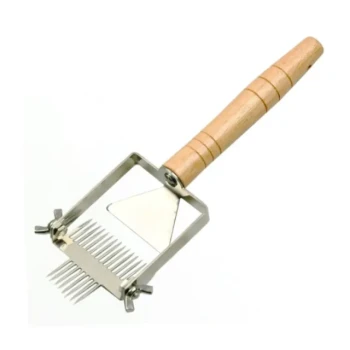
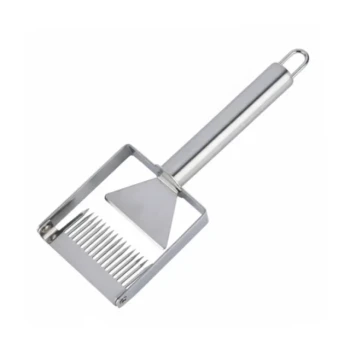
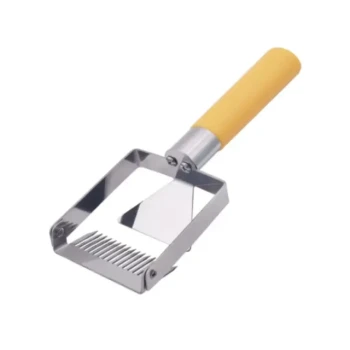
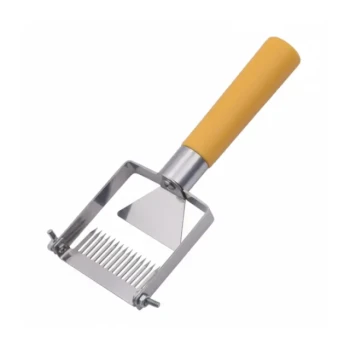
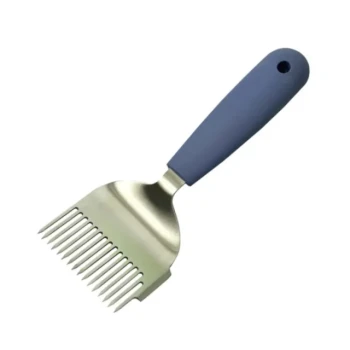
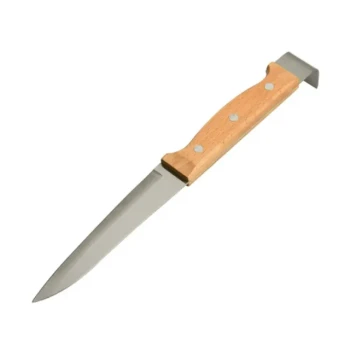
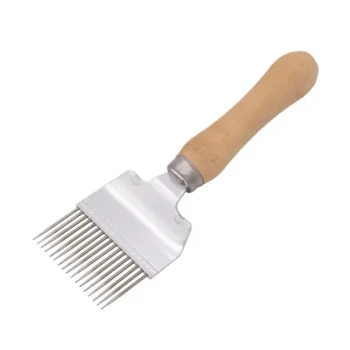
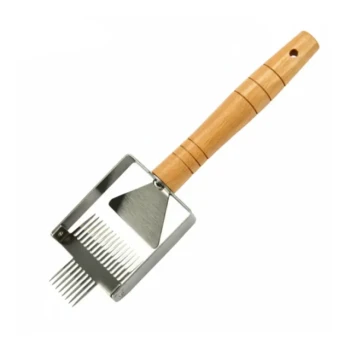
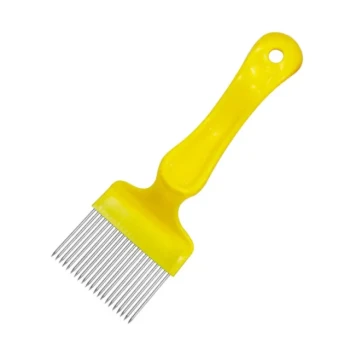
Uncapping forks and scratchers loosen or lift remaining wax in areas a knife cannot reach. Manual cold knives and forks can also be useful for smaller operations or frames with irregular cappings.
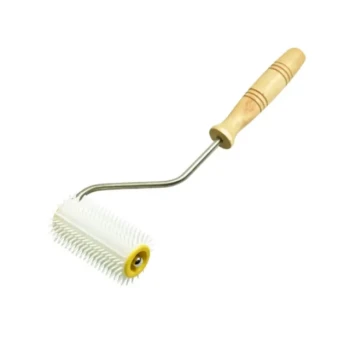
Uncapping rollers provide another option for opening capped cells across the comb surface. The appropriate choice depends on frame volume, capping condition, operator preference, and the required processing speed.
Supporting beeswax recovery
Uncapping is normally performed over an uncapping tank. The tank holds frames during preparation while collecting removed wax cappings and any honey that drains from them.
This arrangement creates a more organized workflow and helps recover beeswax as a valuable byproduct. It also reduces material loss and keeps the work area easier to manage.
How Stainless-Steel Strainers Improve Honey Processing
Removing wax fragments after extraction
After the frames are uncapped and spun in a stainless-steel centrifugal extractor, raw honey can still contain wax bits and other visible impurities. Passing it through a double stainless-steel strainer removes these materials before storage or packaging.
The strainer provides a practical separation stage between extraction and finished-honey handling. It improves the appearance and cleanliness of the honey without replacing any separate quality, moisture, or safety testing required by the processor.
Supporting sanitary handling
Stainless steel is well suited to honey-contact equipment because it provides a durable, cleanable surface for repeated commercial use. A strainer designed for food-contact processing can be incorporated into a more controlled post-extraction workflow.
The filtering stage should be positioned so honey moves directly from extraction into straining and then through the honey gate valve to a storage vessel, bottling container, or packaging line.
Maintaining a continuous workflow
A well-organized system minimizes unnecessary transfers between containers. This can reduce handling, simplify cleaning procedures, and help operators process larger quantities with fewer interruptions.
For distributors and commercial buyers, the strainer is therefore more than an accessory. It is part of the equipment chain that connects extraction, clarification, storage, and packaging.
The Commercial Workflow from Comb to Container
1. Secure and uncap the frames
Operators place honey-filled frames over an uncapping tank and remove the wax seals with a heated knife, fork, roller, or another suitable tool. The objective is to expose the capped cells while avoiding unnecessary damage to the comb structure.
2. Recover the wax and residual honey
The uncapping tank collects wax cappings and draining honey. This supports cleaner work practices while preserving beeswax for recovery, processing, or resale.
3. Extract honey centrifugally
The prepared frames are loaded into a stainless-steel centrifugal extractor. Rotation forces honey from the opened cells while leaving the frames available for further use.
4. Strain the raw honey
The extracted honey passes through a double stainless-steel strainer. Remaining wax pieces and coarse impurities are retained before the honey proceeds to the next stage.
5. Discharge for storage or packaging
A honey gate valve allows controlled discharge into a storage tank, bucket, bottling pail, or packaging system. This makes the transition from filtering to filling more orderly and reduces avoidable spillage.
Why Equipment Matching Matters for Buyers
Throughput must match the operation
A small apiary may manage effectively with manual uncapping tools, while a commercial facility may benefit from electrically heated equipment and a dedicated uncapping tank. Choosing tools that cannot keep pace with frame volume creates bottlenecks before extraction even begins.
The strainer capacity should likewise correspond to extractor output. If filtering is significantly slower than extraction, the strainer becomes a point of congestion.
The complete system matters more than one tool
Uncapping tools, tanks, extractors, strainers, and gate valves must work as a coordinated processing system. Buying individual components without considering connections, capacity, cleaning access, and workflow can undermine the benefits of otherwise high-quality equipment.
For resellers and distributors, offering a compatible product portfolio creates more value than supplying isolated products. Customers typically need a practical path from frame preparation through final honey handling.
Reliable supply supports seasonal demand
Honey harvesting is time-sensitive, so delays in equipment availability can affect the entire processing schedule. Distributors serving beekeepers should prioritize dependable inventory, rapid response, efficient order fulfillment, and clear product guidance.
A one-stop sourcing model can simplify procurement by combining uncapping equipment, stainless-steel strainers, extraction equipment, and downstream handling components in one supply relationship.
Understanding the Trade-offs
Heated tools improve speed but require control
Heated knives generally make wax removal smoother and faster, particularly in repetitive processing. However, operators must control temperature and technique to avoid excessive heat or unnecessary comb damage.
Manual knives and forks require more labor and may reduce throughput, but they offer simplicity and can be practical for smaller or lower-volume operations.
Fine filtration is not always the same as better processing
A strainer removes wax fragments and visible impurities, but it is not automatically a substitute for every downstream clarification or quality-control step. Selecting an unnecessarily restrictive filter may slow flow and increase cleaning requirements.
The appropriate strainer should balance cleanliness, flow rate, maintenance, and the intended presentation of the honey.
More equipment increases maintenance requirements
Commercial equipment improves consistency but adds cleaning, inspection, and replacement responsibilities. Strainers must be cleared regularly, and all honey-contact surfaces should be cleaned according to the operator’s sanitation procedures.
Buyers should evaluate not only purchase price, but also durability, spare-part availability, service support, and ease of maintenance.
Comb preservation depends on operation as well as equipment
A well-designed uncapping tool can help preserve comb structure, but operator technique remains important. Excessive cutting, scraping, or heat can damage comb and increase material loss regardless of the tool selected.
Training and consistent operating procedures should accompany equipment supply, especially when multiple workers share the same processing line.
How to Apply This to Your Operation
The best equipment package is the one that matches processing volume, workflow layout, labor capacity, and future expansion plans.
- If your primary focus is higher processing throughput: Prioritize electrically heated uncapping knives, suitable uncapping tanks, and straining capacity that can keep pace with the centrifugal extractor.
- If your primary focus is comb preservation: Choose precise uncapping tools and emphasize controlled operating technique rather than aggressive scraping or excessive heat.
- If your primary focus is cleaner finished honey: Use a properly sized double stainless-steel strainer between extraction and storage or packaging.
- If your primary focus is beeswax recovery: Pair uncapping tools with an uncapping tank that collects cappings and draining honey efficiently.
- If your primary focus is dependable procurement: Work with a supplier offering a compatible product range, responsive service, professional guidance, and fast, reliable fulfillment.
A coordinated uncapping, extraction, straining, and discharge system turns honey harvesting into a cleaner, more efficient, and more commercially dependable process.
Summary Table:
| Tool | Function | Benefit |
|---|---|---|
| Heated Uncapping Knife | Removes wax seals from honeycomb cells | Fast, smooth wax removal for high-throughput operations |
| Uncapping Fork/Scratcher | Accesses areas knives can't reach | Ensures complete uncapping, reducing waste |
| Uncapping Roller | Opens cells across the comb | Consistent uncapping, suitable for large volumes |
| Uncapping Tank | Collects wax cappings and honey | Recovers beeswax, keeps workspace organized |
| Centrifugal Extractor | Spins frames to extract honey | Efficient honey removal while preserving comb |
| Double Stainless-Steel Strainer | Filters wax and impurities | Ensures clean honey, meets quality standards |
| Honey Gate Valve | Controls honey discharge | Precise, spill-free transfer to storage or packaging |
Upgrade Your Honey Processing Line with HONESTBEE
At HONESTBEE, we supply the complete range of uncapping knives, forks, rollers, uncapping tanks, stainless-steel extractors, strainers, and gate valves — all built for commercial efficiency. Our one-stop sourcing model ensures you get compatible, high-quality equipment that matches your throughput needs.
Why HONESTBEE?
- Premium quality with certifications for food-contact materials
- Rapid response and dedicated customer service
- Deep expertise to help you choose the right tools
- Ultra-fast delivery to keep your harvest on schedule
Whether you're expanding an apiary or reselling to beekeepers, we support your growth with reliable supply and OEM/ODM capabilities.
👉 Contact us today for a tailored quote and let us streamline your honey extraction process!
Related Products
- Stainless Steel Dual Blade Uncapping Plane
- All Stainless Steel Double Sided Pivoting Honey Uncapping Fork
- Stainless Steel Double Sided Honey Uncapping Fork with Scraper
- Adjustable Stainless Steel Honey Uncapping Fork with Scraper for Beekeeping
- Wide Adjustable Stainless Steel Honey Uncapping Fork with Scraper
People Also Ask
- How does an uncapping plane work and what is its main feature? Master Precision Harvesting with Adjustable Heat
- What is an uncapping plane, and how does it differ from an electric knife? Precision vs. Speed for Beekeepers
- How does an uncapping plane work? Precision Honey Harvesting with Adjustable Blades for Beekeepers
- What is the advantage of an uncapping plane over an electric knife? Precision Cutting for Less Honey Waste
- What are the features of a stainless steel honey uncapping knife? Unlock a Cleaner, More Efficient Harvest