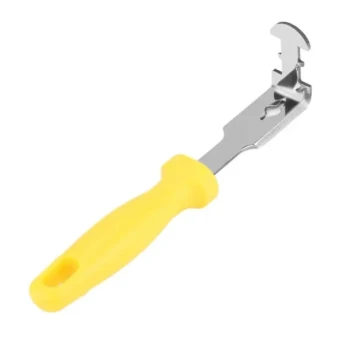
The connection between hardware and conservation is fundamentally economic. The use of diverse bee product collection equipment, such as propolis collectors and pollen traps, indirectly promotes environmental protection by significantly increasing the economic value of each hive. This enhanced financial return creates a powerful incentive for beekeepers to actively engage in vegetation restoration and reduce the use of chemical pesticides to protect their high-value assets.
The adoption of specialized extraction tools transforms beekeeping from a simple agricultural activity into a high-value bio-industry. This shift creates a "positive cycle" where the profitability of by-products like propolis and royal jelly funds and motivates the stewardship of forest ecosystems and the reduction of agrochemicals.
The Economic Engine of Ecology
Moving Beyond a Monoculture Model
Traditionally, many apiaries relied almost exclusively on honey production. By introducing specialized equipment, operations transition to a multi-product matrix that includes pollen, propolis, royal jelly, and bee bread. This diversification stabilizes income, making the operation less vulnerable to market fluctuations and allowing for long-term ecological planning rather than short-term survival decisions.
Incentivizing Habitat Restoration
The production of high-quality bee products is directly linked to the health of the surrounding flora. As apiaries generate higher returns from these diverse outputs, they gain the financial capacity to invest in vegetation restoration. Practitioners are motivated to plant and maintain diverse nectar and pollen sources to sustain the "supply chain" for their specialized collecting equipment.
Driving Pesticide Reduction
High-value by-products, particularly those used in pharmaceuticals and cosmetics, demand exceptional purity. To secure the premium prices associated with these markets, beekeepers must ensure their products are free from contaminants. This economic reality acts as a strict enforcement mechanism, compelling beekeepers to reduce or eliminate chemical pesticides and advocate for cleaner foraging zones.
How Specialized Tools Enable Value
Propolis Collectors and Purity
Propolis collectors work by simulating hive crevices, inducing bees to seal them with resin. Unlike manual scraping, which introduces wood chips and debris, these collectors yield industrial-grade purity suitable for medical applications. This high purity grants access to premium markets, reinforcing the financial loop that supports sustainable practices.
Pollen Traps and Resource Efficiency
Pollen traps utilize a grid structure at the hive entrance to gently dislodge pollen pellets from the hind legs of returning bees. This allows for the efficient collection of bio-active materials without destroying the hive structure. By maximizing the resource utilization of the colony without invasive harvesting methods, beekeepers can maintain a balance between extraction and colony health.
Understanding the Trade-offs
While the economic-ecological loop is positive, the introduction of intensive collection equipment brings specific challenges that must be managed.
Colony Stress Management
Aggressive collection of pollen and propolis can deplete the hive's essential reserves. Over-harvesting high-value by-products may weaken the colony's immune system or nutritional status. Operators must carefully time the use of traps to ensure the bees retain enough resources for their own survival and development.
Increased Operational Complexity
Moving from honey-only production to a multi-product model requires more labor and technical skill. Equipment like royal jelly harvesters and pollen traps requires frequent maintenance, cleaning, and monitoring. This increases the operational overhead, requiring a higher level of management to maintain the efficiency that drives the conservation benefits.
Making the Right Choice for Your Goal
To leverage these tools effectively, align your equipment strategy with your operational objectives:
- If your primary focus is Economic Resilience: Prioritize a mix of propolis and royal jelly tools to access high-margin pharmaceutical and cosmetic markets, buffering against honey price volatility.
- If your primary focus is Ecological Integrity: Use pollen traps intermittently to monitor local floral diversity while reinvesting profits into expanding forage zones to support colony density.
By treating specialized equipment as a bridge to higher market value, beekeepers transform their operations into financially self-sustaining engines for environmental preservation.
Summary Table:
| Equipment Type | Primary Output | Environmental & Economic Impact |
|---|---|---|
| Propolis Collectors | High-purity resin | Secures medical-grade premiums; encourages chemical-free foraging zones. |
| Pollen Traps | Bio-active pollen | Maximizes resource efficiency; funds local vegetation and habitat restoration. |
| Royal Jelly Tools | High-value secretion | Diversifies income; reduces reliance on monoculture honey production. |
| Diversified Matrix | Multi-product yield | Stabilizes apiary revenue; enables long-term investment in forest stewardship. |
Maximize Your Apiary’s Potential with HONESTBEE
Transform your commercial beekeeping operation into a high-value, sustainable bio-industry. At HONESTBEE, we specialize in supporting commercial apiaries and distributors with a comprehensive wholesale range of professional tools—from specialized propolis collectors and pollen traps to advanced honey-filling and hive-making machinery.
Our equipment is designed to help you unlock premium markets for by-products, ensuring both financial resilience and ecological health. Whether you are scaling a professional apiary or stocking essential industry consumables, our expert team is ready to provide the hardware and machinery you need to thrive.
Ready to upgrade your production? Contact us today to explore our full spectrum of beekeeping solutions and cultural merchandise.
References
- Luciano Pereira Da Silva, Edemar Ferrarezi. AS ABELHAS E SUA RELEVANTE IMPORTÂNCIA NO PROCESSO DE POLINIZAÇÃO. DOI: 10.31510/infa.v19i1.1369
This article is also based on technical information from HonestBee Knowledge Base .
Related Products
- 8 Frame and 10 Frame Propolis Trap Collector Screen for Propolis Collection
- Heavy Duty Stainless Steel Frame Cleaner with Plastic Handle
- 30 cm Plastic Entrance Hole Bee Pollen Trap and Collector
- Plastic Bee Pollen Trap Strips Comb Catcher Collector
- Heavy-Duty Ergonomic Grip Galvanized Pollen Shovel
People Also Ask
- Why is a specific wooden frame required when installing a propolis screen? Optimize Your Propolis Harvest Efficiency
- What are the advantages of using propolis collector screens? Elevate Your Harvest to Pharmaceutical Purity
- How does the mesh size of a propolis collection screen influence the efficiency of propolis harvesting? Optimize Yields!
- How do commercial-grade plastic screens compare to custom fine-mesh screens? Maximize Your Propolis Yield & ROI
- What are the technical advantages of using specialized propolis collection screens? Maximize Purity and Efficiency