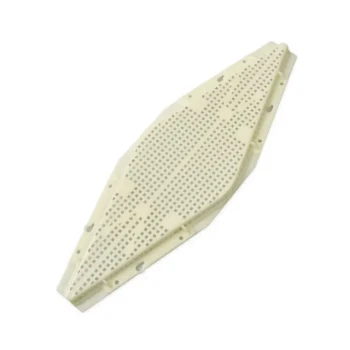
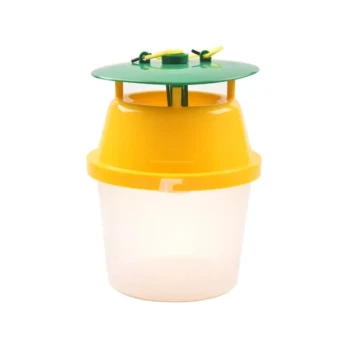
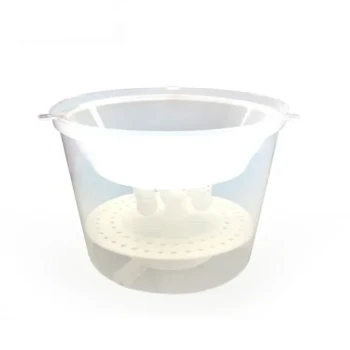
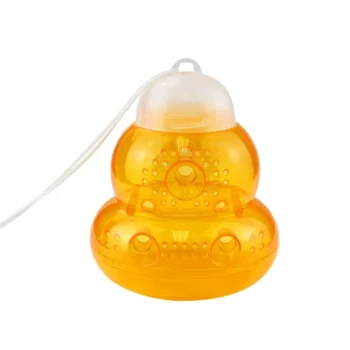
Worker bee leg anatomy directly determines which harvesting equipment an apiary can use effectively. The hind legs combine pollen baskets, stiff hairs, combs, and a pollen press to collect, compress, and transport pollen pellets. Returning bees can also carry sticky propolis on their hind legs, allowing apiaries to use entrance pollen traps and in-hive propolis mats that work with these natural behaviors rather than obstructing them.
Commercial harvesting equipment should be selected around bee anatomy, not treated as a generic hive accessory. Correctly sized pollen-trap openings and flexible propolis-collection surfaces improve yield while reducing the risk of restricting movement, damaging legs or wings, or disrupting colony activity.
How Hind-Leg Anatomy Supports Collection
Pollen Baskets Hold the Finished Load
A worker bee’s hind leg has a broad, flattened area called the corbicula, or pollen basket. Fringe hairs and an internal bristle help secure a compact pollen pellet during the flight back to the hive.
This structure gives the bee a stable transport system. It also creates the specific target that entrance pollen traps must engage when removing pollen from returning foragers.
Leg Combs Gather and Organize Pollen
Stiff hairs and comb-like structures on the legs help bees brush pollen from their bodies and consolidate it into loads. Pollen collected from flowers is progressively transferred toward the hind legs during grooming.
The bee’s legs therefore function as both collection tools and packing mechanisms. Equipment that interferes with grooming or leg movement can reduce collection efficiency and place unnecessary stress on the bees.
The Pollen Press Creates Dense Pellets
A specialized pollen press, formed by structures near the hind-leg joint, helps compress pollen into a dense pellet inside the corbicula. Nectar or other fluids may help bind the material during this packing process.
Because the pellet is compact and securely held, a pollen trap needs a carefully engineered opening or grid to dislodge it. Excessively large openings may produce poor collection rates, while overly restrictive designs can impede or injure bees.
How Bees Transport Propolis
Propolis Is a Resinous Material
Propolis is a sticky plant resin that bees use to seal cracks, reinforce hive surfaces, and maintain the colony’s internal environment. Its texture and handling behavior differ substantially from dry pollen.
Bees commonly carry propolis on their hind legs, where it may be secured among the hairs and basket structures. However, propolis should not be treated as identical to a pollen pellet or assumed to be deposited in the same way.
Propolis Collection Relies on the Sealing Instinct
Unlike pollen, which bees primarily gather as food for the colony, propolis is collected for construction and maintenance. Bees are more likely to work propolis when the hive presents surfaces or gaps that encourage sealing activity.
Propolis mats and traps take advantage of this behavior by providing textured, flexible surfaces that bees fill with resin. Once sufficiently loaded, the material can be removed for processing.
Surface Design Affects Usability
A propolis harvesting mat must encourage deposition without creating dangerous obstructions inside the hive. Flexible materials with suitable grooves or textured surfaces can provide bees with an accessible place to deposit resin.
For commercial buyers, the design should also support fast removal, cleaning, replacement, and packaging. A mat that collects well but is difficult to handle can reduce labor efficiency across a large apiary.
Why Anatomy Matters When Selecting Equipment
Pollen Traps Must Match Bee Movement
Entrance pollen traps are installed where returning foragers pass through a calibrated screen or grid. The openings are intended to strip pollen pellets from the corbicula as bees enter the hive.
The equipment must allow bees to pass through without trapping delicate legs, wings, or other body parts. Opening dimensions, material finish, and overall trap geometry are therefore critical purchasing specifications.
Collection Efficiency Must Be Balanced With Bee Welfare
A pollen trap that removes nearly every pellet may appear efficient, but excessive resistance can delay returning bees and increase physical stress. Some bees may also avoid an entrance that is difficult to navigate.
A practical commercial design balances harvest rate, bee clearance, airflow, durability, and colony access. Product claims should be evaluated against these factors rather than judged by collection capacity alone.
Materials Need to Withstand Apiary Conditions
Harvesting equipment is exposed to moisture, propolis, pollen dust, temperature changes, handling, and repeated cleaning. Screens and grids must retain their shape, while collection drawers and mats should remain serviceable over repeated cycles.
For distributors and wholesalers, durable materials reduce replacement frequency and simplify inventory planning. Consistent manufacturing is equally important because small dimensional differences can affect bee passage and collection performance.
Choosing Equipment for Commercial Operations
Match the Product to the Harvesting Objective
Pollen traps are designed for pellet removal at the hive entrance. Propolis mats and specialized traps are designed to encourage resin deposition and enable later removal from inside the hive.
These products should be sourced as distinct equipment categories. Combining them without considering their different collection mechanisms can lead to poor yields or unnecessary disruption to the colony.
Evaluate Installation and Maintenance
Commercial apiaries need equipment that can be installed quickly across multiple hive formats. Clear attachment methods, removable collection drawers, accessible surfaces, and straightforward cleaning procedures directly affect labor requirements.
A supplier’s product range should therefore include compatible accessories, replacement components, and practical installation information. One-stop sourcing can reduce compatibility issues and shorten procurement cycles.
Consider the Needs of Different Buyers
Beekeepers often prioritize bee safety, yield, and ease of use. Resellers and distributors must also evaluate packaging, product consistency, stock availability, technical support, and delivery reliability.
A strong commercial offering combines a full equipment portfolio with rapid response, dependable order fulfillment, and knowledgeable customer service. These factors matter when customers need to equip entire apiaries rather than purchase a single trial unit.
Understanding the Trade-offs
Higher Collection Rates Can Increase Colony Disruption
Frequent or overly aggressive pollen harvesting can reduce the amount of pollen entering the hive. Since pollen is a colony food resource, collection schedules should account for colony strength, season, forage availability, and local management practices.
Equipment selection cannot compensate for an unsuitable harvesting program. A well-designed trap still needs to be used selectively and responsibly.
Tight Openings Create a Design Risk
A restrictive grid may remove more pollen, but it can also create congestion or damage if the openings are poorly sized, rough, or misaligned. Smooth surfaces and precise dimensions are essential.
Manufacturers and resellers should request clear specifications and quality controls rather than relying only on broad descriptions such as “high-efficiency” or “bee-friendly.”
Propolis Is Messy to Handle
Propolis adheres strongly to tools, hive surfaces, and collection materials. Mats that are difficult to remove or clean may increase labor costs and reduce the practical value of the harvest.
Commercial buyers should assess how the product is rolled, frozen, scraped, stored, and replaced. The best option is the one that supports the complete workflow, not merely the initial collection step.
Making the Right Choice for Your Goal
Equipment should be selected according to the intended harvest, operating scale, and acceptable level of colony disturbance.
- If your primary focus is pollen yield: Choose a pollen trap with precisely calibrated, smooth openings, an accessible collection drawer, and dimensions that remove pellets without restricting returning bees.
- If your primary focus is propolis production: Choose a flexible, textured propolis mat or trap that encourages sealing behavior and can be removed, cleaned, and processed efficiently.
- If your primary focus is bee welfare: Prioritize clearances, smooth materials, airflow, easy passage, and a harvesting schedule that does not deprive colonies of essential resources.
- If your primary focus is distribution or resale: Build a portfolio around compatible pollen and propolis equipment, replacement parts, dependable stock, responsive technical support, and efficient delivery.
- If your primary focus is large-apiary efficiency: Favor standardized, durable products that install consistently across hives and reduce inspection, cleaning, and replacement time.
Understanding the worker bee’s hind-leg anatomy turns harvesting equipment selection from a generic purchasing decision into a precise choice about compatibility, yield, labor, and colony health.
Summary Table:
| Feature | Pollen Collection | Propolis Collection | Equipment Implication |
|---|---|---|---|
| Pollen Basket (Corbicula) | Holds compact pollen pellets | Can carry resin on hind legs | Trap grids must dislodge pellets without catching legs |
| Leg Combs & Brushes | Gather and consolidate pollen | Aid in moving resin | Equipment should not obstruct grooming movements |
| Pollen Press | Compresses pollen into dense pellets | Not directly involved | Precise opening sizes needed for efficient removal |
| Sealing Instinct | Not applicable | Drives bees to deposit resin on textured surfaces | Propolis mats should encourage this natural behavior |
Maximize your apiary's efficiency with HONESTBEE's comprehensive range of pollen traps and propolis mats, designed to work harmoniously with bee anatomy. As a leading B2B supplier, we offer durable, bee-safe equipment at wholesale prices, with rapid delivery and dedicated support. Ready to upgrade your harvest? Contact us today to discuss your needs and get a tailored quote.
Related Products
- 8 Frame and 10 Frame Propolis Trap Collector Screen for Propolis Collection
- 30 cm Plastic Entrance Hole Bee Pollen Trap and Collector
- Removable Plastic Pollen Trap With Ventilated Tray for Bees Pollen Collector
- Plastic Bee Pollen Trap Strips Comb Catcher Collector
- High-Efficiency Diamond Maze Bee Escape for Clearing Supers
People Also Ask
- Why is a specific wooden frame required when installing a propolis screen? Optimize Your Propolis Harvest Efficiency
- What are the advantages of using propolis collector screens? Elevate Your Harvest to Pharmaceutical Purity
- How do propolis collection screens work? Discover material specs for commercial harvesting equipment
- How does the mesh size of a propolis collection screen influence the efficiency of propolis harvesting? Optimize Yields!
- How do commercial-grade plastic screens compare to custom fine-mesh screens? Maximize Your Propolis Yield & ROI