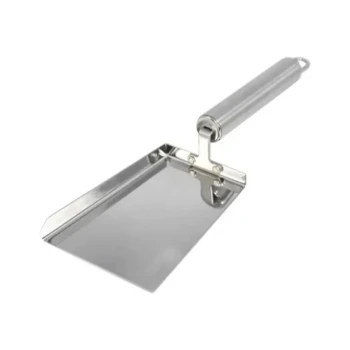
To ensure effective consumption, pollen patties must be placed directly above the brood nest. You should flatten the patty into a thin slab or divide it into small pieces and lay them across the top bars of the frames exactly where the bees are clustered. This placement guarantees that nurse bees have immediate access to the protein required for rearing brood without leaving the warmth of the cluster.
The critical factor for success is proximity; bees will not travel to the cold perimeter of the hive to retrieve supplements. You must position the patty directly between the brood cluster and the inner cover to ensure the colony utilizes it.
Positioning for Maximum Consumption
Target the Brood Nest
Your primary goal is to locate the center of the bee cluster. This is where the brood is located and where the nurse bees—the primary consumers of pollen—are active.
Direct Contact with Top Bars
Place the flattened patty directly on the top bars of the frames. It should span across multiple frames to maximize the surface area available to the bees below.
Using Deep Rim Inner Covers
If you are using larger patties or cannot flatten them sufficiently, standard spacing may not be enough. In this case, place the patty inside a deep rim inner cover to provide the necessary vertical clearance without crushing the bees.
Step-by-Step Application
Prepare the Surface
Before placing the patty, lightly smoke the bees to drive them down between the frames. This protects the bees from being squashed and clears your workspace.
Clean the Framework
Use your hive tool to scrape away excess wax or burr comb from the top bars. A smooth, flat surface ensures the patty sits flush against the frames, maximizing accessibility.
Managing Wrapped Patties
If your pollen substitute comes in a plastic bag or cling wrap, do not remove it entirely. Instead, use a sharp knife to cut a slit along the side of the bag.
Prevent Drying Out
Lay the bag slit-side down across the top bars. This technique allows bees to access the feed through the opening while the plastic retains moisture, preventing the remaining paste from drying into a hard, unusable rock.
Common Pitfalls to Avoid
Avoiding the Perimeter
Never place patties on the outer frames or near the hive walls. These areas are often abandoned by the cluster during cool nights, leaving the food untouched and wasted.
The Risk of Desiccation
Pollen substitutes that dry out become useless to the bees. If you are not using the slit-bag method, ensure you only provide small pieces that the bees can consume quickly before the patty hardens.
Making the Right Choice for Your Goal
To apply this effectively, choose the method that aligns with your specific equipment and hive conditions:
- If your primary focus is feeding pre-packaged substitute: Keep the patty in its wrapping, cut a slit, and place it face-down to maintain moisture.
- If your primary focus is using loose or homemade patties: Flatten the mixture into small, thin pieces and place them inside a deep rim inner cover to prevent drying.
Correct placement turns a simple supplement into an immediately accessible resource that drives colony expansion.
Summary Table:
| Factor | Recommended Action | Reason |
|---|---|---|
| Placement Location | Directly above the brood nest cluster | Ensures nurse bees can access protein without leaving the cluster |
| Surface Prep | Scrape burr comb and smoke bees down | Prevents crushing bees and ensures the patty sits flush |
| Application Form | Flatten into a thin slab across top bars | Maximizes surface area for easier bee access |
| Moisture Control | Keep in wrap and cut a slit (face down) | Prevents the supplement from drying out and becoming unusable |
| Equipment Used | Deep rim inner cover | Provides vertical clearance for larger patties |
Scale Your Apiary Success with HONESTBEE
Proper nutrition placement is just the first step in successful beekeeping management. At HONESTBEE, we empower commercial apiaries and distributors with the high-performance tools and machinery needed to thrive.
Whether you are looking for specialized hive-making machinery, efficient honey-filling solutions, or a consistent wholesale supply of premium beekeeping tools and consumables, we provide the industrial-grade equipment your business demands. Our comprehensive portfolio is designed to increase your operational efficiency and product quality.
Ready to upgrade your commercial beekeeping operation? Contact us today for wholesale inquiries and expert equipment solutions
Related Products
- Removable Plastic Pollen Trap With Ventilated Tray for Bees Pollen Collector
- Heavy-Duty Ergonomic Stainless Steel Pollen Shovel
- Heavy-Duty Ergonomic Grip Galvanized Pollen Shovel
- Stainless Steel Pollen Shovel with Wooden Handle
- Plastic Bee Pollen Trap Strips Comb Catcher Collector
People Also Ask
- What are the design principles and advantages of pollen traps in the collection of bee pollen? Boost Your Apiary Yield
- What is the function of professional pollen traps in evaluating honey plants? Quantifying Pollination and Crop Potential
- What functions do pollen traps serve for bee bread production? Optimize Your Raw Material Collection
- What maintenance and pest prevention measures should be taken for pollen traps? Protect Your Hive and Harvest Quality
- How does the use of pollen traps in honeybee hives enhance crop fertilization? Boost Your Yield Through Induced Activity