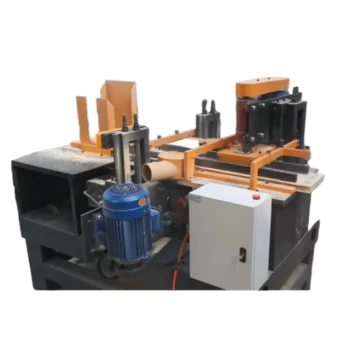
The preparation of frame end bar blanks began with raw 2x6 lumber, which was first planed down to a precise thickness of 1 3/8 inches. These prepared boards were then cross-cut into blocks matching the required length of the final component. Finally, each block was processed through a gang rip saw twice to yield 11 individual end bar blanks.
The manufacturing process was optimized for high-volume efficiency, converting standard dimension lumber into precise apiary components. By planing the stock to 1 3/8 inches initially, the width of the final bar was established before the ripping process ever began, ensuring strict adherence to Langstroth frame standards.
The Material Preparation Phase
Selection and Planing
The process exclusively utilized 2x6 lumber rather than the 1x10 or 1x6 boards used for other components like top bars.
Establishing the Width
Before any ripping occurred, the lumber was planed to a thickness of 1 3/8 inches. This step was critical because this initial thickness would eventually become the width of the finished end bar.
Creation of Blocks
Once planed, the thick boards were cut into blocks. These blocks were cut to the specific length required for the finished bar, preparing them for the gang rip saw.
The Ripping Workflow
Utilizing the Gang Rip Saw
The pre-cut blocks were fed through a gang rip saw. To maximize yield, each block was run through the machine twice.
High-Yield Output
This two-pass method was highly efficient. A single block of prepared lumber produced 11 end bar blanks.
Final Dimensions and Standards
The resulting blanks conformed to the standard for a Langstroth frame. Each finished blank measured 3/8 inch thick, 1 3/8 inch wide, and 9 1/8 inch long.
Understanding the Manufacturing Trade-offs
Efficiency vs. Setup Time
Using a gang rip saw allows for mass production, but it requires precise setup. If the initial planing to 1 3/8 inches is inaccurate, every single blank produced from that board will be the wrong width.
Material Selection Constraints
While top bars could utilize various lumber sizes (1x10, 1x6) or even "unsuitable" lumber, end bars required specific 2x6 stock. This dependence on a specific cut of lumber limits flexibility compared to other frame components.
Making the Right Choice for Your Goal
When evaluating or replicating this manufacturing process, consider your specific requirements:
- If your primary focus is accurate reproduction: Ensure your raw stock is planed to exactly 1 3/8 inches before cutting to length, as this determines the final bar width.
- If your primary focus is material estimation: Calculate your lumber needs based on a yield of 11 blanks per standard 2x6 block.
- If your primary focus is quality control: Verify that the final length is exactly 9 1/8 inches, as this dimension is established during the cross-cutting phase, not the ripping phase.
Precision in the initial planing stage is the single most important factor in achieving standard frame dimensions.
Summary Table:
| Stage | Action | Key Specifications |
|---|---|---|
| Material Selection | Stock Choice | 2x6 raw lumber |
| Planing | Thickness Setting | Planed to exactly 1 3/8" (Final Width) |
| Cross-Cutting | Block Formation | Cut to finished length (9 1/8") |
| Ripping | Gang Rip Saw | Two-pass process yielding 11 blanks |
| Final Dimensions | Standard Size | 3/8" Thick x 1 3/8" Wide x 9 1/8" Long |
Scaling Your Apiary Production with HONESTBEE
Manufacturing precision is the backbone of a successful beekeeping operation. At HONESTBEE, we understand that commercial apiaries and distributors require equipment built to strict Langstroth standards. We provide a comprehensive wholesale range, from specialized hive-making and honey-filling machinery to professional-grade beekeeping tools and essential consumables.
Whether you are looking to optimize your own production line or stock high-quality components for distribution, our expertise ensures you get the reliability and efficiency your business deserves. Partner with HONESTBEE today to access premium beekeeping hardware and honey-themed cultural merchandise tailored for industry leaders.
Related Products
- HONESTBEE Bee Frame Side Bar Forming Machine Precision Engineered for High-Volume Production Bee Frame Machine
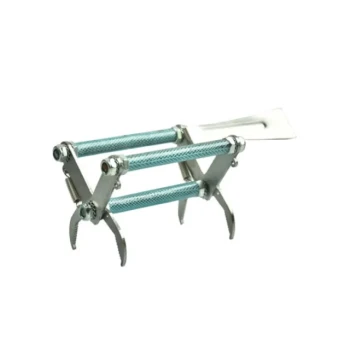
- Professional 3-Bar Frame Grip with Integrated Hive Tool
- HONESTBEE Top Bar & Bottom Bar Forming Machine | Bee Frame Machine
People Also Ask
- What are the qualities of the bee frame forming machine? Durable, Efficient, and Built to Last
- How does a bee frame making machine work? A Guide to Automated Metal Frame Production
- Why is professional beehive frame-making machinery required for large-scale apiary operations? Scale with Precision
- How do professional beehive and frame manufacturing machines contribute to commercial apiary management? Boost Efficiency
- What should be done to the sidebars if wiring the frames? A Guide to Drilling Holes for Maximum Frame Strength