Digital temperature sensors fundamentally outperform analog alternatives in precision beekeeping by integrating signal processing directly into the sensor unit. They provide factory-calibrated digital outputs and unique identification codes, which eliminates the need for complex analog-to-digital conversion circuitry and massive cable bundles.
Core Takeaway By utilizing bus communication protocols and unique serial numbers, digital sensors allow for high-precision, multi-point monitoring on a single wire. This architecture drastically reduces wiring complexity while ensuring data integrity against electrical interference, enabling accurate assessment of colony thermoregulation without physical disturbance.
Simplifying Apiary Architecture
The Power of Single-Bus Wiring
Traditional analog sensors typically require individual wire pairs for every single measurement point, leading to unmanageable cable nests in large apiaries. Digital sensors utilizing 1-Wire or similar bus technologies transmit data over a single shared data line. This allows you to daisy-chain multiple sensors—monitoring internal brood, hive edges, and ambient air—significantly reducing physical clutter and hardware costs.
Unique Device Identification
As highlighted in the primary reference, each digital sensor possesses a unique physical serial number. This allows the central monitoring system to distinguish between the brood nest and the hive wall effortlessly, even when they share the same wire. It ensures that data is never misattributed, maintaining the spatial context required for precision monitoring.
Ensuring Data Integrity and Precision
Factory Calibration and Stability
Analog signals are susceptible to voltage drops and degradation over long cable runs, often requiring manual calibration. High-precision digital sensors come factory-calibrated, delivering accurate temperature data directly to your system. This eliminates the need for complex external amplification or error-prone backend analog-to-digital conversion circuitry.
Superior Noise Immunity
Beehives may be located near equipment or transmission lines where electrical interference can skew sensitive analog voltage readings. Digital signal transmission offers robust anti-interference capabilities. This ensures the data reflects the actual microclimate—critical for scientific analysis—rather than external electrical noise.
Unlocking Biological Insights
Granular Microclimate Mapping
Precise digital monitoring captures the dynamics of nest thermoregulation, specifically around the 34.8°C brood rearing threshold. By placing sensors at both the center and edges of the hive, beekeepers can compare gradients to evaluate colony health. This data is vital for assessing queen status and winter survival rates without physically opening the hive.
Non-Invasive Continuous Monitoring
The compact form factor allows digital sensors to be embedded directly into the bee cluster or hive walls. This enables continuous logging of critical thresholds, such as the 38°C danger zone for stingless bees. Beekeepers receive automated alerts regarding extreme weather threats or ventilation issues without disrupting normal foraging activities.
Understanding the Trade-offs
Protocol Complexity
Unlike analog sensors which output a simple voltage readable by a multimeter, digital sensors require specific communication protocols. Your recording device must be programmed to handle digital handshakes and parse data streams, requiring slightly more advanced software integration.
The "Single Point of Failure" Risk
Daisy-chaining multiple sensors on a single bus simplifies wiring but introduces a potential vulnerability. If the main data line is severed near the source, all downstream sensors on that chain may be lost simultaneously. Proper cable management and protection are essential to mitigate this risk in a field environment.
Making the Right Choice for Your Goal
To maximize the effectiveness of your monitoring system, align your sensor choice with your specific objectives:
- If your primary focus is large-scale commercial management: Prioritize digital sensors with 1-Wire bus technology to connect multiple nodes across many hives using minimal cabling infrastructure.
- If your primary focus is biological research or brood health: Ensure you utilize factory-calibrated digital sensors placed specifically at the cluster center to track the 34.8°C regulation benchmark accurately.
Digital sensors transform beekeeping from a reactive manual task into a proactive, data-driven science, ensuring colony health through precision and foresight.
Summary Table:
| Feature | Digital Sensors (e.g., 1-Wire) | Traditional Analog Sensors |
|---|---|---|
| Wiring Complexity | Single-bus (daisy-chain) for multiple nodes | Individual wire pairs for every sensor |
| Data Integrity | High noise immunity; factory-calibrated | Prone to voltage drops & interference |
| Identification | Unique serial numbers for each node | No built-in ID; requires port mapping |
| System Stability | Stable over long cable runs | Signal degrades over distance |
| Installation | Simplified, non-invasive architecture | High physical clutter in large apiaries |
Scaling Your Beekeeping Operation with Precision Technology
At HONESTBEE, we understand that commercial success in modern beekeeping hinges on data-driven insights and efficient infrastructure. Whether you are managing a large-scale commercial apiary or operating as a distributor, our comprehensive wholesale offering provides the tools you need to stay ahead.
From high-precision monitoring components to industrial-grade hive-making and honey-filling machinery, we supply the full spectrum of beekeeping hardware and essential industry consumables. Contact us today to learn how HONESTBEE can streamline your operations, enhance colony health, and maximize your production yield with our specialized equipment and cultural merchandise.
References
- Aleksejs Zacepins, Jurijs Meitalovs. Implementation of multi-node temperature measurement system for bee colonies online monitoring. DOI: 10.1109/carpathiancc.2014.6843694
This article is also based on technical information from HonestBee Knowledge Base .
Related Products
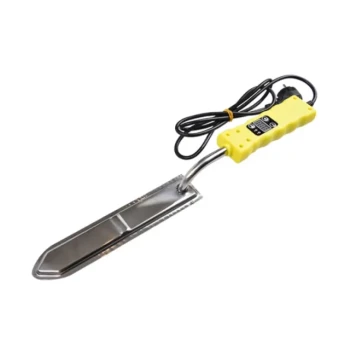
- Professional Electric Honey Uncapping Knife with Heated Digital Temperature Control for Beekeeping
- Digital Honey Refractometer for Precision Measurement of Optimal Honey Quality
- HONESTBEE Adjustable Voltage Wire Embedder with Digital Display
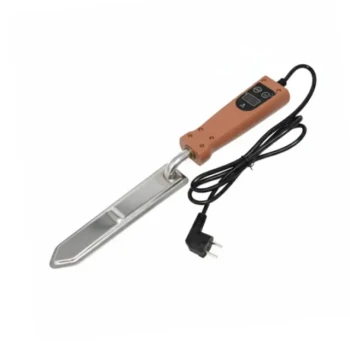
- Digital Display Electric Honey Uncapping Knife for Beekeeping and Decapping
People Also Ask
- Why are electric honey uncapping knives essential? Boost Efficiency & Preserve Comb for Professional Honey Extraction
- What is an electric uncapping knife and how is it used? Master Faster Honey Extraction with Heat
- What are the advantages and disadvantages of using an electric knife for uncapping honey frames? Boost Extraction Speed
- What are the drawbacks of using an electric knife for uncapping honey frames? Cost and Power Constraints Explained
- How should an electric uncapping knife be utilized? Master Efficient Honey Extraction with Heated Precision