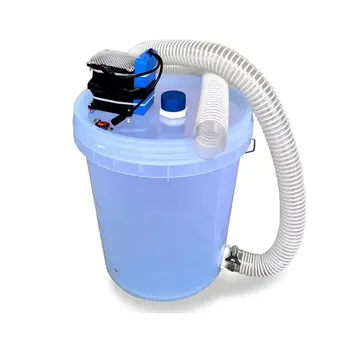
The operational advantage of using a portable vacuum sampling device lies in its ability to combine speed with sample preservation. By temporarily blocking the hive entrance and utilizing suction, this method allows for the rapid collection of forager bees without the inefficiencies of manual capture. It significantly increases field throughput while minimizing physical damage to the bees, ensuring the biological integrity required for accurate Nosema spp. detection.
The primary value of vacuum sampling is the standardization of the collection process; it converts a slow, manual task into a rapid, mechanical workflow that yields undamaged, representative samples essential for reliable laboratory results.
Transforming Field Efficiency
Rapid Collection at Scale
In commercial or large-scale apiary settings, time is a critical resource. Manual capture methods are labor-intensive and slow, creating bottlenecks during field inspections.
A portable vacuum device enables the rapid collection of large numbers of bees directly from the hive entrance. This mechanical efficiency allows operators to sample more colonies in less time, making it a superior choice for high-volume operations.
Non-Destructive Handling
Manual handling often carries the risk of crushing or damaging the specimen.
Vacuum devices use controlled suction to collect bees, which minimizes physical damage during the capture process. By avoiding the physical stress of pinching or grasping, the device ensures the bees remain intact for transport and analysis.
Ensuring Diagnostic Accuracy
Preserving Biological Integrity
For Nosema spp. detection, the condition of the bee affects the accuracy of the spore count.
Vacuum sampling preserves the biological integrity of the sample. Because the bees are not crushed during collection, the risk of sample contamination or degradation is significantly reduced, providing high-quality raw material for the lab.
Representative Sampling
To accurately diagnose a colony's health, the sample must reflect the true infection status of the hive.
By collecting foragers at the entrance, vacuum devices capture a representative sample of the population most likely to carry the pathogen. This approach provides standardized data, ensuring that laboratory results accurately reflect the infection levels of the colony.
Understanding the Operational Trade-offs
While vacuum devices offer superior speed and quality, they introduce specific operational considerations that manual methods do not.
Equipment Dependencies
Unlike manual collection, which requires simple containers, vacuum sampling relies on mechanical reliability. Operators must ensure batteries are charged and the device is free of blockages to maintain suction efficiency throughout the day.
Procedure Standardization
The success of this method relies on the technique of temporarily blocking the hive entrance to concentrate foragers. Improper execution of this step can lead to inconsistent sample sizes or unnecessary disturbance to the colony's defensive behavior.
Making the Right Choice for Your Goal
When deciding between manual capture and vacuum sampling, consider your operational priorities.
- If your primary focus is field efficiency: Adopt vacuum sampling to maximize the number of hives inspected per hour without sacrificing sample quality.
- If your primary focus is diagnostic precision: Use vacuum devices to ensure you are providing the laboratory with undamaged, standardized samples that yield consistent spore counts.
By mechanizing the collection process, you move from anecdotal observation to rigorous, scalable disease monitoring.
Summary Table:
| Feature | Manual Collection | Vacuum Sampling Device |
|---|---|---|
| Collection Speed | Slow, labor-intensive | Rapid, mechanical efficiency |
| Sample Integrity | High risk of physical damage | Minimized damage via suction |
| Throughput | Low (few hives per hour) | High (scalable for large apiaries) |
| Sample Quality | Inconsistent | Standardized & Representative |
| Best For | Small-scale / Hobbyist | Commercial / Disease Monitoring |
Elevate Your Apiary Operations with HONESTBEE
At HONESTBEE, we specialize in empowering commercial apiaries and distributors with the tools needed for modern, scalable beekeeping. Whether you are looking for advanced honey-filling machines, durable hive-making hardware, or specialized sampling equipment to safeguard colony health, we provide a comprehensive wholesale portfolio to meet your demands.
Why partner with HONESTBEE?
- Full Spectrum Supply: From heavy machinery to essential industry consumables.
- Commercial Focus: Dedicated solutions tailored for high-volume distributors and honey producers.
- Proven Quality: Tools designed for biological integrity and operational longevity.
Contact us today to discover how our wholesale beekeeping equipment can optimize your field efficiency and business growth.
References
- Agostina Giacobino, Marcelo Signorini. Potential associations between the mite Varroa destructor and other stressors in honeybee colonies (Apis mellifera L.) in temperate and subtropical climate from Argentina. DOI: 10.1016/j.prevetmed.2018.09.011
This article is also based on technical information from HonestBee Knowledge Base .
Related Products
People Also Ask
- What are the advantages of using portable bee vacuums for sampling honey bees? Optimize Nosema Detection Efficiency
- Who is qualified to use a bee vacuum? Essential Safety and Experience Requirements for Effective Bee Relocation
- What potential problems can occur when using a bee vacuum? Prevent Colony Mortality and Ensure Safe Bee Removal
- What are the benefits of using a bee vacuum? Safely Remove & Preserve Honey Bee Colonies
- Why do people use bee vacuums? A Humane Solution for Live Bee Removal