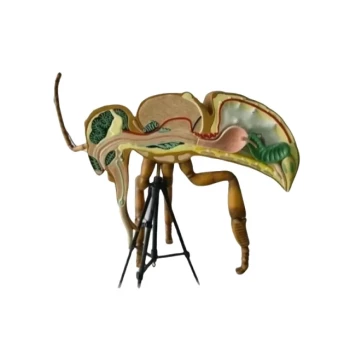
For commercial apiaries, Apis mellifera is generally the stronger choice when maximum honey output and mechanized processing are the priorities. It can produce approximately 30–50 kg of honey per hive annually, compared with roughly 8–12 kg per Apis cerana colony, although actual yields vary with forage, climate, colony strength, and management. Apis cerana offers better adaptation to local flora and longer daily foraging activity, but its greater tendency to swarm or abscond requires a different equipment and management strategy.
Apis mellifera supports higher-volume commercial production, while Apis cerana can be more practical in locally adapted, lower-input systems. The correct outfitting decision depends on expected yield, environmental conditions, pest pressure, colony behavior, and the level of mechanization required.
How Productivity Changes the Equipment Requirement
Apis mellifera Supports Higher Throughput
Apis mellifera forms larger colonies, carries larger nectar and pollen loads, and typically delivers substantially greater annual honey yields. Its relatively low swarming and absconding tendencies also make colonies more predictable for scheduled inspections and harvesting.
Commercial operators keeping A. mellifera generally need larger hive bodies, deeper honey supers, standardized movable frames, and higher-capacity extractors. These components support consistent handling from hive inspection through extraction, filtering, filling, and packing.
Apis cerana Favors Smaller, More Adaptable Systems
Apis cerana produces less honey per colony but can perform reliably in dense forests, varied terrain, plantation zones, and temperate environments. Its ability to exploit local flora and maintain longer daily foraging periods can make it valuable where A. mellifera is less well adapted.
A. cerana operations may benefit from smaller, lighter hive hardware, including tetragon wooden box systems or appropriately scaled movable-frame hives. Equipment should be easy to transport, inspect, repair, and reposition in rugged or dispersed apiary locations.
Yield Figures Must Be Treated as Operating Ranges
Reported production varies significantly between regions and management systems. The commonly cited comparison of 30–50 kg for A. mellifera and 8–12 kg for A. cerana is useful for commercial planning, but it should not be treated as a guaranteed output.
Distributors and commercial buyers should qualify equipment against the customer’s local forage calendar, colony population, climate, and harvesting frequency, rather than selecting machinery from yield figures alone.
Hive Hardware and Processing Compatibility
Standardized Systems Favor Apis mellifera
Apis mellifera is commonly managed in standard Langstroth hives with modular wooden boxes and movable frames. This format is widely compatible with commercial extraction machinery and automated downstream processing.
For large apiaries, a standardized frame system simplifies spare-parts supply, hive expansion, disease inspection, migratory operations, and integration with radial extractors, uncapping equipment, honey pumps, filters, and filling machinery.
Apis cerana Requires Species-Appropriate Sizing
Apis cerana has smaller colonies and different nesting behavior, so equipment designed around large A. mellifera colonies may be inefficient or difficult to manage. Smaller hive bodies and appropriately fitted frames can reduce unused space and improve inspection practices.
Because A. cerana is more likely to swarm or abscond, hardware should also support fast inspections, secure closure, practical transport, and quick colony intervention. Poorly fitted or oversized equipment can make colony management more difficult.
Hive Integrity Is More Important With Apis cerana
Apis mellifera collects propolis and uses it to seal cracks and sanitize internal hive surfaces. Apis cerana does not collect propolis in the same way, so managers should pay closer attention to joint quality, covers, entrances, seals, and maintenance hardware.
This makes durable hive construction and correctly fitted components particularly important for A. cerana installations. Hive gaps can contribute to pest entry, robbing, weather exposure, and colony stress.
Disease, Pest, and Biosecurity Planning
Apis mellifera Needs Active Pest Management
Apis mellifera is vulnerable to sacbrood virus and parasitic mites such as Tropilaelaps mercedesae. It also requires close monitoring for other pests that can weaken colonies and reduce production.
Commercial operations should budget for pest-monitoring trays, inspection tools, treatment applicators, chemical or organic control products, and replacement hive components. Pest control is not an optional accessory category when outfitting high-density A. mellifera sites.
Apis cerana Has Different Pest Relationships
Apis cerana is a natural host for pests including Varroa destructor and Nosema ceranae. Its grooming behavior can limit Varroa in some circumstances, but this does not eliminate the need for monitoring or create universal protection.
A. cerana colonies can also act as a source of pest transfer to nearby A. mellifera colonies. Equipment programs should therefore include species-appropriate monitoring and treatment tools rather than assuming that the management protocol for one species will work unchanged for the other.
Mixed-Species Sites Require Stronger Biosecurity
Keeping Apis cerana and Apis mellifera close together can increase the risk of robing, parasite transmission, and colony disruption. The risk is especially significant for A. mellifera colonies that are less adapted to particular local parasite pressures.
Commercial operators managing both species should consider separate apiary layouts, robber screens, dedicated inspection tools, controlled equipment movement, and species-specific treatment protocols. Shared tools, boxes, frames, and transport equipment should be managed carefully to reduce cross-contamination.
Colony Behavior and Labor Requirements
Apis mellifera Is More Predictable for Scheduled Work
Apis mellifera generally remains calmer on the comb and has lower swarming and absconding tendencies. This makes frame inspections, queen management, supering, and mechanized harvesting more practical at commercial scale.
Predictable colony behavior improves labor planning. It also helps distributors specify equipment for routine workflows rather than frequent emergency interventions.
Apis cerana Requires More Responsive Management
Apis cerana has stronger swarming, absconding, and robbing tendencies, particularly when forage, weather, or colony conditions become unfavorable. An absconded colony can eliminate the expected return from the hive and leave equipment unused.
Managers should prioritize frequent observation, secure hive design, timely feeding where appropriate, swarm control, entrance management, and rapid response to stress conditions. Equipment must support these interventions without requiring excessive labor or difficult transport.
Equipment Should Match Inspection Frequency
A. mellifera systems can be optimized for repeatable, high-volume inspection and harvesting. A. cerana systems should emphasize accessibility and flexibility because colony status may change more rapidly.
For resellers, this distinction affects product bundling. A. mellifera customers may require complete high-throughput extraction lines, while A. cerana customers may value lightweight hive packages, maintenance components, monitoring tools, and portable handling equipment.
Understanding the Trade-offs
Higher Yield Comes With Higher Operating Exposure
Apis mellifera can generate greater revenue per colony, but it also creates greater dependence on effective disease control, feeding support, replacement equipment, and consistent management. A pest outbreak in a dense commercial operation can affect a large production base quickly.
The business case for A. mellifera is strongest where forage is abundant and concentrated, such as irrigated agricultural areas, open plains, and major fruit or nectar flows.
Lower Investment Does Not Mean Lower Management Risk
Apis cerana may require less capital investment and can be well suited to local conditions. However, lower equipment cost is balanced by lower honey output and greater risks from swarming, absconding, robbing, and inconsistent colony retention.
A lower-input model can be profitable when transport is difficult, local adaptation is valuable, or the operation serves niche regional markets. It is less suitable when the central goal is maximum standardized throughput.
Automation Must Be Justified by Volume
High-capacity extractors, automated honey-filling machinery, pumps, and processing lines are easier to justify with A. mellifera’s higher expected output. Purchasing oversized equipment for a small A. cerana operation can increase capital costs without improving productivity.
Conversely, undersized equipment can create bottlenecks in a large A. mellifera apiary. Equipment capacity should be based on peak harvest volume, number of colonies, frame dimensions, labor availability, and expansion plans.
Species Mixing Can Increase Hidden Costs
Co-managing both species may appear to provide flexibility, but it adds complexity to layouts, equipment identification, disease control, transportation, and staff training. Shared hardware can increase the chance of transferring pests or spreading management errors between colonies.
Where both species are commercially necessary, the operation should use clearly separated workflows and dedicated or carefully sanitized equipment.
Making the Right Choice for Your Goal
The most effective sourcing decision begins with the customer’s production model, environment, and management capacity.
- If your primary focus is maximum honey output: Prioritize Apis mellifera packages with standardized Langstroth hardware, expandable supers, heavy-duty extraction equipment, and comprehensive pest-control tools.
- If your primary focus is local adaptation: Prioritize Apis cerana equipment sized for smaller colonies, varied terrain, and flexible hive maintenance.
- If your primary focus is automated processing: Select A. mellifera-compatible frames, extractors, pumps, filters, and filling machinery with capacity for peak harvest periods.
- If your primary focus is low capital investment: Use a smaller A. cerana-oriented system, while accounting for lower yields and the labor required to manage swarming and absconding.
- If your primary focus is mixed-species production: Separate apiary sites, tools, transport procedures, and pest-monitoring programs to limit robbing and parasite transmission.
- If your primary focus is dependable equipment supply: Work with a supplier able to provide complete hive hardware, disease-control accessories, processing machinery, replacement parts, and responsive technical support from one source.
The right commercial apiary package is the one that aligns species biology with production targets, site conditions, biosecurity requirements, and the operator’s real management capacity.
Summary Table:
| Feature | Apis mellifera | Apis cerana |
|---|---|---|
| Annual honey yield per hive | 30–50 kg | 8–12 kg |
| Typical hive system | Standard Langstroth, larger boxes | Smaller custom or tetragon hives |
| Foraging behavior | Shorter daily foraging, less adaptable to local flora | Longer daily foraging, better local flora adaptation |
| Swarming/absconding tendency | Lower, more predictable | Higher, requires frequent monitoring |
| Pest management | Vulnerable to sacbrood and Tropilaelaps, requires active control | Natural host for Varroa, grooming helps but monitoring needed |
| Propolis collection | Yes, helps seal hives | No, requires better hive sealing |
| Automation compatibility | High, with standard frames and large extractors | Low, requires specialized smaller equipment |
| Best suited for | High-volume production, mechanized processing, predictable management | Local adaptation, low-input systems, variable terrain |
Ready to outfit your commercial apiary with the right equipment? HONESTBEE offers a comprehensive range of beekeeping tools, machinery, and consumables tailored to both Apis mellifera and Apis cerana operations. From Langstroth hives and high-capacity extractors to species-appropriate frames and pest management solutions, we provide one-stop sourcing with rapid response, dedicated service, and ultra-fast delivery. As a trusted supplier to commercial apiaries and distributors, we support your profitability with competitive margins, OEM/ODM services, certifications, and reliable supply. Contact our experts today for a custom quotation or technical consultation — let's optimize your beekeeping operations together. Get in touch now.
Related Products
People Also Ask
- How do honey bees utilize water to regulate the internal temperature of the hive? Master Evaporative Cooling Methods
- Is it good to have honey bees in your yard? A Guide to Boosting Your Garden's Health
- What criteria should be considered in the selection process for honey bee breeding? Top Traits for Sustainable Apiaries
- What should be considered when learning the behavior of honey bees and their queens? Master Colony Management
- Why is maintaining specific relative humidity levels critical in caged honey bee experiments? Ensure Research Validity