Successful honey bee breeding requires a holistic approach. Rather than isolating a single desirable trait, you must select for a "complex of behaviors" that ensures overall colony fitness. This involves simultaneously evaluating productivity, temperament, overwintering ability, and disease resistance—specifically the ability to maintain low Varroa mite levels.
Core Takeaway
Breeding selection is fundamentally a balancing act between performance and biological cost. You cannot maximize every trait simultaneously; you must weigh colony productivity against the metabolic and behavioral "colony cost" required to achieve traits like mite resistance.
The Core Selection Complex
To build a sustainable breeding program, you must evaluate the colony as a whole system. Focusing too narrowly on one metric often degrades others.
Productivity
The most traditional metric is yield. You must assess the colony's ability to gather and store resources, primarily honey. However, high productivity should not come at the expense of the colony's health.
Temperament
A colony’s defensiveness affects management efficiency. Select for bees that are calm and workable. Aggressive colonies are difficult to manage and can pose risks, regardless of their production levels.
Overwintering Ability
Survival is the baseline of fitness. You must select for colonies that demonstrate the capacity to survive through winter months with adequate population and resource stewardship. A highly productive colony that collapses in winter is a genetic dead end.
Mite Tolerance and Resistance
In the modern landscape, you cannot ignore Varroa mites. You must select for colonies that naturally maintain low Varroa mite levels. This reduces dependency on chemical treatments and improves long-term stock viability.
Understanding the Trade-offs: The "Colony Cost"
There is an inherent biological price for certain traits. This is the most critical concept for an advanced breeder to grasp.
The Cost of Resistance
Selecting for "mite tolerance" or "mite resistance" is not free. Mechanisms that allow bees to fight off pests often require energy and behavioral changes.
Balancing Productivity vs. Defense
When a colony allocates resources to defense or grooming behaviors (to remove mites), it may have less energy available for foraging.
Weighting Your Criteria
You must acknowledge this "colony cost." Your selection process requires a weighted formula where you determine how much productivity you are willing to sacrifice to gain higher disease resistance.
Making the Right Choice for Your Goal
The "perfect" bee does not exist; only the bee that best fits your specific environmental and operational goals.
- If your primary focus is Commercial Production: Prioritize productivity and overwintering ability, but ensure you maintain a baseline of temperament to keep labor costs low.
- If your primary focus is Stock Resilience: Prioritize low Varroa mite levels and overwintering ability, accepting that there may be a "colony cost" in reduced honey yields.
- If your primary focus is Urban Beekeeping: Heavily weight temperament and low mite levels to ensure safety and survival in density-restricted areas.
Effective breeding is not about finding the best trait, but about finding the most sustainable balance of compromises.
Summary Table:
| Selection Criterion | Key Focus Area | Primary Benefit |
|---|---|---|
| Productivity | Honey yield and resource storage | Maximizes commercial output and revenue. |
| Temperament | Docility and calmness during inspection | Increases labor efficiency and safety. |
| Overwintering | Survival rates and resource management | Ensures long-term stock viability. |
| Mite Resistance | Low Varroa levels and grooming | Reduces chemical dependency and colony loss. |
| Colony Cost | Energy trade-offs for defense | Balances resilience with honey production. |
Elevate Your Breeding Program with HONESTBEE
At HONESTBEE, we understand that commercial success in beekeeping requires more than just high yields—it requires resilient genetics and the right infrastructure. As a dedicated partner to commercial apiaries and global distributors, we provide the comprehensive tools you need to support a sophisticated breeding program.
From industrial hive-making machinery to precision honey-filling equipment and specialized beekeeping hardware, our portfolio is designed to lower your operational costs while you focus on stock resilience. Whether you are scaling a honey production line or supplying essential consumables to the industry, our wholesale solutions deliver the quality and reliability your business demands.
Ready to optimize your apiary’s performance? Contact us today to discuss how our specialized equipment and wholesale offerings can support your long-term breeding and production goals.
Related Products
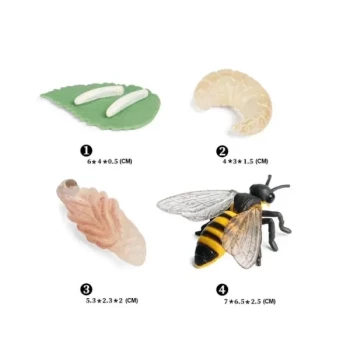
- Honey Bee Life Cycle Model 4 Stage Educational Set for Kids Learning
- Honey Bee Lifecycle Model: A Detailed Honeycomb Display of Bee Development
- HONESTBEE Anatomy Bee Model Detailed Anatomical Display for Education and Study
- Galvanized Beekeeping Smoker for Honey Bee and Apiculture
- HONESTBEE AC Powered Wire Embedder with Alligator Clips
People Also Ask
- How do honey bees utilize water to regulate the internal temperature of the hive? Master Evaporative Cooling Methods
- Is it good to have honey bees in your yard? A Guide to Boosting Your Garden's Health
- What should be considered when learning the behavior of honey bees and their queens? Master Colony Management
- What activities require a lot of energy for honey bees? Understanding the Colony's Energy Budget
- How do honey bees develop from egg to adult? The Complete 4-Stage Metamorphosis Guide